How marine positioning technology affects offshore project risk
In offshore engineering, even small location errors can trigger major delays, safety incidents, and cost overruns. Marine positioning technology plays a critical role in reducing these risks by improving vessel accuracy, equipment coordination, and real-time decision-making in complex sea conditions. For project managers and engineering leaders, understanding its impact is essential to strengthening control, compliance, and overall project performance.
Why marine positioning technology is directly tied to offshore project risk
For offshore project managers, the key question is not whether positioning matters, but how much project risk it can realistically remove. In most cases, the answer is significant.
Marine positioning technology affects offshore project risk by improving location accuracy, timing, coordination, and situational awareness across vessels, subsea assets, and work zones. Better positioning means fewer operational surprises.
When a vessel, platform, ROV, crane barge, or survey system is not exactly where the team believes it is, the consequences multiply quickly. Minor errors can become installation defects, near misses, standby time, or contract disputes.
This is why marine positioning technology is not only a navigation issue. It is a project control tool that influences HSE performance, schedule reliability, asset protection, regulatory compliance, and cost certainty.
What offshore leaders are actually trying to prevent
Project managers and engineering leads usually evaluate new systems through a practical lens. They want to know which risks are reduced, where failures still happen, and whether the investment improves execution under real offshore conditions.
In offshore work, the main risks linked to poor positioning are vessel collision, anchor misplacement, subsea asset damage, inaccurate installation, weather-related downtime, inefficient survey rework, and operational delays during critical marine spreads.
There is also a hidden management risk. When positional confidence is weak, teams become slower and more conservative. Decision cycles lengthen, approvals stall, and marine spread utilization drops.
That means positioning performance affects not only technical accuracy, but also the speed and quality of operational decision-making. In high-cost offshore campaigns, this management effect can be as expensive as direct errors.
How location accuracy changes cost, schedule, and safety outcomes
The most immediate impact of marine positioning technology is on execution precision. Accurate vessel and equipment positioning reduces uncertainty during approach, station keeping, cable laying, lifting, trenching, and subsea intervention.
For example, during offshore wind foundation installation, even small offset errors can affect pile placement, alignment tolerances, and follow-on work. This can force corrective action across multiple downstream packages.
In oil and gas projects, positioning error can put pipelines, umbilicals, manifolds, and wellhead infrastructure at risk. The cost of repair offshore is usually far higher than the cost of prevention.
From a safety standpoint, positional confidence improves exclusion zone control, vessel separation, and hazard awareness near fixed assets. That lowers the chance of collision, dropped object events, and unintended encroachment.
From a schedule standpoint, better positioning reduces trial-and-error maneuvering and repeated verification. This shortens critical path activities and helps weather windows get used more effectively.
From a cost standpoint, the benefits often appear in reduced standby, fewer re-surveys, less reinstallation, lower fuel waste, and more productive use of specialized marine assets.
Where marine positioning technology creates the biggest risk reduction
Not every offshore activity needs the same level of positioning sophistication. Project leaders should focus on operations where positional error has a high consequence or where marine spread costs are especially sensitive.
Dynamic positioning support vessels are an obvious example. When these vessels perform close-proximity operations, reliable position reference inputs are essential for safe station keeping and continuous control.
Subsea construction is another priority area. ROV intervention, spool installation, cable touchdown monitoring, and metrology work all depend on accurate relative and absolute positioning.
Survey and geophysical campaigns also benefit strongly. Better positioning raises data quality, improves repeatability, and reduces the risk of interpretation errors caused by poor spatial reference.
Offshore wind construction is especially sensitive because multiple vessels, tight tolerances, and aggressive schedules must be coordinated in changing environmental conditions. Positioning reliability becomes a major execution enabler.
Even logistics and port approach operations can benefit. When crew transfer vessels, supply vessels, and barges have stronger positional awareness, the project gains better timing and lower transfer risk.
What technologies are typically involved
Marine positioning technology is not a single tool. It is usually a layered system that combines satellite navigation, sensors, correction services, onboard software, and reference inputs from multiple sources.
GNSS is the foundation in many cases, but standard satellite positioning alone is often not enough for offshore operations with tight tolerances. Accuracy, continuity, and resilience matter more than baseline availability.
Differential corrections, RTK, PPP, and regional augmentation services can improve positioning precision. The right choice depends on operational range, expected accuracy, and infrastructure availability.
Gyrocompasses, inertial navigation systems, motion reference units, Doppler velocity logs, radar, lidar, sonar, taut wire, and hydroacoustic systems may also be integrated depending on the mission profile.
For dynamic positioning vessels, multiple position reference systems are often used together so that failure in one input does not immediately compromise the operation. Redundancy is a risk control feature, not a luxury.
The value for project management lies in system integration quality. A technically advanced sensor stack still creates risk if the data is not validated, synchronized, or interpreted correctly by onboard systems and operators.
Why reliability matters more than headline accuracy
Many buyers focus first on advertised accuracy. That is understandable, but offshore project risk is often driven more by reliability, continuity, and integrity than by best-case precision figures.
A system that delivers excellent accuracy in ideal conditions but degrades sharply during weather, multipath interference, signal blockage, or vessel motion may not protect the project when it matters most.
Project leaders should ask whether the positioning solution remains stable during operational stress. They should also examine alarm behavior, failure modes, redundancy logic, and recovery performance after disruptions.
Integrity monitoring is especially important. Teams need to know not only where the vessel or asset is, but how confident they can be in that information at any specific moment.
When crews understand confidence levels in real time, they can make safer go or no-go decisions. This is one of the clearest ways marine positioning technology affects offshore project risk.
How poor positioning increases commercial and contractual exposure
The risk is not limited to operations. Poor positioning can create commercial problems that are harder to quantify but equally damaging to project outcomes and stakeholder trust.
If installation tolerances are missed, survey data is disputed, or subsea asset locations are later found to be inaccurate, disagreements can emerge between owners, EPC contractors, marine contractors, and insurers.
Evidence quality becomes critical in those situations. High-integrity positioning records help establish what happened, when it happened, and whether work was performed within specification.
That supports claims defense, quality assurance, and handover confidence. In contrast, weak positioning evidence can leave project teams exposed during acceptance, warranty review, or incident investigation.
For project managers, this means positioning systems should be assessed not only as operational tools but also as part of the project’s documentation and compliance framework.
How to evaluate whether an upgrade is worth the investment
Engineering leaders rarely approve technology upgrades based on technical promise alone. They need a practical framework that connects marine positioning technology to measurable project value.
Start by identifying operations where positioning error has the highest impact. This could be close-approach vessel work, subsea installation, cable lay, heavy lift positioning, or precision survey repeatability.
Then estimate the current risk cost. Include standby time, rework, weather inefficiency, insurance implications, HSE exposure, quality escapes, and the cost of delayed project milestones.
Next, compare technology options based on mission fit rather than broad capability. A system that is ideal for deepwater subsea intervention may be excessive for simpler coastal support operations.
Also review crew readiness, integration requirements, maintenance burden, vendor support, and cyber resilience. A strong technology choice can fail commercially if implementation complexity is underestimated.
Finally, ask what decision quality improves once the system is deployed. The most valuable positioning investment is often the one that makes offshore decisions faster, clearer, and less reactive.
Implementation risks that project teams should not ignore
Even good technology can underperform if deployment is rushed. One common mistake is assuming that hardware installation alone delivers risk reduction without process updates and operator training.
Another issue is poor sensor integration. If timing references, coordinate frames, chart data, or motion compensation are inconsistent, teams may act on misleading position information.
Overreliance on a single positioning source is also risky. Offshore environments are dynamic, and signal degradation or equipment faults can occur without warning.
Human factors matter as well. Bridge teams, survey teams, and project engineers must share a common understanding of system limitations, alarms, fallback procedures, and decision thresholds.
Managers should therefore treat marine positioning technology as a combined system of equipment, software, procedures, and competence. Risk reduction only appears when all four elements work together.
Questions project managers should ask before selecting a solution
Before committing budget, project leaders should ask a focused set of questions that connect technical capability to offshore risk outcomes.
What level of positional accuracy is actually required for the target operations, and under what sea state, vessel motion, and proximity conditions must that accuracy be sustained?
How does the system behave during signal interruption, sensor disagreement, power issues, or cyber events? What redundancy and integrity monitoring are built into the architecture?
Can the solution integrate smoothly with dynamic positioning systems, survey software, ROV systems, GIS platforms, and project reporting workflows already in use?
What evidence exists from similar offshore campaigns? Proven performance in comparable environments is usually more valuable than impressive specification sheets alone.
What training, calibration, lifecycle support, and remote diagnostics are available? Technology that cannot be supported consistently offshore may add risk instead of removing it.
The strategic takeaway for offshore project leadership
Marine positioning technology affects offshore project risk because offshore work depends on precise spatial control under uncertain environmental and operational conditions. Better positioning reduces uncertainty where costs escalate fastest.
For project managers, its value is not limited to navigation accuracy. It improves safety margins, execution discipline, schedule confidence, commercial defensibility, and real-time decision quality across the project lifecycle.
The strongest business case usually appears in operations with high spread cost, tight tolerances, multiple asset interfaces, or severe consequences from placement error. In these scenarios, better positioning often pays back quickly.
At the same time, leadership teams should avoid viewing positioning as a standalone procurement item. The real return comes from integrating technology, procedures, redundancy, and crew competence into one operational model.
In short, marine positioning technology is a direct lever for controlling offshore project risk. When selected carefully and implemented well, it helps turn uncertain marine operations into more predictable, safer, and commercially resilient project execution.
Related News
Supplier Capability Evaluation Process: Key Criteria for B2B Sourcing Decisions
Supplier capability evaluation process explained: learn the key criteria for B2B sourcing decisions, reduce supplier risk, and choose partners with confidence.
How to Evaluate a Seat Sensing Technology Supplier for Safety and Integration?
Seat sensing technology supplier evaluation guide: compare safety maturity, integration fit, algorithm reliability, and validation support to choose a partner that reduces risk.
How to Evaluate Custom Smart Automotive Seating for Premium Vehicle Programs?
Custom smart automotive seating evaluation starts with safety, comfort, integration, and production readiness. Discover how premium vehicle teams choose smarter, lower-risk seat solutions.
B2B Product Intelligence Platforms: How to Compare Features, Data Coverage, and ROI
B2B product intelligence platform comparison: learn how to evaluate data coverage, feature depth, compliance visibility, and ROI to choose a sourcing tool that reduces risk and speeds decisions.

Climate Control Seats Cost: What Drives Price and Long-Term Ownership Value?
Climate control seats cost depends on materials, thermal tech, and integration. Learn what drives price and how to judge long-term value before you buy.
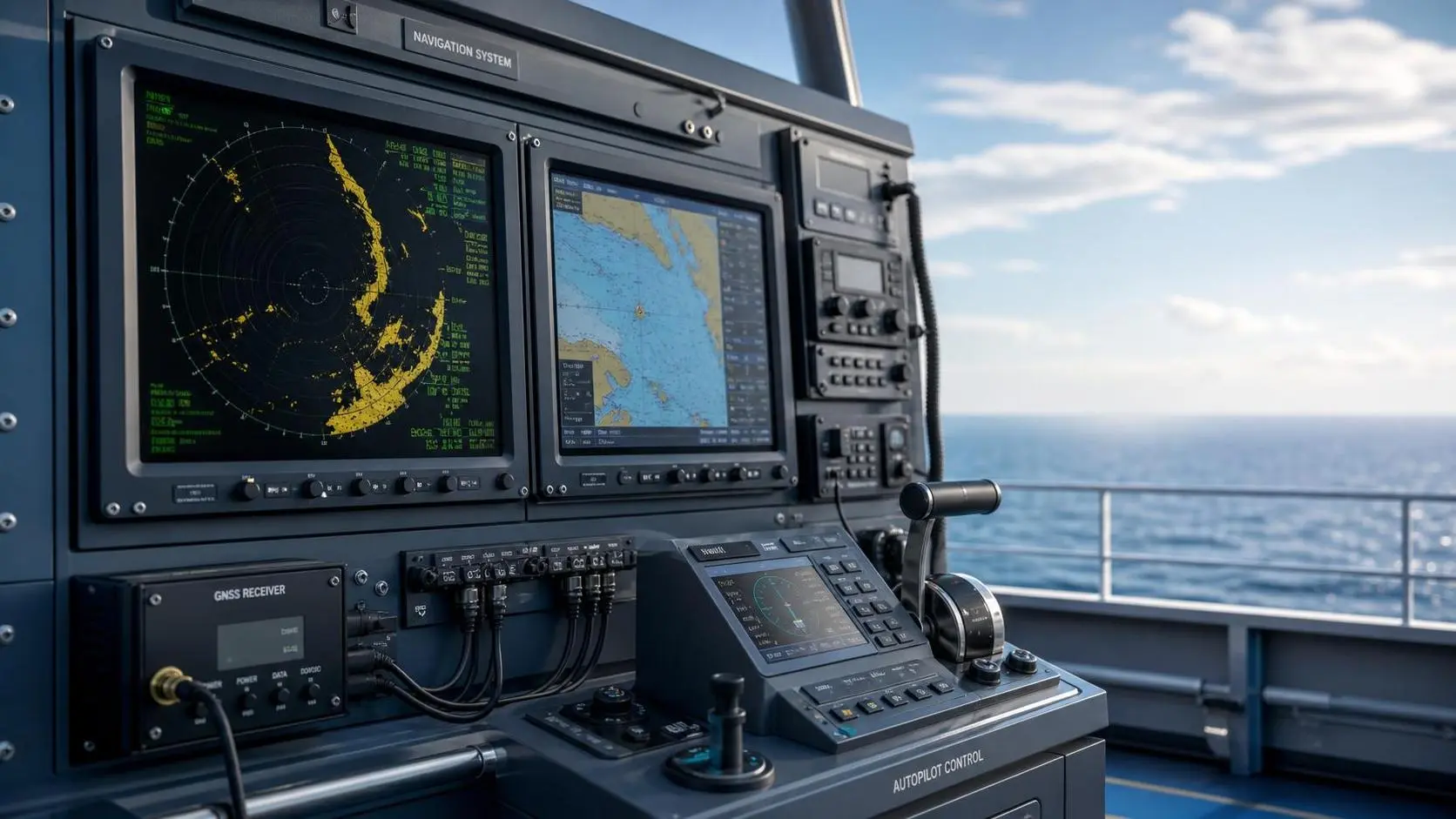
What Factors Drive Marine Navigation Components Cost in Commercial Vessel Projects?
Marine navigation components cost is shaped by integration, compliance, installation, and lifecycle support. Discover what drives pricing and how buyers can reduce risk while improving value.
How Much Does Seat Occupancy Sensing Cost? Key Pricing Factors for Buyers
Seat occupancy sensing price varies widely by technology, integration, and compliance needs. Learn the key cost drivers, avoid hidden fees, and make smarter buying decisions.
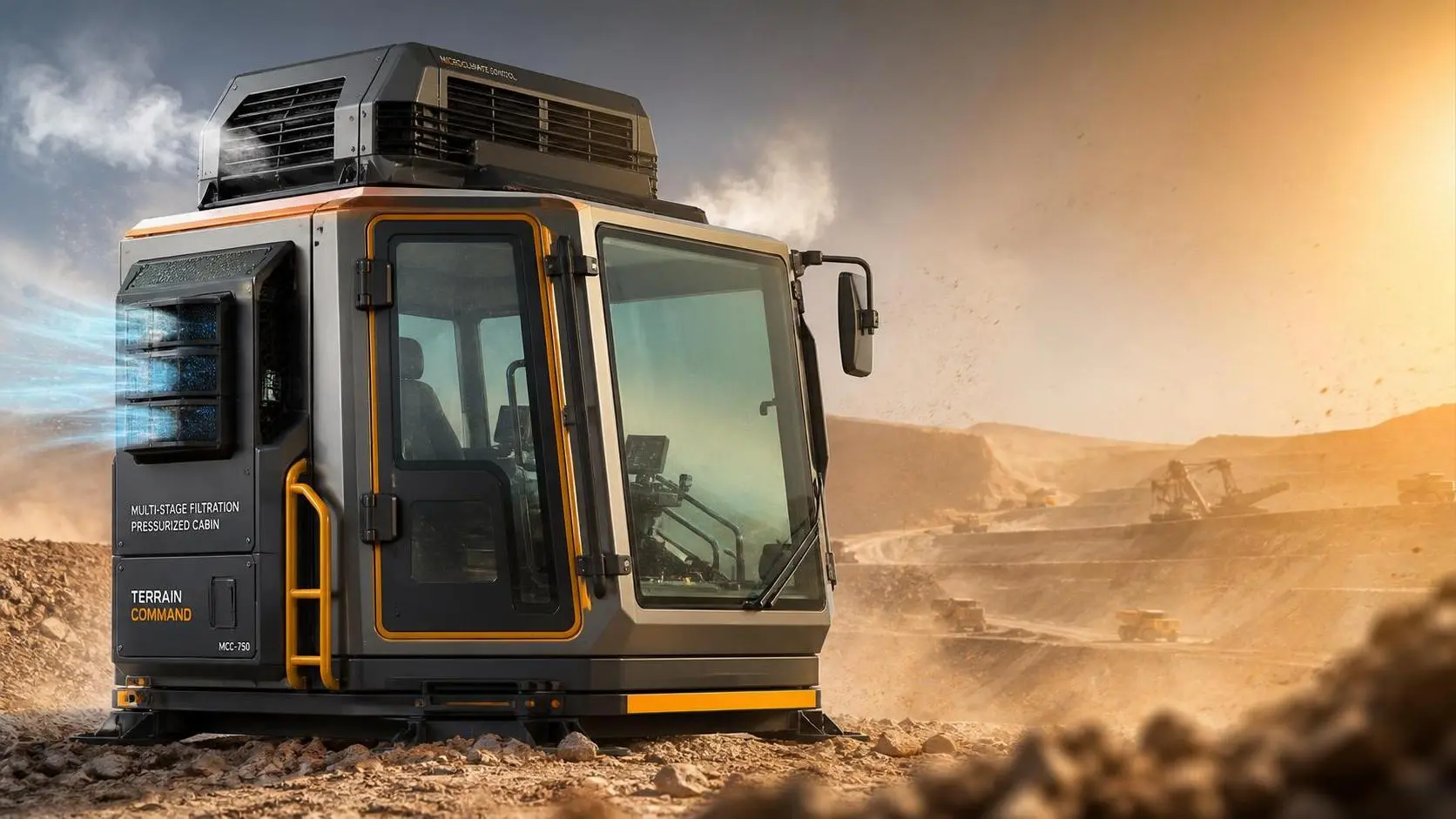
How to Specify Micro-Climate Control Cabins for Harsh Outdoor Worksites?
Micro-climate control cabins for harsh outdoor worksites: learn how to specify thermal control, filtration, pressurization, and durability for safer uptime and smarter buying.
How to Evaluate a B2B Product Knowledge Platform for Faster Procurement Decisions
B2B product knowledge platform procurement starts with reducing decision risk. Learn how to compare specs, compliance, and supplier data to speed sourcing with confidence.
Related News
- 00
0000-00
How to Choose a Marine Positioning Solutions Supplier in Europe for Offshore and Port Operations - 00
0000-00
Marine Positioning Solutions Provider Comparison: GNSS, Accuracy, and Integration Factors - 00
0000-00
Marine Electromagnetic Navigation Accuracy vs GNSS: Which Performs Better Near Interference? - 00
0000-00
Marine Electromagnetic Navigation Accuracy: What Affects Position Stability at Sea? - 00
0000-00
Marine Positioning Systems Exporter Selection: What to Check in GNSS Accuracy, Compliance, and Support
Weekly Insights
Stay ahead with our curated technology reports delivered every Monday.