Can an AIS Transponder Be Upgraded Without Full Replacement?
For vessel operators balancing compliance, situational awareness, and lifecycle costs, the answer depends on hardware architecture, software support, and evolving maritime regulations.
This guide examines practical AIS upgrade paths, from firmware and interface enhancements to Class A or Class B replacement decisions, helping fleets improve navigation intelligence without unnecessary disruption or expense.
What Vessel Operators Really Need to Know Before Upgrading AIS
The core search intent is practical: operators want to know whether an existing AIS installation can meet new operational needs without purchasing an entirely new system.
Most readers are not seeking a basic AIS definition. They need a decision framework covering compliance, technical compatibility, installation downtime, network integration, and total ownership cost.
In many cases, an AIS transponder can be improved through firmware, peripheral equipment, antenna work, or interface upgrades. However, some limitations require transponder replacement.
The critical distinction is between upgrading the AIS ecosystem and upgrading the AIS transponder itself. Supporting equipment is often replaceable independently; core radio hardware may not be.
Operators should first identify the business problem. Is the goal regulatory compliance, stronger bridge visibility, fleet monitoring, ECDIS integration, or better data quality?
A clear objective prevents unnecessary spending. Replacing a functioning Class A unit because of a chartplotter compatibility issue is rarely the most efficient solution.
Conversely, attempting to retain obsolete hardware may create compliance exposure, unreliable vessel reporting, unsupported software, and avoidable maintenance costs during critical voyages.
Start With the Difference Between Software Limits and Hardware Limits
Firmware upgrades are the least disruptive AIS improvement path. They can correct known faults, improve message handling, add supported functions, and maintain compatibility with approved standards.
However, firmware cannot change the fundamental radio class, transmission power, receiver design, approved message capacity, or environmental certification of an existing transponder.
A Class B AIS transponder cannot become a Class A unit through a software update. Their reporting behavior, transmission authority, power level, and regulatory application differ materially.
Similarly, an older Class A device may receive software maintenance but still lack the processing capacity, interfaces, security features, or approved functions found in current equipment.
Before authorizing any update, confirm the manufacturer, exact model, serial number, software version, and certification status. These details determine whether a valid upgrade path exists.
Manufacturers may publish approved firmware updates only through authorized service agents. This protects type approval, preserves configuration integrity, and reduces the risk of interrupted AIS transmissions.
Never treat AIS firmware as ordinary consumer software. A failed update or incorrect configuration can affect vessel identity, static voyage data, alarm behavior, and network communications.
Which AIS Components Can Usually Be Upgraded Separately?
Many AIS-related performance issues originate outside the transponder. A disciplined assessment should examine every connected component before the transponder is considered obsolete.
The VHF antenna system is often the highest-value upgrade area. Antenna placement, cable loss, connectors, corrosion, grounding, and splitter condition directly affect AIS reception and transmission.
Replacing degraded coaxial cable or a poorly positioned antenna can improve real-world AIS performance more than replacing a transponder that remains electrically sound and compliant.
GNSS input equipment may also be upgraded separately. A more capable approved position source can improve resilience, accuracy, or integration where the AIS supports external positioning input.
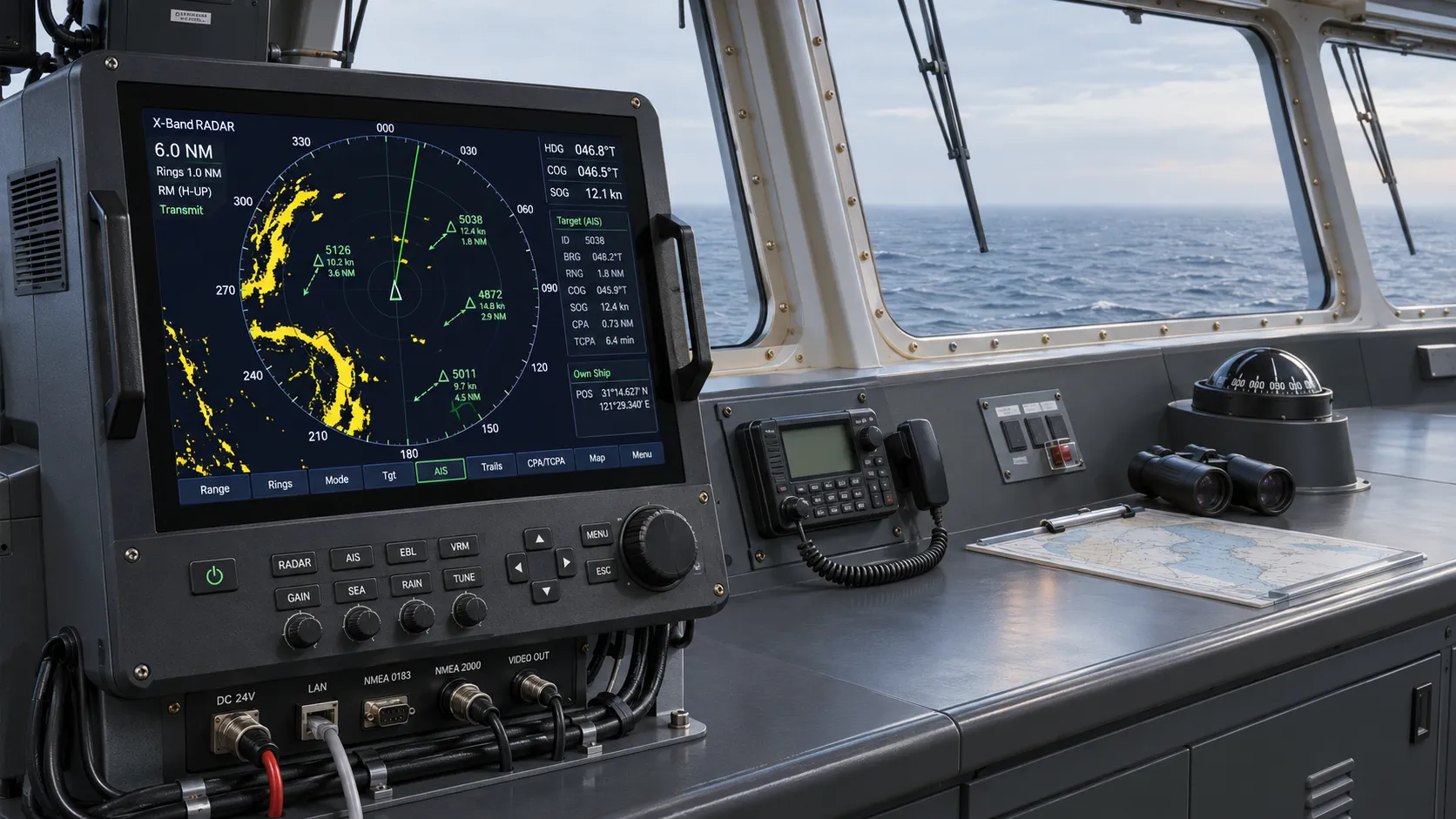
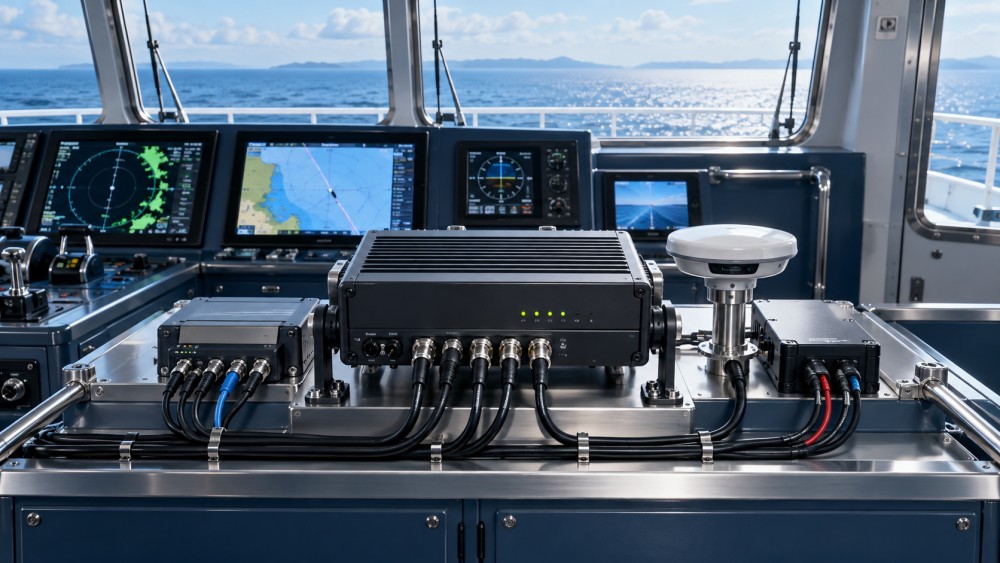
Bridge displays, chartplotters, radar overlays, ECDIS interfaces, and voyage data networks can commonly be modernized while retaining the original AIS radio unit.
An NMEA 0183 to NMEA 2000 gateway, serial multiplexer, or certified network converter can resolve data-sharing limitations without requiring a complete AIS replacement project.
For fleet operators, shore-side monitoring software may be the real constraint. Upgrading onboard connectivity or fleet platforms can improve reporting workflows while preserving compliant vessel hardware.
Power supplies, circuit protection, display units, pilot plugs, and dedicated alarms may also be serviceable independently, depending on the AIS manufacturer’s approved installation architecture.
When a Firmware or Interface Upgrade Is the Right Choice
An incremental upgrade is usually appropriate when the installed transponder remains type-approved, reliable, supportable, and suitable for the vessel’s present operating category.
This approach works well when the operator needs better integration rather than a different AIS class. Typical requirements include chartplotter visibility, ECDIS data flow, or fleet tracking.
Firmware updates can be valuable when manufacturers release corrections for AIS target handling, message processing, regional channel management, or interoperability with newer navigation equipment.
Interface upgrades are often justified when legacy serial ports limit bridge modernization. Properly selected gateways can distribute AIS data to multiple displays without compromising approved connections.
Operators should verify baud rates, sentence support, output capacity, isolation requirements, and data priority. A poorly designed network can cause dropped targets or confusing duplicate information.
For commercial vessels, any modification should be evaluated against the approved bridge configuration, flag-state requirements, class rules, and the equipment manufacturer’s installation guidance.
The commercial benefit is straightforward: targeted upgrades reduce capital expenditure, shorten yard time, preserve familiar crew workflows, and extend useful equipment life responsibly.
When Full AIS Transponder Replacement Is Usually Necessary
Replacement becomes the practical choice when the AIS unit no longer meets mandatory carriage requirements, lacks manufacturer support, repeatedly fails, or cannot maintain its approved performance.
A vessel moving from voluntary leisure use into a regulated commercial role may need a different AIS class. This is a compliance decision, not merely an equipment preference.
Class A AIS is generally required for SOLAS-regulated ships and other vessels subject to specific national or regional carriage regulations. Operators must confirm applicable rules directly.
Class B AIS is designed for many smaller commercial, fishing, workboat, and recreational applications, but it does not provide the same transmission behavior or regulatory standing as Class A.
Replacing the unit is also sensible when repair costs rise, spare parts disappear, displays become unreadable, or the device cannot connect reliably to required bridge systems.
Cybersecurity and lifecycle support can influence the decision. Older equipment may lack current update pathways, documented service support, secure configuration procedures, or vendor technical assistance.
A new transponder may offer clearer diagnostics, better GNSS resilience, improved interface options, integrated display functions, and easier data distribution across a modern bridge network.
Still, replacement should not be assumed to be simple. It can require antenna verification, new cabling, configuration, commissioning, surveys, crew familiarization, and documentation updates.
How Class A and Class B Decisions Affect Upgrade Planning
The question “Can an AIS transponder be upgraded without replacing the whole system?” often becomes a class-selection question once compliance or operational requirements change.
Class A units are built for higher-demand commercial operation. They generally transmit more frequently, support additional operational information, and integrate into regulated bridge arrangements.
Class B units offer lower-cost AIS participation for suitable vessels, improving visibility and awareness while typically operating under different transmission and equipment requirements.
Operators should not choose based only on initial purchase price. The correct class depends on vessel type, tonnage, route, flag, cargo, passenger activity, and local navigation rules.
A fishing vessel, harbor tug, charter craft, offshore support vessel, and private yacht can face very different AIS obligations even when operating in the same waters.
Where Class A replacement is necessary, much of the existing installation may still be reusable. Antennas, GNSS feeds, displays, network cabling, and power infrastructure require assessment.
That distinction matters financially. Replacing the transponder does not automatically mean replacing every connected navigation component or rebuilding the entire bridge electronics architecture.
A Practical Assessment Process Before Spending Capital
Begin by documenting the existing installation. Record AIS model details, approval labels, software revision, connected displays, GNSS source, antenna type, cable routes, and power arrangement.
Next, define the trigger for change. Separate mandatory compliance needs from operational preferences, maintenance concerns, and desired fleet-management capabilities.
Ask the manufacturer or an authorized marine electronics service provider whether the installed model supports approved firmware, display, interface, or positioning-source upgrades.
Request written confirmation of compatibility. Verbal assumptions about NMEA connections, pilot plug arrangements, or external GNSS inputs can create expensive commissioning delays later.
Evaluate the antenna system using inspection and appropriate test procedures. Check cable attenuation, connectors, splitter performance, power supply stability, and physical antenna separation.
Then calculate the full lifecycle cost of each option. Include equipment, labor, survey attendance, downtime, documentation, crew training, future support, and likely maintenance exposure.
For fleet managers, standardization can outweigh individual vessel savings. Common equipment platforms simplify spares, training, remote support, maintenance planning, and configuration control.
Finally, schedule work around planned maintenance periods whenever possible. AIS changes should be tested carefully before departure, particularly on vessels operating in congested or regulated waters.
Compliance Risks That Should Not Be Treated as Technical Details
AIS equipment supports safety, identification, and traffic awareness. Its configuration must accurately reflect vessel identity, dimensions, call sign, MMSI, and operational status information.
Incorrect static data can undermine the safety value of AIS even when the radio operates normally. It may also create regulatory issues during inspections or incident investigations.
Changes involving MMSI programming, vessel ownership, flag transfer, or major equipment replacement should follow the responsible authority’s rules and the manufacturer’s authorized procedures.
Operators should also recognize that AIS is an aid to navigation, not a substitute for watchkeeping, radar, visual observation, collision regulations, or professional judgment.
When integrating AIS with ECDIS or radar, crews need clear understanding of target filtering, lost-target alerts, data latency, symbol interpretation, and alarm management.
Modernization should improve decision quality, not overload the bridge. Poor alarm settings or crowded displays can reduce situational awareness despite technically successful equipment upgrades.
Choosing the Most Cost-Effective AIS Upgrade Strategy
The lowest-cost option is not always the least expensive over time. A minor repair may defer replacement but can become inefficient when service calls and downtime accumulate.
Conversely, full replacement may be premature where a supported firmware update, antenna correction, or interface gateway solves the actual operational problem.
Use a three-option comparison: retain and service, upgrade selected components, or replace the transponder. Score each option against compliance, reliability, capability, downtime, and lifecycle cost.
For vessels approaching refit, drydock, or bridge renewal, replacement can be strategically efficient because installation labor and system testing may be shared with planned works.
For recently installed, approved equipment with limited connectivity, targeted upgrades usually provide better return. The key is proving that the AIS core remains fit for purpose.
Procurement teams should also consider supplier support regions, spare availability, training materials, warranty conditions, authorized service coverage, and compatibility with the wider navigation suite.
Conclusion: Upgrade the System Where It Creates Real Value
Can an AIS transponder be upgraded without replacing the whole system? Often, yes. Firmware, antenna, GNSS, display, interface, and network improvements can extend useful service life.
But an upgrade cannot transform one AIS class into another or overcome obsolete, unsupported, non-compliant, or physically limited radio hardware. Those situations require replacement.
The strongest decision begins with compliance requirements, then verifies technical compatibility, examines connected equipment, and compares lifecycle costs instead of focusing only on purchase price.
For vessel operators, the objective is not simply newer equipment. It is dependable navigation intelligence, accurate vessel visibility, manageable maintenance, and a bridge system that supports safer operations.