
Navigation Compliance Standards Explained: What Vessel Operators Must Check Before Approval
Why do navigation compliance standards matter before a vessel is approved?
Before approval, a vessel is not judged by one device alone.
It is judged by whether its navigation chain works as a reliable system.
That is the practical meaning of navigation compliance standards.
They connect chart integrity, bridge electronics, crew readiness, radio capability, and maintenance evidence into one approval logic.
In real operations, a vessel may have modern hardware yet still fail review.
The usual reason is not missing technology, but weak verification.
An outdated ECDIS database, expired certificates, poor alarm settings, or undocumented repairs can all raise compliance concerns.
For a platform like GNCS, this matters beyond shipping alone.
Its broader focus on perception, containment, and safety intelligence shows a familiar pattern across mobility sectors.
Whether in marine navigation or cabin safety, approval depends on traceable performance under risk.
So when people search navigation compliance standards, they are usually asking a deeper question.
What must be checked before authorities, clients, or classification bodies trust a vessel to operate safely?
What exactly falls under navigation compliance standards?
The term sounds narrow, but the scope is wider than route planning.
It usually covers technical conformity, operational readiness, and documentary proof.
A useful way to understand it is to divide checks into five blocks.
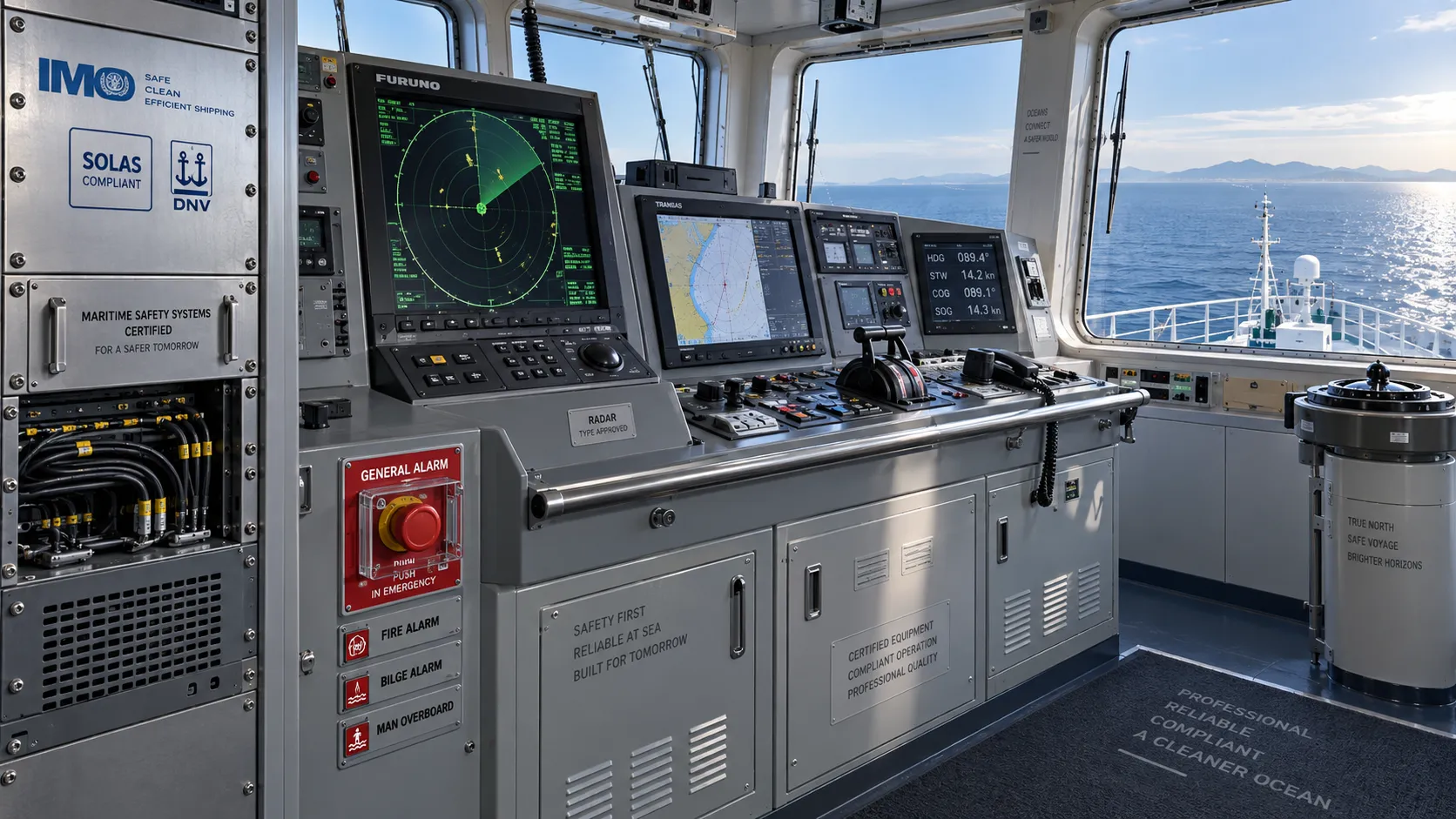
- Navigation equipment status, including radar, ECDIS, GNSS, AIS, gyro, and speed log.
- Chart and publication validity, especially corrections, licenses, and update history.
- Communication readiness, such as GMDSS fit, distress capability, and antenna condition.
- Crew qualification and watchkeeping evidence, including familiarization records.
- Maintenance, testing, and nonconformity closure, showing that issues are controlled.
The important point is that navigation compliance standards rarely accept assumptions.
A system is considered compliant when it is installed correctly, functions correctly, and can be demonstrated consistently.
This is why approval reviews often examine logs and routines as closely as equipment labels.
In that sense, compliance is both a technical and behavioral discipline.
Which checks are most likely to delay approval?
Operators often expect major failures to cause delays.
More common are smaller gaps that suggest poor control.
The table below highlights typical approval checkpoints and what reviewers usually want to see.
This is where many approval delays begin.
A reviewer may tolerate a managed defect.
They are less comfortable with uncertainty, missing records, or systems that no one can explain clearly.
Is compliant equipment enough, or does the crew side matter just as much?
The crew side matters just as much, and often more.
A compliant bridge setup can still become a risk if operators do not understand modes, alarms, limitations, or fallback procedures.
This is especially relevant in vessels using integrated navigation suites.
When data from radar, AIS, sonar, autopilot, and satellite positioning is stitched together, one weak handoff can affect the whole picture.
That system view aligns with GNCS thinking.
The portal treats safety as an intelligence chain, not a list of isolated parts.
In marine operations, that means the operator must verify more than installation certificates.
- Bridge teams should know which sensor is primary and which is cross-check only.
- Alarm management should be understood, not merely accepted by habit.
- Manual navigation skills should still exist when digital layers degrade.
- Shift handovers should capture operational limitations, not only route progress.
When approval teams ask questions onboard, they often test this human layer indirectly.
If answers are vague, navigation compliance standards may appear satisfied on paper but weak in practice.
Where do operators usually misunderstand navigation compliance standards?
One common misunderstanding is treating compliance as a yearly event.
In practice, approval is only a snapshot of everyday control.
If records are rushed before inspection, inconsistencies appear quickly.
Another mistake is assuming manufacturer conformity equals operational conformity.
A certified device can still fail the compliance expectation if software is outdated or settings are poorly managed.
There is also confusion between safety presence and safety readiness.
For example, a backup system may exist physically but not be tested under realistic conditions.
The same logic appears across transport safety fields.
A restraint component, radar array, or smart seat assembly gains trust through validated performance, not catalog claims.
A practical check is to ask three questions before approval review.
- Can the vessel prove each critical function works today?
- Can the crew explain operating limits without guessing?
- Can records show issues were corrected in a controlled way?
If any answer is uncertain, the risk is not theoretical.
It can affect approval timing, insurer confidence, and operational continuity.
How should approval preparation be organized to reduce last-minute surprises?
The best preparation is staged, not rushed.
A few weeks before review, start with document alignment.
Check certificates, chart subscriptions, maintenance history, radio records, and familiarization logs.
Then move to live equipment verification.
This should include sensor comparison, alarm testing, power backup checks, and route planning workflow confirmation.
After that, review the human interface.
Bridge teams should be able to demonstrate normal use, degraded mode use, and escalation steps.
A simple preparation sequence often works well.
- Map all items required by flag, class, and route-specific rules.
- Identify open defects that touch navigation compliance standards directly.
- Run an internal bridge walkthrough using approval-style questions.
- Correct missing evidence, not just missing hardware.
- Record final checks in a way that is easy to audit.
This approach saves time because it mirrors how reviewers think.
They are not only asking whether equipment exists.
They are judging whether the navigation safety system is credible, current, and repeatable.
What is the simplest way to judge readiness before seeking approval?
A useful rule is this.
If the vessel cannot show clear evidence for each critical navigation function, it is not truly ready.
Navigation compliance standards are not just technical rules.
They are a discipline for proving reliable perception, decision support, and safe execution at sea.
That is why the topic continues to attract attention across the wider mobility safety landscape.
The same approval mindset used in marine systems also shapes how advanced safety components are judged elsewhere.
For the next step, it helps to build a short readiness checklist around actual operations.
Review chart validity, communication health, crew familiarity, maintenance closure, and evidence quality together.
Then compare those findings against the navigation compliance standards that apply to the vessel’s route and authority.
That gives a more realistic picture than relying on certificates alone.
And it usually leads to safer approval, smoother inspection, and fewer operational surprises after departure.
Related News

How to Specify Integrated Marine Electronics for Reliable Bridge Operations
Integrated marine electronics: learn how to specify reliable bridge systems with clear data flows, redundancy, alarm control, lifecycle interfaces, and operational testing.

How to Evaluate Navigation Radar Manufacturers for Commercial Vessel Projects
Navigation radar manufacturers: learn how to compare performance, compliance, integration, support, and lifecycle cost for commercial vessel projects.

How Adjustable Cabin Ergonomics Reduce Operator Fatigue in Long-Shift Vehicles
Adjustable cabin ergonomics reduces operator fatigue through better seating, reach, visibility, vibration control, and climate comfort for safer long-shift vehicles.

How Rear-Impact Safety Components Work Together to Protect Vehicle Occupants
Explore how automotive safety components for rear impact work together—from crash structures and seats to head restraints and belts—to enhance occupant protection.
How to Evaluate a Marine Safety Systems Manufacturer for Vessel Compliance and Reliability
Marine safety systems manufacturer evaluation guide: verify compliance, engineering quality, lifecycle costs, and global service support for safer, reliable vessel operations.

Crash Test Regulations for Seatbelts: Key Compliance Requirements Explained
Crash test regulations seatbelts explained: explore FMVSS, UN rules, anchorage strength, and dynamic restraint testing for safer, compliant vehicle systems.

How to Calculate the Total Cost of Automotive Lightweighting for a Vehicle Program
Automotive lightweight solutions cost: learn how to calculate program-level costs, including materials, tooling, joining, validation, risk, and vehicle-level value.

How Automotive Seat Occupancy Sensing Improves Airbag Deployment Decisions
Automotive seat occupancy sensing helps optimize airbag deployment decisions, improving passenger classification, safety diagnostics, and compliance across real-world conditions.

What Drives Lightweight Body Component Costs in High-Volume Vehicle Programs?
Lightweight body components cost depends on material yield, forming, joining, tooling, validation, and logistics. Explore proven ways to optimize total vehicle program cost.
Related News
- 00
0000-00
How to Specify Integrated Marine Electronics for Reliable Bridge Operations - 00
0000-00
How Adjustable Cabin Ergonomics Reduce Operator Fatigue in Long-Shift Vehicles - 00
0000-00
How to Evaluate a Marine Safety Systems Manufacturer for Vessel Compliance and Reliability - 00
0000-00
How to Calculate the Total Cost of Automotive Lightweighting for a Vehicle Program - 00
0000-00
What Drives Lightweight Body Component Costs in High-Volume Vehicle Programs?
Weekly Insights
Stay ahead with our curated technology reports delivered every Monday.