
How to Evaluate Smart Sensing Solutions for Industrial Monitoring and Predictive Maintenance
How to Evaluate Smart Sensing Solutions for Industrial Monitoring and Predictive Maintenance
Choosing the right smart sensing solution for industrial monitoring and predictive maintenance is no longer just a technical decision. It directly shapes uptime, safety, maintenance cost, and project ROI.
In many operations, teams face a crowded market. Vendors promise better visibility, faster alerts, and easier deployment. Yet the real question is simpler: which smart sensing option fits your assets, risks, and scale?
That matters even more in safety-critical environments. GNCS follows sectors where precision perception and physical protection cannot fail, from marine navigation systems to smart seating and passive safety components.
The same evaluation logic applies across industries. A strong smart sensing strategy must connect sensor performance, operational context, compliance, and long-term data value. This guide offers a practical decision framework.
Start with the Business-Critical Monitoring Problem
Before comparing products, define the failure modes that actually matter. This step prevents overbuying features and underestimating integration risk.
For example, a marine electronics platform may need early warning on vibration, heat drift, and power instability. A seat assembly line may care more about torque consistency, pressure mapping, and motor wear.
In practice, the best smart sensing decision starts with three questions:
- Which asset failures create the highest downtime or safety impact?
- Which operating variables change before failure occurs?
- How fast must the system detect and respond to those changes?
This also helps separate condition monitoring from predictive maintenance. Not every use case needs advanced prediction. Sometimes reliable threshold monitoring creates faster value.
A clear problem definition keeps the smart sensing evaluation grounded in business outcomes, not sales claims.
Match Sensor Type to Failure Physics
A common mistake is choosing sensors by popularity instead of physical relevance. Good smart sensing depends on matching the sensing method to the way equipment actually degrades.
Rotating equipment often benefits from vibration, acoustic, temperature, and current sensing. Hydraulic systems may need pressure, flow, contamination, and thermal data.
In high-precision environments, sensor fusion can be a better choice. Combining multiple signals often reduces false alarms and gives earlier failure visibility.
What to compare at this stage
- Measurement range and resolution
- Sampling rate and response speed
- Sensitivity to noise and environmental interference
- Calibration stability over time
- Cross-sensitivity to unrelated variables
When smart sensing is used near electromagnetic systems, moving structures, or impact-related components, interference tolerance becomes especially important.
Evaluate Data Quality Before Analytics Claims
Advanced dashboards look impressive. But predictive maintenance fails if input data is weak, inconsistent, or poorly labeled.
A practical smart sensing review should focus first on signal integrity. Ask how the solution handles drift, packet loss, timestamp alignment, and edge-to-cloud synchronization.
From recent market changes, one clearer signal stands out. Buyers now care less about raw sensor counts and more about trusted, decision-ready data.
Key data questions
- How is data validated at the edge?
- Can the system flag sensor failure separately from asset failure?
- Are timestamps accurate enough for multi-sensor correlation?
- How are missing values handled in alerts and models?
- Is historical data accessible for root-cause analysis?
If a vendor cannot explain data reliability clearly, the smart sensing solution may look scalable but perform poorly in real operations.
Check Integration Effort Across the Existing Stack
Integration complexity often decides project success more than sensor accuracy. Even a strong smart sensing platform can stall if it does not fit plant systems, field protocols, or maintenance workflows.
Look at PLC, SCADA, MES, CMMS, and cloud connectivity early. Also check whether the vendor supports OPC UA, Modbus, CAN, MQTT, or other needed interfaces.
This is where many industrial monitoring projects lose momentum. Teams underestimate site-specific wiring, gateway placement, cybersecurity review, and data mapping effort.
A useful integration checklist
- Supports current control and enterprise systems
- Works with existing network and power constraints
- Offers APIs for reporting and workflow automation
- Allows edge processing where latency matters
- Defines clear ownership for commissioning and support
A smart sensing deployment should reduce friction, not create a separate digital island.
Assess Durability, Safety, and Compliance Fit
Industrial monitoring hardware lives in the real world. Heat, moisture, vibration, dust, shock, and EMI can damage sensing quality long before complete failure appears.
That means smart sensing evaluation must include environmental durability, not just software capability. Review enclosure ratings, mounting robustness, and long-cycle stability.
For regulated sectors, compliance fit is equally important. Marine systems, mobility platforms, and safety-related components often face strict testing and documentation demands.
A smart sensing supplier should explain relevant certifications, traceability, firmware control, and change management. If not, lifecycle risk grows quietly.
Compare Scalability, Not Just Pilot Performance
Many solutions work in a pilot. Fewer work across multiple sites, asset types, and operating teams. This is why smart sensing selection should include a scale-up view from day one.
Ask what happens when device counts grow, data volume expands, or analytics rules change. Licensing models and storage costs can shift the economics quickly.
More importantly, check whether templates, dashboards, and alarm logic can be reused across assets. Repeatability is often where smart sensing creates enterprise value.
Look Beyond Hardware to Vendor Capability
A smart sensing solution is never just a device purchase. It is a long-term operating capability involving firmware, analytics logic, support quality, and roadmap alignment.
This is especially relevant when assets have long service lives. In mobility, navigation, and safety-linked systems, product continuity and engineering support can matter as much as first-year performance.
Review the vendor on four levels:
- Domain knowledge in your operating environment
- Service capability during deployment and tuning
- Cybersecurity and update governance
- Roadmap stability and component availability
A lower-cost smart sensing option may become expensive if support, updates, or spare parts are unreliable.
Build a Practical Scoring Model for Selection
To make decisions clearer, use a weighted scoring model. This keeps discussions objective and helps align engineering, operations, and finance.
A useful smart sensing scorecard often includes technical fit, data quality, integration effort, lifecycle cost, compliance fit, and supplier capability.
Example scoring categories
- Failure detection relevance
- Signal quality and reliability
- Integration complexity
- Deployment speed
- Scalability and reuse
- Compliance and cybersecurity
- Total cost of ownership
- Vendor support strength
Keep the model simple enough to use. If the scoring system becomes too complex, teams stop trusting it.
In actual business settings, a good smart sensing choice is rarely the most advanced option. It is the one that performs reliably within operational reality.
Final Decision: Choose for Measurable Value
The strongest smart sensing decisions balance precision, practicality, and long-term resilience. They begin with failure physics, test data quality carefully, and treat integration as a core workstream.
They also reflect a broader shift in industrial monitoring. Buyers increasingly want systems that support predictive maintenance without adding digital complexity that operations cannot absorb.
For organizations working around navigation, safety, structural performance, or intelligent cabins, that discipline is even more important. Precision perception only creates value when it supports trusted action.
The next step is straightforward. Define your top three failure risks, map the signals that matter, and compare each smart sensing candidate against a weighted operational scorecard.
That approach makes selection faster, more defensible, and far more likely to deliver lasting predictive maintenance results.
Related News
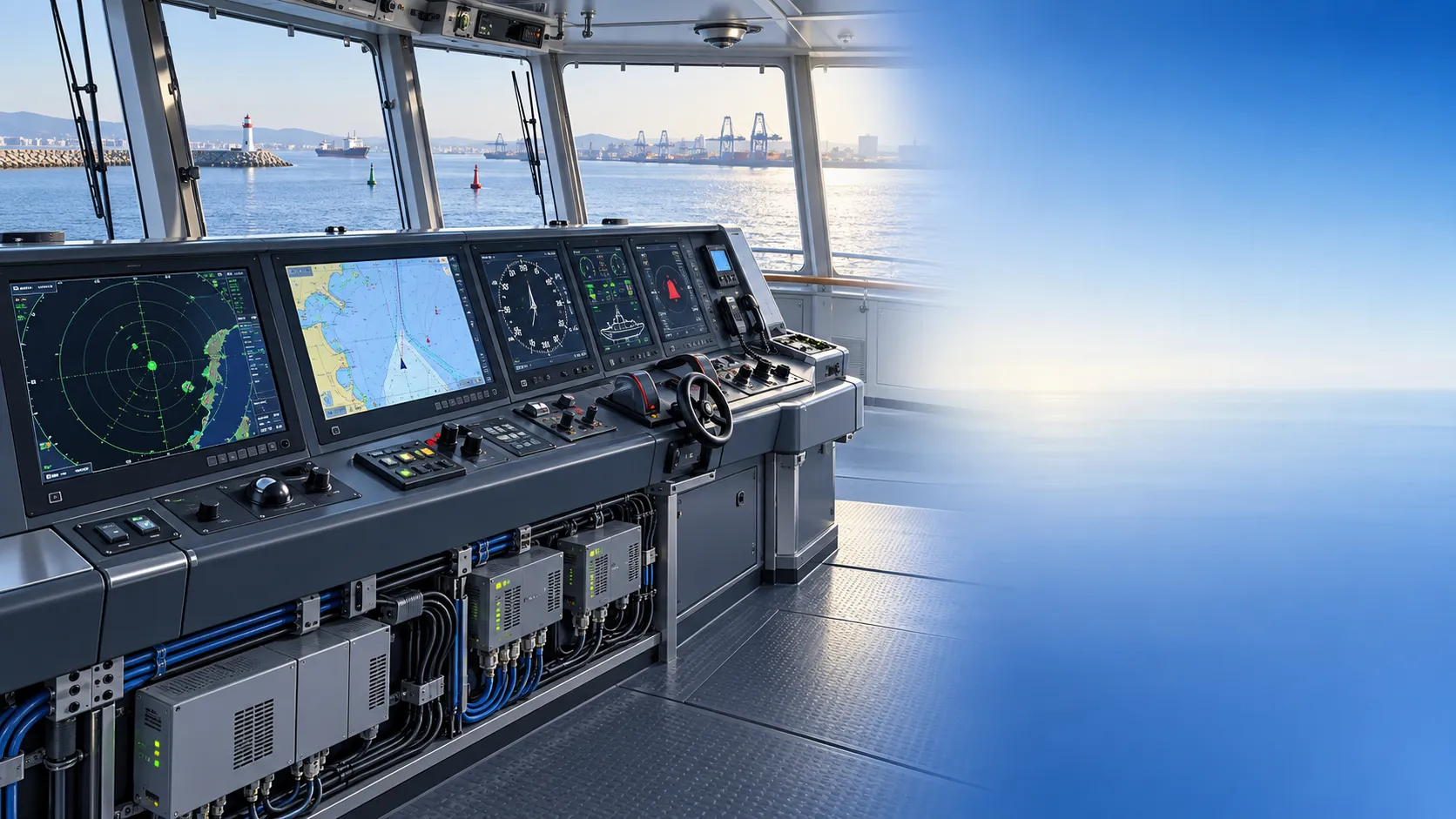
How to Specify Integrated Marine Electronics for Reliable Bridge Operations
Integrated marine electronics: learn how to specify reliable bridge systems with clear data flows, redundancy, alarm control, lifecycle interfaces, and operational testing.

How to Evaluate Navigation Radar Manufacturers for Commercial Vessel Projects
Navigation radar manufacturers: learn how to compare performance, compliance, integration, support, and lifecycle cost for commercial vessel projects.

How Adjustable Cabin Ergonomics Reduce Operator Fatigue in Long-Shift Vehicles
Adjustable cabin ergonomics reduces operator fatigue through better seating, reach, visibility, vibration control, and climate comfort for safer long-shift vehicles.

How Rear-Impact Safety Components Work Together to Protect Vehicle Occupants
Explore how automotive safety components for rear impact work together—from crash structures and seats to head restraints and belts—to enhance occupant protection.
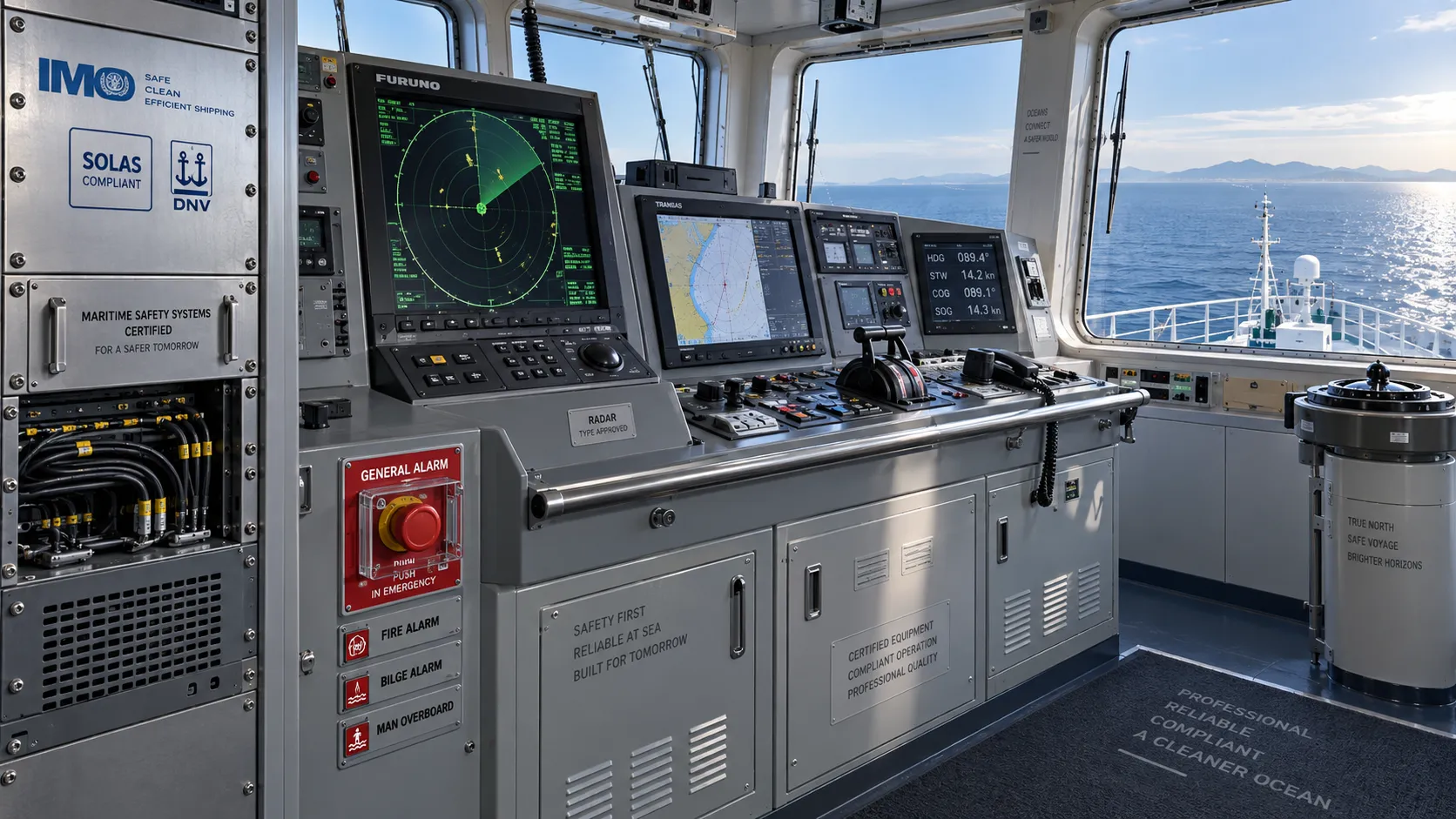
How to Evaluate a Marine Safety Systems Manufacturer for Vessel Compliance and Reliability
Marine safety systems manufacturer evaluation guide: verify compliance, engineering quality, lifecycle costs, and global service support for safer, reliable vessel operations.
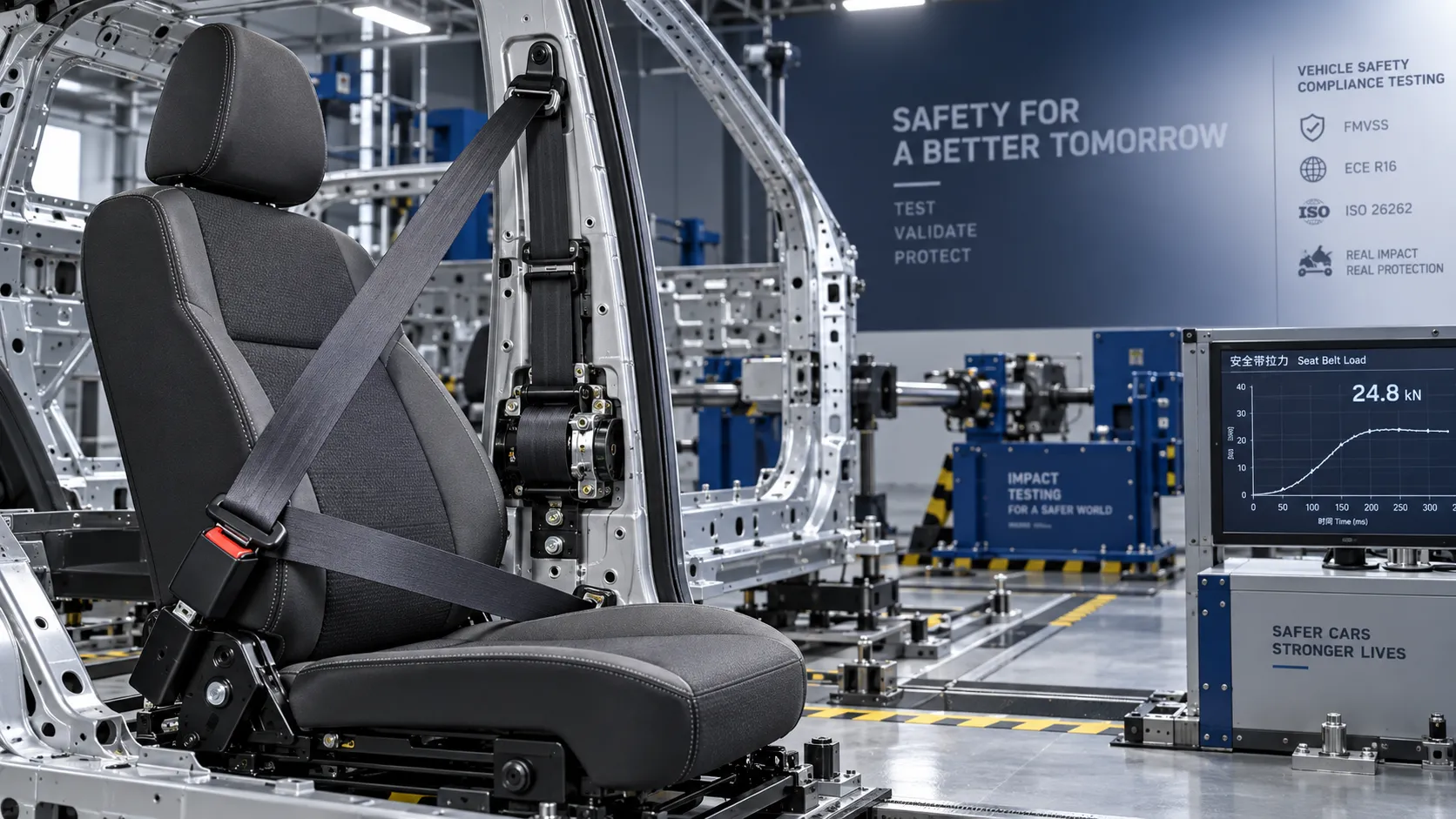
Crash Test Regulations for Seatbelts: Key Compliance Requirements Explained
Crash test regulations seatbelts explained: explore FMVSS, UN rules, anchorage strength, and dynamic restraint testing for safer, compliant vehicle systems.

How to Calculate the Total Cost of Automotive Lightweighting for a Vehicle Program
Automotive lightweight solutions cost: learn how to calculate program-level costs, including materials, tooling, joining, validation, risk, and vehicle-level value.

How Automotive Seat Occupancy Sensing Improves Airbag Deployment Decisions
Automotive seat occupancy sensing helps optimize airbag deployment decisions, improving passenger classification, safety diagnostics, and compliance across real-world conditions.

What Drives Lightweight Body Component Costs in High-Volume Vehicle Programs?
Lightweight body components cost depends on material yield, forming, joining, tooling, validation, and logistics. Explore proven ways to optimize total vehicle program cost.
Related News
- 00
0000-00
How to Specify Integrated Marine Electronics for Reliable Bridge Operations - 00
0000-00
How Adjustable Cabin Ergonomics Reduce Operator Fatigue in Long-Shift Vehicles - 00
0000-00
How to Evaluate a Marine Safety Systems Manufacturer for Vessel Compliance and Reliability - 00
0000-00
How to Calculate the Total Cost of Automotive Lightweighting for a Vehicle Program - 00
0000-00
What Drives Lightweight Body Component Costs in High-Volume Vehicle Programs?
Weekly Insights
Stay ahead with our curated technology reports delivered every Monday.