
Crash Test Regulations by Market: What Buyers Should Verify Before Sourcing Components
Crash Test Regulations by Market: What Should Be Checked Before Any Component Is Sourced?
Crash test regulations do not move at the same speed across markets.
A part accepted in one region may fail validation in another.
That gap creates real sourcing risk.
It can lead to redesign, delayed launches, repeat testing, and avoidable logistics cost.
This matters most for body stampings, airbags, seatbelt systems, and seat structures.
These parts sit directly inside the compliance chain.
In practice, the better question is not whether a supplier “passes tests.”
The better question is which crash test regulations were used, where, and with what evidence.
GNCS follows this issue closely because global mobility safety now depends on connected judgment.
From lightweight structures to passive restraint systems, compliance decisions are becoming more technical and more regional.
Are crash test regulations the same as crash ratings?
Not exactly, and mixing them up is a common sourcing mistake.
Crash test regulations usually refer to legal or homologation requirements.
Crash ratings often come from consumer programs such as Euro NCAP or IIHS.
Both influence design decisions, but they do not serve the same purpose.
A component may satisfy baseline regulation and still underperform in a tougher rating protocol.
That difference affects sourcing strategy.
For example, seat frames, pretensioners, and side-impact parts may need extra performance margin.
The reason is simple.
Vehicle platforms are often engineered for market access and brand safety targets at the same time.
When reviewing supplier claims, verify whether the evidence supports regulatory approval, consumer score performance, or both.
A quick way to separate the two
Which market differences matter most when sourcing safety-related parts?
The biggest differences usually appear in test protocol, dummy selection, impact speed, and reporting format.
Regional documentation rules can also change the approval path.
A supplier may show strong data from one country, yet that data may not transfer cleanly.
This is especially important for multi-market vehicle programs.
More common problem areas include:
- Side-impact components validated under one geometry but not another.
- Seatbelt systems tested with different restraint calibration assumptions.
- Airbag assemblies supported by outdated inflator or sensor documentation.
- Body stampings optimized for mass reduction but not local intrusion limits.
At GNCS, this cross-market tension appears often in intelligence tracking.
Lightweight design, occupant containment, and regional rules increasingly influence one another.
That means sourcing cannot rely on a generic “global compliant” statement.
It needs market-by-market proof.
What should be verified in supplier test evidence before approval?
Test evidence should be readable, current, and linked to the exact part configuration.
A polished presentation is not enough.
The most useful review starts with traceability.
Check whether the report names the part number, revision level, material grade, and assembly condition.
Then confirm whether the lab, method, and test date still support the target program.
In actual sourcing reviews, these points deserve attention:
- Was the test completed under the right crash test regulations for the destination market?
- Did the sample reflect production tooling, or only prototype conditions?
- Were welds, coatings, foam density, brackets, or fasteners identical to sourced parts?
- Does the report include failure mode notes, not just pass statements?
- Are change-control records available for later audits?
This matters because many failures are not dramatic lab failures.
They are paperwork failures, specification mismatches, or uncontrolled engineering changes.
Those issues are expensive because they surface late.
Supplier evidence checklist
How do crash test regulations affect cost, lead time, and resourcing decisions?
Usually through hidden cost, not just unit price.
A cheaper part can become expensive if it needs repeat validation.
The same is true when one supplier supports only one market set.
Crash test regulations shape cost in several ways.
- Material upgrades may be needed for higher intrusion or energy absorption thresholds.
- Documentation packages may require third-party translation, certification, or local formatting.
- Program timing may stretch if local witnessing or new test builds are required.
- Dual sourcing may be necessary when one validated design cannot cover all destinations.
In body structures, lightweighting decisions can complicate this balance.
Hot-stamped steel, aluminum, or magnesium solutions may reduce mass.
Yet they also change joining methods, deformation behavior, and validation effort.
For seat and restraint systems, calibration and integration work often drive the schedule more than the hardware itself.
So when comparing quotes, include validation transferability as a commercial factor.
That step gives a more honest landed cost.
Where do sourcing teams misread compliance risk most often?
One frequent mistake is accepting a pass claim without checking boundary conditions.
Another is assuming similar markets accept the same evidence package.
That is not always true.
The risk grows when suppliers serve marine electronics, cabin systems, and automotive safety from mixed compliance workflows.
GNCS often highlights this broader pattern.
High-reliability sectors reward technical credibility, but only when evidence is structured for the right approval environment.
A few warning signs deserve extra caution:
- “Equivalent standard” language without detailed correlation data.
- Outdated reports reused after design optimization.
- Missing linkage between simulation, sled test, and full-vehicle evidence.
- No clear owner for homologation documents after nomination.
More common than outright fraud is partial truth.
A supplier may be technically strong, yet not prepared for the target market paperwork burden.
That still creates sourcing exposure.
What is the smartest next step before locking a source?
Start by mapping each component to its destination market and approval path.
Then request evidence against those exact crash test regulations.
This sounds basic, but it prevents expensive assumptions.
A practical review usually includes:
- List the destination countries and vehicle programs for each sourced part.
- Match each program to mandatory regulations and expected rating targets.
- Ask suppliers for traceable reports, revision records, and test scope notes.
- Flag gaps that require retesting, local certification, or design reinforcement.
- Build timing and revalidation risk into the commercial comparison.
The value of this approach is not only compliance.
It also improves negotiation quality, forecast accuracy, and program stability.
For industries connected to navigation, cabin protection, and mobility systems, fragmented rules are now part of normal sourcing reality.
The strongest decisions come from combining technical evidence with market-specific judgment.
Before moving forward, organize a clear verification list, compare documents against target markets, and challenge any claim that sounds globally valid without market detail.
That is usually the fastest way to reduce cost, protect launch timing, and source with confidence.
Related News

How to Specify Integrated Marine Electronics for Reliable Bridge Operations
Integrated marine electronics: learn how to specify reliable bridge systems with clear data flows, redundancy, alarm control, lifecycle interfaces, and operational testing.

How to Evaluate Navigation Radar Manufacturers for Commercial Vessel Projects
Navigation radar manufacturers: learn how to compare performance, compliance, integration, support, and lifecycle cost for commercial vessel projects.
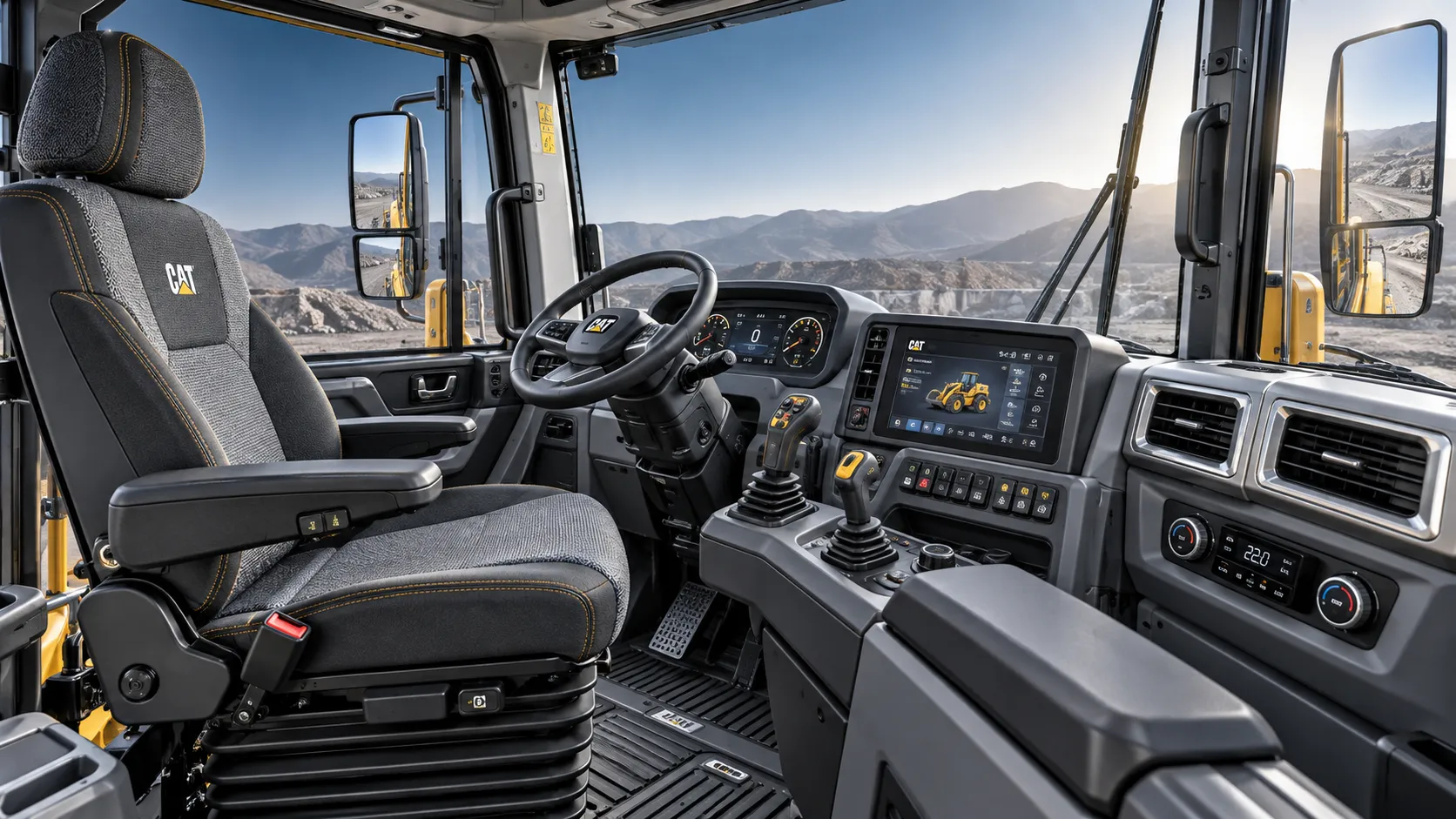
How Adjustable Cabin Ergonomics Reduce Operator Fatigue in Long-Shift Vehicles
Adjustable cabin ergonomics reduces operator fatigue through better seating, reach, visibility, vibration control, and climate comfort for safer long-shift vehicles.

How Rear-Impact Safety Components Work Together to Protect Vehicle Occupants
Explore how automotive safety components for rear impact work together—from crash structures and seats to head restraints and belts—to enhance occupant protection.
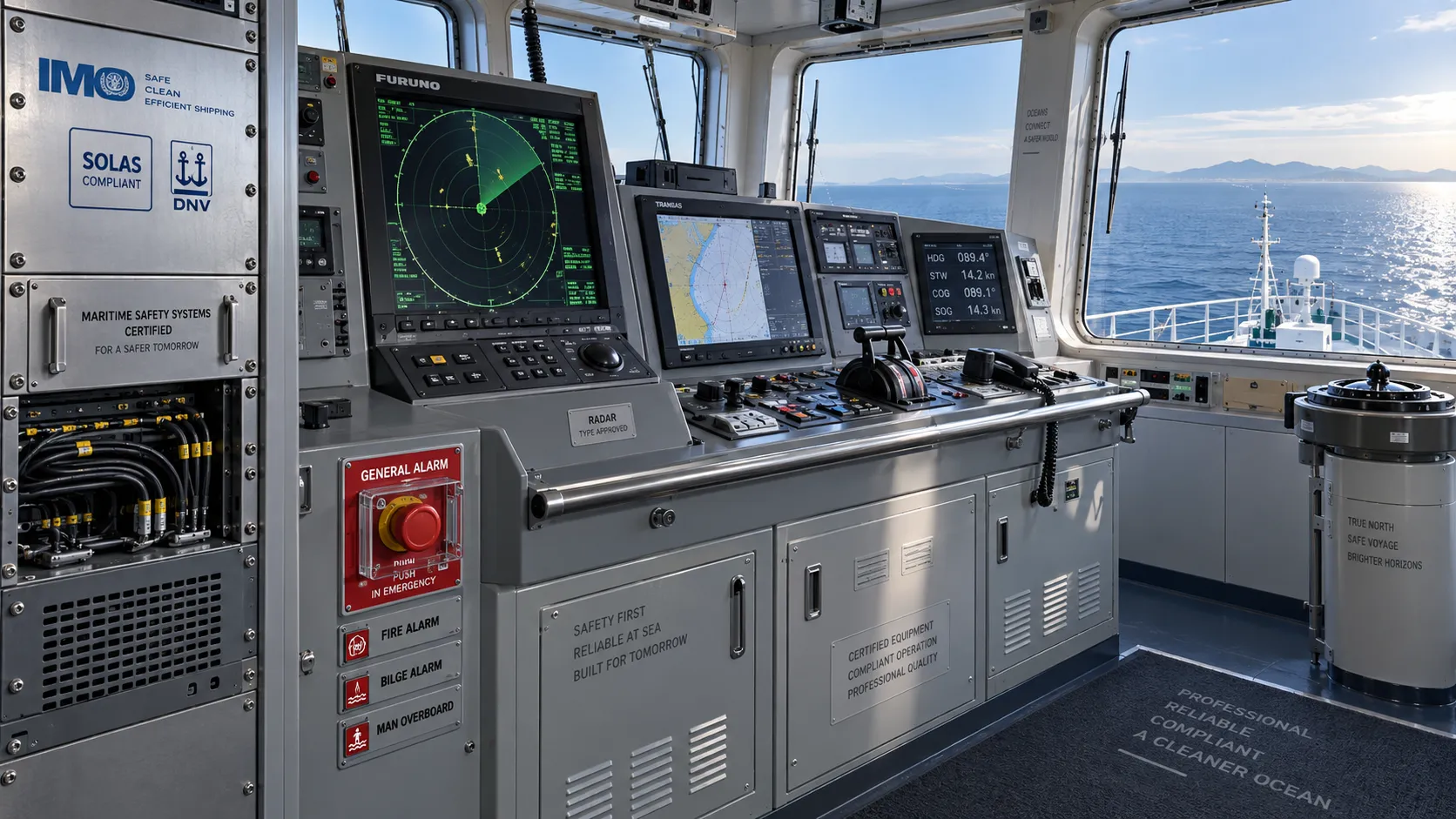
How to Evaluate a Marine Safety Systems Manufacturer for Vessel Compliance and Reliability
Marine safety systems manufacturer evaluation guide: verify compliance, engineering quality, lifecycle costs, and global service support for safer, reliable vessel operations.
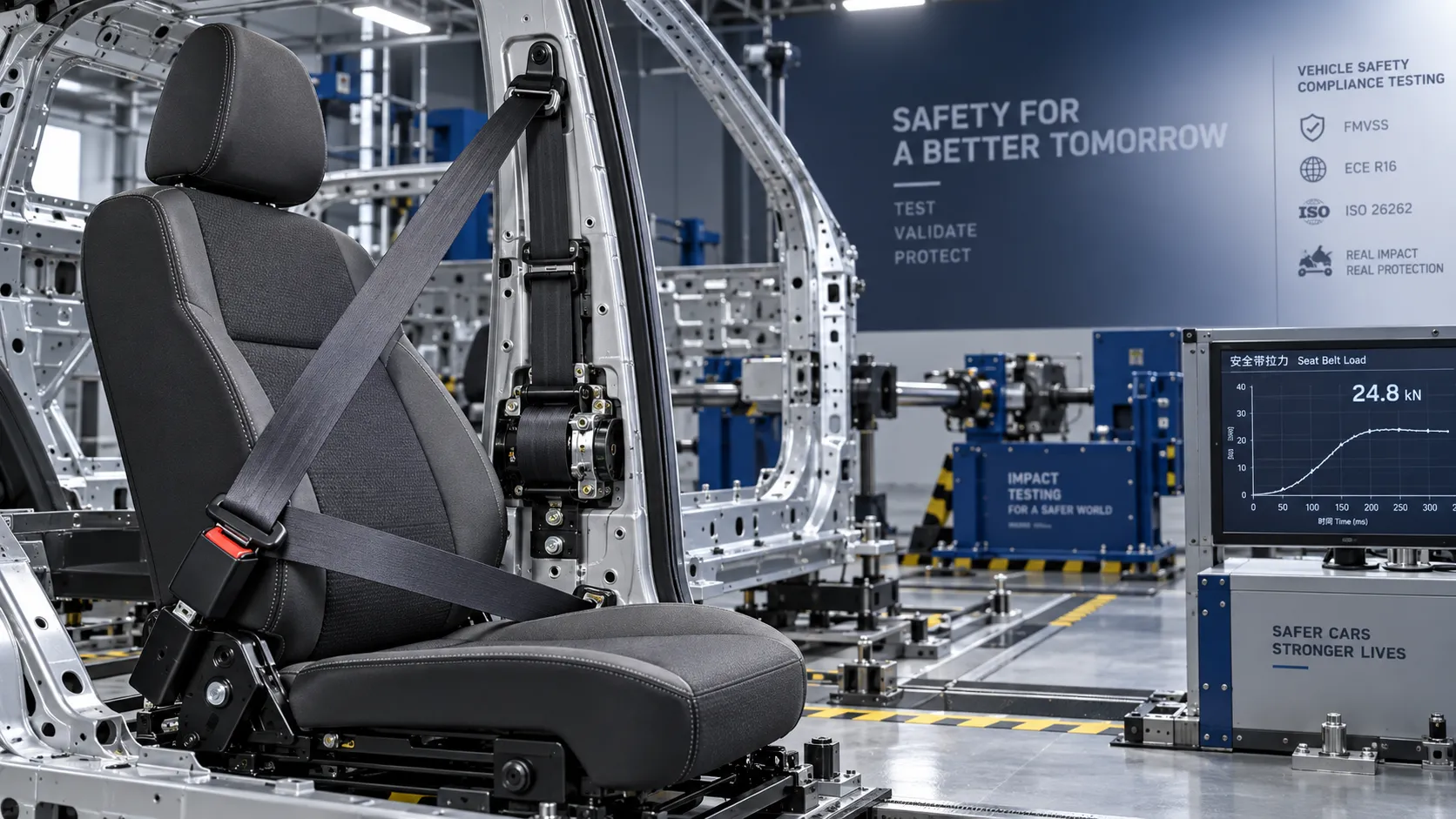
Crash Test Regulations for Seatbelts: Key Compliance Requirements Explained
Crash test regulations seatbelts explained: explore FMVSS, UN rules, anchorage strength, and dynamic restraint testing for safer, compliant vehicle systems.

How to Calculate the Total Cost of Automotive Lightweighting for a Vehicle Program
Automotive lightweight solutions cost: learn how to calculate program-level costs, including materials, tooling, joining, validation, risk, and vehicle-level value.

How Automotive Seat Occupancy Sensing Improves Airbag Deployment Decisions
Automotive seat occupancy sensing helps optimize airbag deployment decisions, improving passenger classification, safety diagnostics, and compliance across real-world conditions.

What Drives Lightweight Body Component Costs in High-Volume Vehicle Programs?
Lightweight body components cost depends on material yield, forming, joining, tooling, validation, and logistics. Explore proven ways to optimize total vehicle program cost.
Related News
- 00
0000-00
How to Specify Integrated Marine Electronics for Reliable Bridge Operations - 00
0000-00
How Adjustable Cabin Ergonomics Reduce Operator Fatigue in Long-Shift Vehicles - 00
0000-00
How to Evaluate a Marine Safety Systems Manufacturer for Vessel Compliance and Reliability - 00
0000-00
How to Calculate the Total Cost of Automotive Lightweighting for a Vehicle Program - 00
0000-00
What Drives Lightweight Body Component Costs in High-Volume Vehicle Programs?
Weekly Insights
Stay ahead with our curated technology reports delivered every Monday.