
Crash Test Standards Explained: What OEMs Check and How Ratings Affect Design
Crash test standards do much more than generate public ratings. They shape how vehicles are conceived, how cabins manage impact energy, and how suppliers align materials, restraint logic, and compliance choices with market expectations.
That is why the topic matters well beyond consumer safety headlines. In the wider mobility chain, crash performance now influences lightweight body strategy, seating architecture, airbag integration, and even the commercial credibility of a platform.
For a knowledge platform such as GNCS, which tracks both physical containment protection and precision systems across mobility sectors, crash test standards are a practical lens. They reveal how engineering decisions connect regulation, product value, and technical evolution.
What crash test standards actually measure
At a basic level, crash test standards define how impact scenarios are reproduced and how outcomes are evaluated. The goal is not only to see whether a vehicle survives a crash, but how occupants are protected during it.
Different programs focus on different conditions. Some examine frontal overlap collisions. Others assess side impacts, pole strikes, roof strength, whiplash, rollover protection, or pedestrian injury reduction.
The most influential frameworks include NCAP programs, IIHS protocols, and legal regulations under regional authorities. Ratings may look simple on the surface, yet the underlying assessment is highly structured.
In most cases, OEMs check four broad layers at once: structural integrity, restraint timing, occupant kinematics, and post-crash safety. A strong result depends on how those layers work together, not on one isolated component.
Core elements behind the score
- Body structure deformation and survival space retention.
- Airbag deployment timing, pressure management, and coverage.
- Seatbelt pre-tensioning, load limiting, and occupant positioning.
- Seat performance, head restraint behavior, and anti-submarining control.
- Door opening risk, fuel or battery safety, and emergency access.
Why ratings now influence design much earlier
Years ago, crash validation often sat closer to the end of development. Today, crash test standards are embedded much earlier, sometimes from the first body architecture decisions.
That shift happened because ratings now affect brand positioning, regional market entry, insurance perception, and supply chain qualification. A weak result can trigger redesign cost, launch delay, or reduced competitiveness.
Just as marine navigation systems must interpret complex signals under changing conditions, passive safety systems must manage fast-moving energy under highly variable crash loads. The standards create the reference map for that management.
More importantly, modern protocols keep evolving. Small overlap tests, far-side impact assessments, rear occupant protection, and active safety scoring have raised the design threshold across the industry.
What changed in industry attention
The conversation is no longer limited to surviving a single crash pulse. Crash test standards now reward integrated safety performance, including sensing, restraint adaptation, and occupant diversity.
That is especially relevant in platforms using lightweight materials, larger battery packs, advanced seats, and more software-defined cabin functions. Design freedom grows, but so does validation complexity.
What OEMs check during development
OEM review is far broader than the public sees in final videos. Physical tests matter, but simulation, subsystem verification, and design iteration happen long before a rated crash event.
Body-in-white teams look at load paths, intrusion zones, weld performance, and how hot-stamped steel or aluminum sections collapse progressively. The objective is controlled deformation rather than raw stiffness.
Restraint teams examine sensor placement, crash pulse interpretation, inflator behavior, venting, belt geometry, and occupant posture. Small timing changes can materially alter chest, head, or femur injury results.
Seat systems receive similar scrutiny. Cushion stiffness, frame strength, recliner performance, and head restraint motion all influence occupant motion. In some conditions, the seat becomes a primary safety device.
How crash test standards affect material and component choices
One of the clearest business effects of crash test standards appears in material selection. Lightweighting is valuable, but it cannot undermine crash energy management.
This is why advanced high-strength steel, tailored blanks, aluminum castings, and selective magnesium use are judged not only by mass reduction, but by predictable deformation under impact.
The same logic applies to passive safety components. Airbag propellant chemistry, inflator packaging, belt retractor response, and seat frame design all have to fit the target pulse and occupant motion envelope.
GNCS closely follows these intersections because they sit at the center of design trade-offs. A lighter body, a smarter seat, or a new restraint module only creates value when it performs reliably under the right standard conditions.
A practical reading of trade-offs
- Higher strength can improve survival space but may transfer loads differently.
- Softer restraint tuning may reduce chest loads but increase excursion.
- Seat comfort geometry can conflict with ideal crash posture.
- Global platform sharing can complicate regional compliance targets.
Why global differences still matter
Not all crash test standards ask the same questions. A vehicle tuned for one region may need changes for another, even when the basic platform remains the same.
NCAP protocols often push future-facing safety expectations faster than legal minimums. IIHS may emphasize a challenging overlap condition. Euro NCAP may combine occupant protection with active safety weighting.
That means compliance is only the starting point. A market-leading rating usually requires understanding where standards are moving, not just where they stand today.
For information research, this distinction is useful. It helps separate products that merely pass from those engineered for durable relevance across evolving assessment cycles.
How to interpret crash performance in business terms
A crash score should never be read as a single marketing badge. It is better understood as evidence of system integration quality.
When crash test standards are met with margin, several signals often appear. Development discipline is stronger. Supplier interfaces are more mature. Validation methods are usually better aligned across digital and physical stages.
This matters for body stampings, airbag modules, belts, and seat structures alike. In each case, safety performance becomes a proxy for manufacturing repeatability and technical consistency.
It also explains why high-reliability components attract premium attention. In many mobility programs, the path to stronger market acceptance runs directly through robust compliance and proven crash behavior.
Useful questions for further evaluation
- Which crash test standards are mandatory, and which shape market reputation?
- How much of the rating depends on structure versus restraint tuning?
- Are lightweight materials validated for real crash load paths?
- Do seat and belt systems support varied occupant sizes and postures?
- Is the platform prepared for the next protocol revision?
Where to focus next
The most useful next step is to read crash test standards as design signals rather than isolated test rules. That approach makes it easier to compare platforms, component strategies, and regional readiness with more precision.
It also helps to track how body structures, airbags, seatbelts, and seat assemblies interact under changing protocols. Those interactions often reveal more than a final star rating alone.
For anyone following global mobility intelligence, the strongest reference point is a joined view of regulation, component evolution, and structural design. That is where crash test standards stop being a checklist and start becoming a decision framework.
A careful review of upcoming rating updates, material choices, and restraint integration pathways will usually provide the clearest basis for the next comparison, specification review, or strategic assessment.
Related News

How to Specify Integrated Marine Electronics for Reliable Bridge Operations
Integrated marine electronics: learn how to specify reliable bridge systems with clear data flows, redundancy, alarm control, lifecycle interfaces, and operational testing.

How to Evaluate Navigation Radar Manufacturers for Commercial Vessel Projects
Navigation radar manufacturers: learn how to compare performance, compliance, integration, support, and lifecycle cost for commercial vessel projects.

How Adjustable Cabin Ergonomics Reduce Operator Fatigue in Long-Shift Vehicles
Adjustable cabin ergonomics reduces operator fatigue through better seating, reach, visibility, vibration control, and climate comfort for safer long-shift vehicles.

How Rear-Impact Safety Components Work Together to Protect Vehicle Occupants
Explore how automotive safety components for rear impact work together—from crash structures and seats to head restraints and belts—to enhance occupant protection.

How to Evaluate a Marine Safety Systems Manufacturer for Vessel Compliance and Reliability
Marine safety systems manufacturer evaluation guide: verify compliance, engineering quality, lifecycle costs, and global service support for safer, reliable vessel operations.
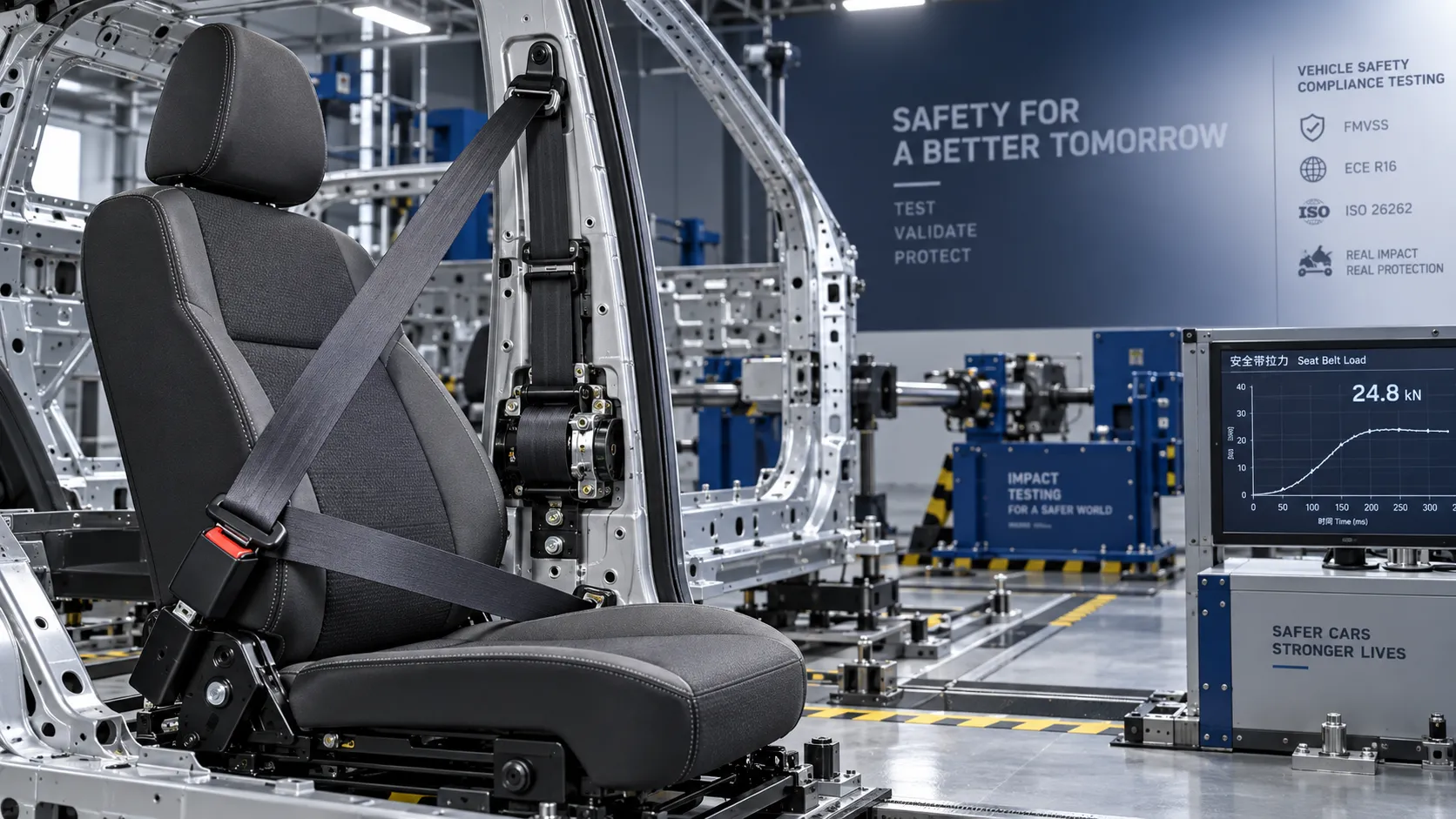
Crash Test Regulations for Seatbelts: Key Compliance Requirements Explained
Crash test regulations seatbelts explained: explore FMVSS, UN rules, anchorage strength, and dynamic restraint testing for safer, compliant vehicle systems.

How to Calculate the Total Cost of Automotive Lightweighting for a Vehicle Program
Automotive lightweight solutions cost: learn how to calculate program-level costs, including materials, tooling, joining, validation, risk, and vehicle-level value.

How Automotive Seat Occupancy Sensing Improves Airbag Deployment Decisions
Automotive seat occupancy sensing helps optimize airbag deployment decisions, improving passenger classification, safety diagnostics, and compliance across real-world conditions.

What Drives Lightweight Body Component Costs in High-Volume Vehicle Programs?
Lightweight body components cost depends on material yield, forming, joining, tooling, validation, and logistics. Explore proven ways to optimize total vehicle program cost.
Related News
- 00
0000-00
How to Specify Integrated Marine Electronics for Reliable Bridge Operations - 00
0000-00
How Adjustable Cabin Ergonomics Reduce Operator Fatigue in Long-Shift Vehicles - 00
0000-00
How to Evaluate a Marine Safety Systems Manufacturer for Vessel Compliance and Reliability - 00
0000-00
How to Calculate the Total Cost of Automotive Lightweighting for a Vehicle Program - 00
0000-00
What Drives Lightweight Body Component Costs in High-Volume Vehicle Programs?
Weekly Insights
Stay ahead with our curated technology reports delivered every Monday.