
How to Select Occupant Safety Systems for Vehicles Operating in the Middle East
At midday in the Gulf, a parked vehicle can become a severe thermal environment long before it begins its journey. Fine dust works its way into mechanisms and connectors. Long intercity routes encourage fatigue; dense urban traffic increases low-speed crash exposure; off-road use, heavy payloads, and a wide mix of adult and child occupants place further demands on the cabin. For a technical evaluator, these conditions change the question from “Does this restraint system pass a crash test?” to “Will this complete protection system work predictably throughout its service life in this operating environment?”
Selecting Middle East occupant safety systems therefore requires a vehicle-level decision process. Airbags, seatbelts, seats, sensors, electrical architecture, trim, and body load paths must function as one calibrated restraint environment. A component with strong laboratory credentials may still introduce risk if its materials, diagnostics, deployment strategy, or installation assumptions are not suitable for regional heat, dust, usage patterns, and regulatory pathways.
Start with the real vehicle mission, not the component catalogue
The Middle East is not one homogeneous duty cycle. A premium passenger SUV used for daily commuting in Dubai, a fleet pickup operating on construction sites in Saudi Arabia, a long-haul vehicle in Oman, and a locally assembled vehicle intended for multiple GCC markets can share broad climatic challenges while facing very different safety priorities.
Before comparing suppliers, define the vehicle’s safety use case in operational terms. The resulting profile should guide architecture decisions, test severity, and validation duration.
- Occupant population: Consider stature range, seating posture, rear-seat use, child-restraint use, and the likelihood of unbelted or improperly belted occupants.
- Vehicle application: Distinguish private passenger vehicles from taxis, commercial fleets, pickups, utility vehicles, and vehicles with frequent rough-road exposure.
- Crash exposure: Map likely frontal, side, rollover, rear-impact, and vulnerable-road-user scenarios instead of optimizing around a single test condition.
- Climate and storage: Include solar load, cabin soak temperature, thermal cycling, humidity near coastal areas, sand and dust ingress, and long idle periods.
- Service reality: Account for maintenance intervals, diagnostic-tool availability, replacement-part traceability, and workshop capability across the intended sales territory.
This early work prevents a common procurement mistake: selecting airbags, belt assemblies, or seats individually and expecting integration to solve all conflicts later. In practice, occupant protection performance is shaped by timing, geometry, stiffness, and sensor interpretation across the entire cabin.
Translate regional conditions into engineering requirements
Heat is often treated as a materials issue, but it is also a systems issue. High-temperature exposure can affect polymer aging, foam comfort, textile behavior, adhesive durability, connector retention, sensor drift, electronic control-unit reliability, and the consistency of pyrotechnic restraint components. The evaluation should examine performance after conditioning, not only the “as-built” state.
For airbag assemblies, assess the inflator, cushion fabric, coating, venting, folding method, connector interface, module cover, and mounting environment together. Technical teams should request evidence showing that deployment characteristics remain controlled after the applicable high-temperature and thermal-cycling exposures. The aim is not simply to verify that an airbag deploys, but to confirm that deployment timing, pressure management, and cushion interaction remain appropriate for the occupant and vehicle interior.
Seatbelt systems deserve the same depth of scrutiny. Retractor spring performance, webbing behavior, buckle function, pretensioner operation, load-limiter calibration, and D-ring geometry all influence how an occupant is managed in the first milliseconds of a crash. Dust and contamination exposure can be especially relevant for vehicles used in desert, industrial, or unpaved-road environments. A belt that retracts slowly or fails to present comfortably may encourage misuse long before a crash occurs.
Smart seating introduces another layer. Occupant classification, seat-position sensing, buckle-status detection, memory functions, heating or ventilation elements, and in-seat wiring require robust environmental sealing and diagnostic logic. Technical evaluators should be cautious about treating a sensor-equipped seat as a comfort feature alone. Its signals may influence restraint deployment decisions, warning strategies, or post-crash diagnostics.
Questions worth asking during supplier review
- Which environmental conditioning sequences were used before functional and crash-related tests?
- Are test samples representative of production materials, coatings, connectors, and software versions?
- What failure modes have been considered for dust ingress, thermal aging, vibration, and connector corrosion?
- Does the diagnostic strategy distinguish a temporary fault from a safety-critical loss of function?
- What evidence demonstrates stable performance at the end of the intended service interval?
A supplier response should include more than a declaration of compliance. Review test plans, traceability logic, boundary conditions, and the rationale behind acceptance criteria. Where test reports are confidential, a structured technical review can still establish whether the evidence genuinely reflects the vehicle’s intended operating context.
Choose the restraint architecture as an integrated package
Passive safety works through controlled energy management. The body structure creates survivable space and directs crash loads; seat structures retain occupant position; belts manage forward motion; airbags supplement the belt and distribute contact loads. A weakness in one layer often increases the burden on another.
For this reason, the selection of Middle East occupant safety systems should begin with occupant kinematics rather than a fixed list of components. A high-strength, lightweight body may alter deceleration pulses and intrusion patterns. Changes in seat-track stiffness, cushion angle, steering-wheel position, or instrument-panel design can affect belt loading and airbag interaction. Even a trim change can influence knee contact or out-of-position airbag performance.
The table is not a substitute for simulation and physical testing, but it provides a useful review lens. If a supplier can explain component performance but cannot explain its interaction with the seat, body, and restraint control logic, the proposal is incomplete.
Regulatory compliance is the entry point, not the finish line
Vehicle approval requirements vary by market, vehicle category, import route, and local authority. Many programs in the region reference or align with international frameworks, including UNECE requirements, while vehicle manufacturers may also work to internal standards or target consumer-assessment expectations such as Euro NCAP. Requirements can change, and technical teams should verify the current obligations for each destination market with the relevant approval and legal specialists.
From a sourcing perspective, separate three questions that are often blended together:
- Can the component support the required vehicle type approval? Review applicable regulation references, homologation markings where relevant, approved configuration boundaries, and documentation ownership.
- Can the vehicle meet the intended performance target? Regulatory compliance may not cover every crash mode, occupant size, seating position, or misuse condition important to the program.
- Can the configuration remain compliant after localization or change? Local assembly, alternate trim, seat variants, body revisions, and software updates can create an unplanned revalidation burden.
It is particularly important to control configuration management for airbag control units and smart seats. A calibration is not interchangeable merely because connector layouts or mechanical envelopes appear similar. Version control should connect hardware part numbers, software releases, sensor characteristics, deployment algorithms, test evidence, and service procedures.
Do not validate only the “standard” occupant
The Middle East’s vehicle population includes families, business travelers, workers in fleet vehicles, and drivers who may spend extended periods behind the wheel. A safety package tuned only around a nominal test occupant can leave uncertainty around small adults, larger occupants, older occupants, rear-seat passengers, and people seated in non-ideal postures.
Evaluation should cover the vehicle positions that matter commercially, especially when rear seats are frequently occupied. Review belt fit across a realistic stature range; head-restraint adjustability; seat cushion support; ISOFIX or other child-restraint anchorage provisions where applicable; rear-seat belt reminders; and the practicality of buckling belts while wearing local clothing or work gear. These are not minor usability points. If restraints are inconvenient or poorly fitted, their real-world protection value declines.
Out-of-position performance should also be treated seriously. A passenger leaning forward, a child near a deployment zone, a reclined seatback, or a driver positioned close to the steering wheel can change airbag interaction dramatically. The correct response is not always “add another airbag.” It may involve seat geometry, warning logic, sensor strategy, belt tuning, interior clearance, or clearer user information.
Build a validation plan that reflects life in the field
A credible validation program combines digital prediction, subsystem testing, sled work, full-vehicle crash testing, environmental conditioning, and serviceability assessment. No single test provides the complete answer. Simulation is highly valuable for exploring parameter changes and occupant variability, but it must be correlated to physical results. Full-vehicle tests reveal structural and restraint interactions that isolated component tests cannot.
For demanding regional deployment, the test matrix should deliberately link environmental exposure to functional and safety outcomes. Examples include restraint operation after heat aging, electrical continuity after vibration and dust exposure, seat-sensor behavior after repeated cycling, and post-conditioning inspection of webbing, cushions, covers, fasteners, and connectors. Coastal use may justify attention to humidity and corrosion mechanisms in addition to desert heat.
Field trials have a different purpose from certification tests. They can reveal slow belt retraction, seat comfort complaints that encourage poor posture, false warning events, difficult repair access, trim wear around modules, or diagnostic issues in real workshop conditions. These findings may not invalidate a crash test, but they can expose reliability and usage risks early enough to correct.
Set decision gates before nomination
Technical evaluators benefit from defining gates that suppliers must pass before commercial selection. A practical sequence may include architecture feasibility, design-review maturity, environmental evidence review, prototype integration, representative crash correlation, production-process assessment, and service-readiness approval. Each gate should have clear owners and documented criteria. Otherwise, unresolved safety assumptions can migrate quietly into late-stage launch risk.
Assess manufacturing consistency, not only prototype performance
Occupant protection systems are sensitive to variation. A small shift in inflator output, webbing characteristics, sewing quality, retractor calibration, seat-frame weld integrity, foam properties, sensor mounting, or body-stamping geometry can affect system behavior. The source-selection process should therefore examine process capability, traceability, incoming-material control, end-of-line verification, and change-notification discipline.
For local or regional assembly programs, pay close attention to interfaces between suppliers. A seat supplier, belt supplier, airbag supplier, body manufacturer, and vehicle integrator may each control a critical part of the safety chain. Technical documentation should specify mounting torque, connector locking, routing constraints, anti-rotation features, software pairing, inspection points, and repair limits. Ambiguity at an interface is often where an otherwise sound design becomes vulnerable in production.
GNCS research across passive safety components, lightweight body structures, and smart cabin systems consistently points to the same conclusion: reliable protection comes from disciplined system integration. High-strength stampings can improve energy management, but only when their crash behavior is understood alongside restraint tuning. Smart seat data can support more tailored protection, but only when sensing reliability, privacy considerations, fault handling, and calibration governance are addressed from the beginning.
A practical selection scorecard
When comparing shortlisted solutions, use a weighted scorecard rather than relying on a headline feature list. Score each candidate against vehicle-fit performance, environmental robustness, regulatory support, integration maturity, manufacturing control, diagnostic capability, serviceability, and lifecycle change management. Include a category for evidence quality: a claim supported by relevant, traceable testing should carry more weight than a broad specification statement.
The best choice may not be the system with the highest component count or the most aggressive technology roadmap. It is the architecture that protects the intended occupants, fits the vehicle’s crash pulse and cabin geometry, remains stable through Middle East operating conditions, and can be manufactured and serviced without losing control of the safety case.
For technical evaluators, that is the central discipline behind selecting Middle East occupant safety systems: treat the cabin as a coordinated protective space, challenge assumptions under heat and dust, validate beyond baseline compliance, and insist on evidence that survives the journey from engineering prototype to vehicles in daily use.
Related News
How to Specify Integrated Marine Electronics for Reliable Bridge Operations
Integrated marine electronics: learn how to specify reliable bridge systems with clear data flows, redundancy, alarm control, lifecycle interfaces, and operational testing.

How to Evaluate Navigation Radar Manufacturers for Commercial Vessel Projects
Navigation radar manufacturers: learn how to compare performance, compliance, integration, support, and lifecycle cost for commercial vessel projects.
How Adjustable Cabin Ergonomics Reduce Operator Fatigue in Long-Shift Vehicles
Adjustable cabin ergonomics reduces operator fatigue through better seating, reach, visibility, vibration control, and climate comfort for safer long-shift vehicles.
How Rear-Impact Safety Components Work Together to Protect Vehicle Occupants
Explore how automotive safety components for rear impact work together—from crash structures and seats to head restraints and belts—to enhance occupant protection.
How to Evaluate a Marine Safety Systems Manufacturer for Vessel Compliance and Reliability
Marine safety systems manufacturer evaluation guide: verify compliance, engineering quality, lifecycle costs, and global service support for safer, reliable vessel operations.
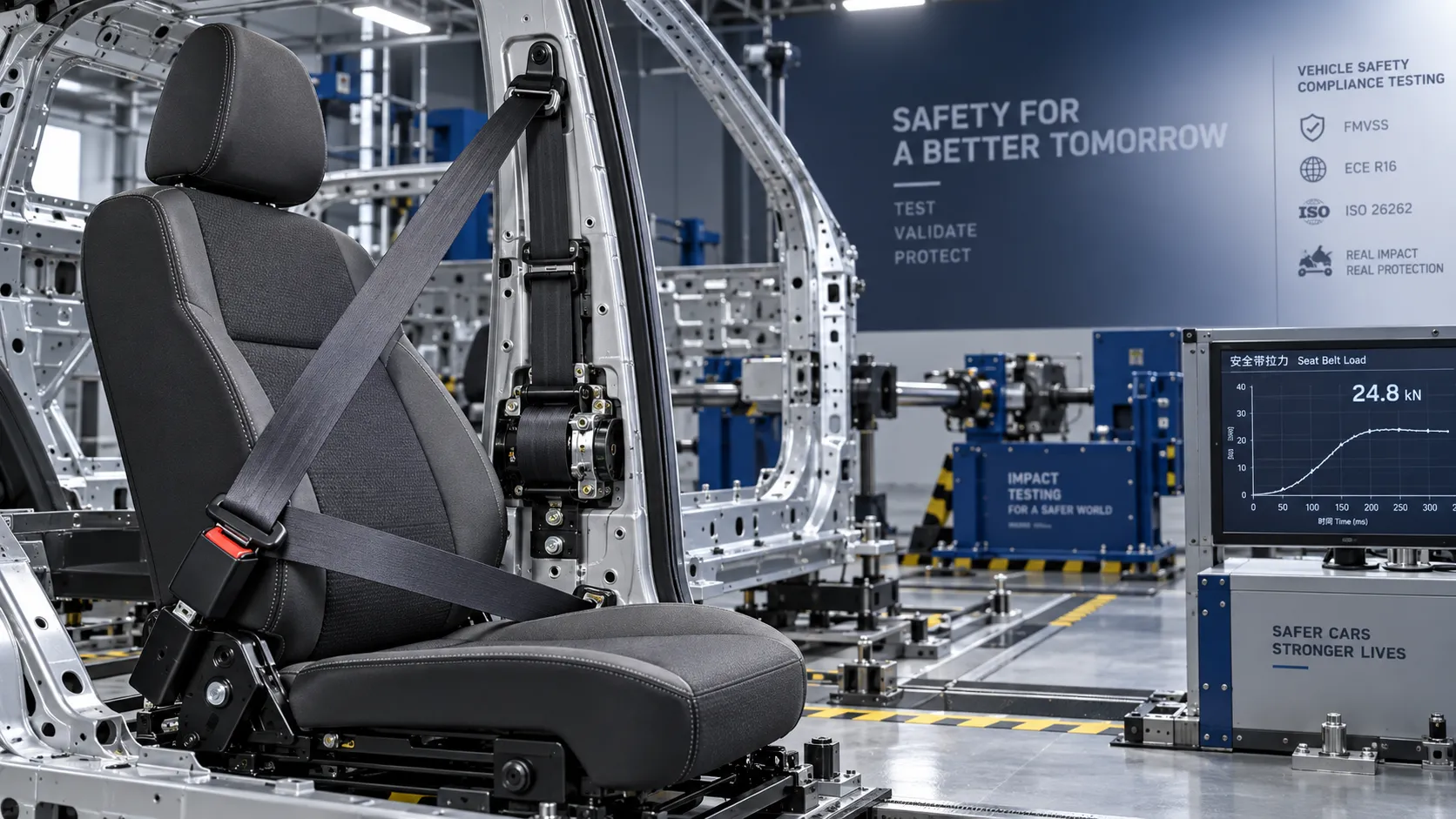
Crash Test Regulations for Seatbelts: Key Compliance Requirements Explained
Crash test regulations seatbelts explained: explore FMVSS, UN rules, anchorage strength, and dynamic restraint testing for safer, compliant vehicle systems.

How to Calculate the Total Cost of Automotive Lightweighting for a Vehicle Program
Automotive lightweight solutions cost: learn how to calculate program-level costs, including materials, tooling, joining, validation, risk, and vehicle-level value.
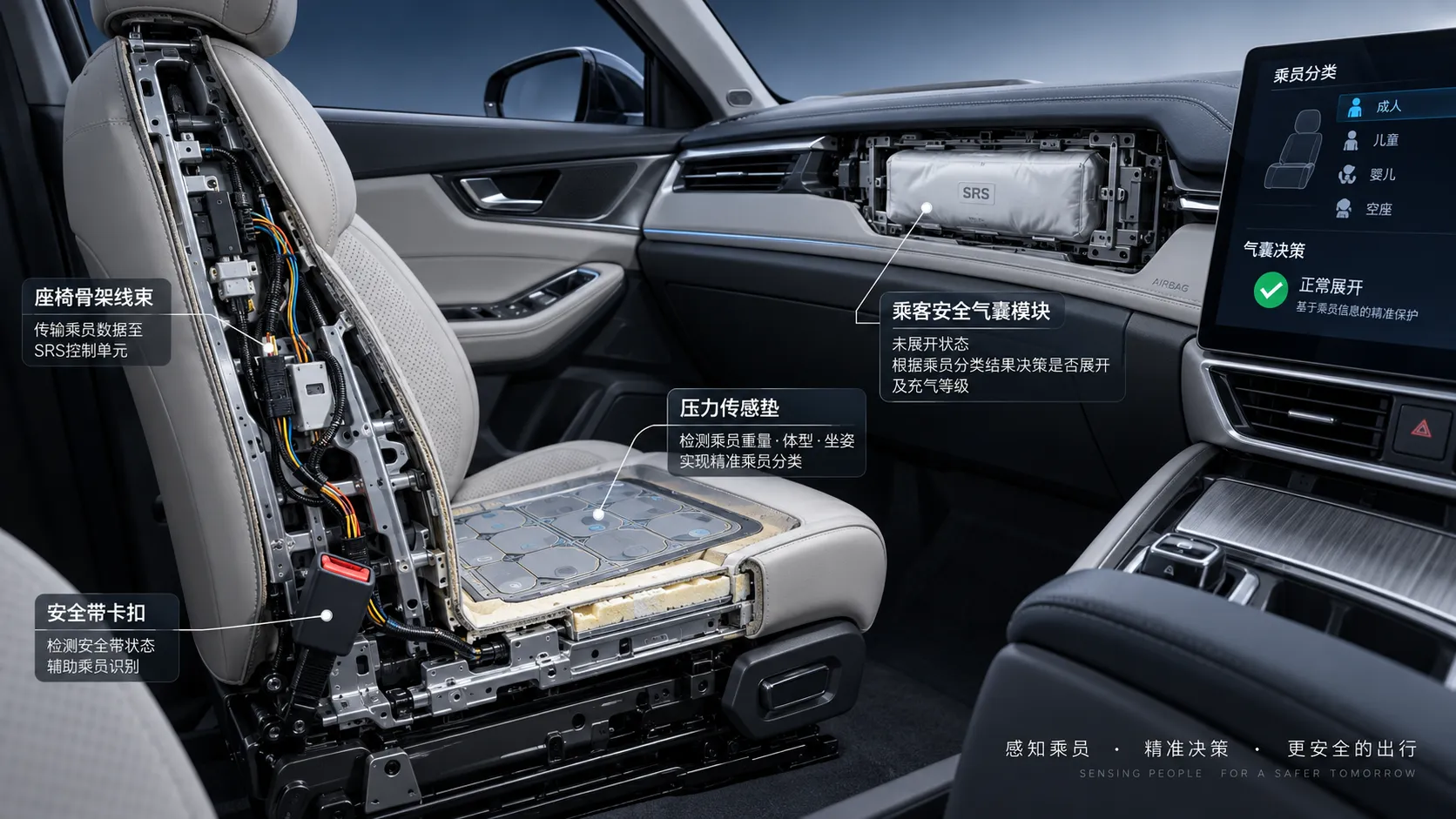
How Automotive Seat Occupancy Sensing Improves Airbag Deployment Decisions
Automotive seat occupancy sensing helps optimize airbag deployment decisions, improving passenger classification, safety diagnostics, and compliance across real-world conditions.

What Drives Lightweight Body Component Costs in High-Volume Vehicle Programs?
Lightweight body components cost depends on material yield, forming, joining, tooling, validation, and logistics. Explore proven ways to optimize total vehicle program cost.
Related News
- 00
0000-00
How Automotive Seat Occupancy Sensing Improves Airbag Deployment Decisions - 00
0000-00
How Smart Seating Sensors Improve Occupant Detection and Airbag Deployment - 00
0000-00
How to Qualify an Airbag Modules Supplier for OEM Safety and Delivery Requirements - 00
0000-00
How to Select Occupant Safety Systems for Vehicles Operating in the Middle East - 00
0000-00
Which Passive Safety Engineering Standards Apply to Automotive Restraint Systems?
Weekly Insights
Stay ahead with our curated technology reports delivered every Monday.