
Technical Credibility Cost: How to Judge Certification, Testing, and Supplier Claims
Technical Credibility Cost: How to Judge Certification, Testing, and Supplier Claims
For procurement teams, technical credibility cost is more than a hidden line item. It affects risk, compliance, warranty exposure, and long-term supplier value.
In marine navigation, passive safety, and mobility equipment, poor technical judgment is expensive. It can delay launches, trigger recalls, or block market access.
That is why technical credibility cost deserves a place in every sourcing decision. It is not only about price. It is about proof.
A polished presentation can hide weak testing depth. A long certification list can mask outdated scope. Strong claims still need traceable evidence.
This guide shows how to judge certification, testing validity, and supplier statements with a practical lens. The goal is simple: reduce technical credibility cost before it turns into operational cost.
Why Technical Credibility Cost Matters Early
Many sourcing teams focus first on unit price, tooling, and lead time. That is understandable. Those numbers are visible and easy to compare.
Technical credibility cost is different. It appears later, often after nomination. By then, switching suppliers becomes slower and more expensive.
In GNSS modules, radar housings, hot-stamped structures, airbags, seatbelts, or smart seats, failures rarely stay isolated. One weak claim can affect system integration, validation timing, and compliance filings.
From recent market shifts, the stronger signal is regulatory tightening. Buyers now face more scrutiny on test traceability, software updates, material declarations, and production consistency.
This means technical credibility cost should be screened at RFQ stage, not after prototype failure. Early diligence protects both commercial leverage and launch schedules.
Start with Certification Scope, Not Certificate Quantity
Suppliers often present many certificates as proof of strength. The better question is whether each certificate matches the exact product, process, and plant involved.
A valid certificate may still have limited scope. It may cover a quality system, but not the specific assembly line. It may apply to one site, not another.
For marine navigation equipment, check whether approvals relate to the actual device category, software version, and intended operating environment. Environmental endurance matters as much as nominal compliance.
For passive safety components, verify whether the certification aligns with the current bill of materials, inflator chemistry, webbing source, or seat structure revision.
Review these points before accepting certification claims:
- Issuing body credibility and accreditation status
- Certificate scope, part family, and manufacturing site
- Expiration date and surveillance audit status
- Referenced standards, revision level, and regional applicability
- Whether the document covers production or only prototype validation
This is where technical credibility cost becomes measurable. The gap between certificate count and certificate relevance is often wider than expected.
Check Whether Testing Reflects Real Use Conditions
Testing can look impressive on paper while still missing the real operating profile. That is a common source of hidden technical credibility cost.
Ask whether the test method reflects actual loads, temperature ranges, vibration patterns, corrosion exposure, power fluctuations, and software interactions.
A navigation unit tested in a stable lab may still struggle in salt fog, electromagnetic interference, or rough sea vibration. A seat frame that passes static load may still underperform in fatigue cycles.
The same logic applies to airbags and seatbelts. Millisecond deployment and restraint timing depend on full-system conditions, not isolated component performance.
When reviewing test evidence, focus on these practical signals:
- Sample size and lot origin
- Test setup versus end-use conditions
- Pass criteria and failure thresholds
- Third-party versus internal lab execution
- Retest history and unexplained data exclusions
If a supplier cannot explain why its test plan mirrors field reality, the technical credibility cost is already rising. Weak test relevance almost always surfaces later.
Separate Supplier Claims from Demonstrated Capability
Supplier claims usually sound similar. Everyone says high precision, stable quality, fast response, and global compliance. Those phrases have little value without evidence.
The useful question is whether the supplier can show repeatable capability. One good sample is not the same as a controlled process.
In actual sourcing work, this means asking for process capability data, validation records, change management logs, and traceability structure. Marketing language cannot replace those basics.
For example, a hot-stamped body part claim should connect material grade, die condition, furnace control, quench performance, and crash energy targets. A smart seating claim should connect sensing accuracy, comfort systems, and durability cycles.
Use this evidence ladder to rank supplier claims:
- Level 1: brochure statement
- Level 2: internal presentation data
- Level 3: signed test report with traceable samples
- Level 4: audited production records and customer references
- Level 5: stable field performance across programs and regions
The lower the evidence level, the higher the technical credibility cost. This is especially true when the part affects safety, positioning accuracy, or legal compliance.
Watch for the Most Common Red Flags
Some warning signs appear again and again across industries. They are rarely dramatic. More often, they show up as vague answers and incomplete records.
Pay close attention when you see these patterns:
- Certificates without full annex pages or scope details
- Test reports using old standards with no update path
- Performance claims based only on simulation
- No clear record of engineering changes after validation
- Inconsistent answers from sales, quality, and engineering teams
- No explanation for failed samples, retests, or data gaps
- Sub-supplier dependence with limited transparency
These signals do not always mean the supplier is unsuitable. They do mean the technical credibility cost is climbing and deserves structured follow-up.
A disciplined review process helps teams avoid being rushed by timing pressure or presentation quality. Strong sourcing decisions need friction at the right moment.
Build a Practical Evaluation Framework
The best way to manage technical credibility cost is to score it. A simple framework makes cross-supplier comparison more objective.
A workable structure can include five dimensions:
Score each dimension before nomination. Then estimate the likely technical credibility cost of closing the identified gaps.
That estimate should include extra validation, supplier audits, engineering support, launch delay risk, and possible redesign effort. This turns abstract concern into decision-ready data.
How to Use Technical Credibility Cost in Negotiation
Technical credibility cost should shape negotiation, not just supplier ranking. A lower quoted price may be less competitive once technical gaps are priced in.
This also creates a better conversation with suppliers. Instead of arguing over opinion, buyers can discuss evidence gaps, closure dates, and accountability.
Useful negotiation levers include:
- Milestone-based commercial release tied to validation evidence
- Supplier-funded additional testing for unsupported claims
- Audit rights for critical processes and sub-suppliers
- Clear change notification obligations
- Warranty terms linked to compliance and field performance
In practice, this approach improves both sourcing quality and supplier discipline. It also makes technical credibility cost visible to commercial stakeholders who may not see the technical details.
Final Decision: Buy Evidence, Not Confidence
The core lesson is straightforward. Technical credibility cost rises when certification is accepted at face value, when testing lacks real-world relevance, and when supplier claims outrun evidence.
In high-stakes sectors such as navigation systems, body structures, airbags, seatbelts, and smart seating, those mistakes carry long shadows. They affect compliance, safety, and program economics.
Better sourcing decisions come from disciplined questions, traceable documents, and a realistic view of technical credibility cost. That is how teams separate polished claims from dependable capability.
Before the next RFQ or supplier review, build technical credibility cost into your checklist, scorecard, and negotiation model. The earlier it is measured, the less it costs to fix.
Related News

How to Specify Micro-Climate Control Cabins for Harsh Outdoor Worksites?
Micro-climate control cabins for harsh outdoor worksites: learn how to specify thermal control, filtration, pressurization, and durability for safer uptime and smarter buying.
How to Evaluate a B2B Product Knowledge Platform for Faster Procurement Decisions
B2B product knowledge platform procurement starts with reducing decision risk. Learn how to compare specs, compliance, and supplier data to speed sourcing with confidence.
How to Evaluate an Occupant Restraint Systems Exporter for Quality, Compliance, and Supply Risk
Occupant restraint systems exporter evaluation guide: learn how to verify quality controls, compliance evidence, and supply risk before sourcing to avoid recalls, delays, and hidden costs.
Navigation Compliance Certification: Which Marine Systems Need It and How to Prepare?
Navigation compliance certification explained: discover which marine systems need approval, what documents matter, and how to prepare early to avoid delays, rework, and costly project risks.
How to Evaluate Steel Auto Body Stampings for Strength, Fit, and Cost
Steel auto body stampings should be judged by strength, fit, and total cost together. Learn how to compare materials, forming limits, springback, joining, and tooling before choosing.

How to Evaluate Lightweight Automotive Components for EV Range and Crash Performance
Lightweight automotive components for EVs: learn how to evaluate real range gains, crash performance, joining risk, and manufacturability to choose safer, smarter EV parts.
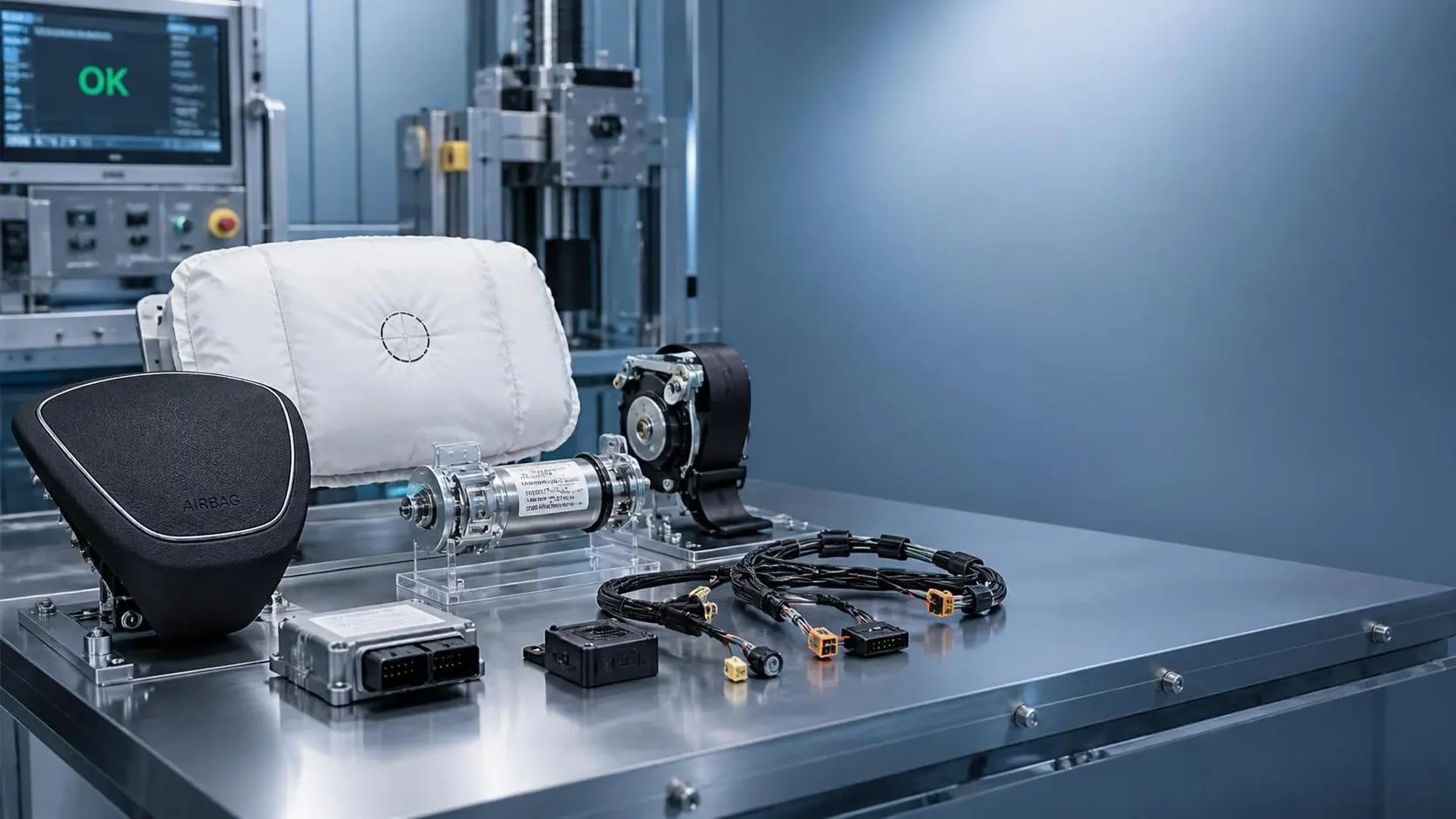
How to Evaluate Airbag Components for OEM Safety Performance and Compliance?
Airbag components evaluation guide for OEM teams: compare deployment performance, inflator consistency, compliance evidence, and supplier traceability to reduce safety risk and choose with confidence.

Maritime Compliance Information Standards: What Ship Operators Must Check
Maritime compliance information standards explained for ship operators: learn the key checks for navigation, documentation, updates, and crew readiness to reduce risk and avoid costly delays.

How to Evaluate Cargo Marine Sonar Systems for Detection Range and Vessel Fit
Cargo marine sonar systems: learn how to assess usable detection range, hull fit, noise risk, and bridge integration to choose a reliable solution for real cargo vessel operations.
Related News
- 00
0000-00
How to Specify Micro-Climate Control Cabins for Harsh Outdoor Worksites? - 00
0000-00
How to Evaluate a B2B Product Knowledge Platform for Faster Procurement Decisions - 00
0000-00
How to Evaluate an Occupant Restraint Systems Exporter for Quality, Compliance, and Supply Risk - 00
0000-00
Navigation Compliance Certification: Which Marine Systems Need It and How to Prepare? - 00
0000-00
How to Evaluate Lightweight Automotive Components for EV Range and Crash Performance
Weekly Insights
Stay ahead with our curated technology reports delivered every Monday.