
Supplier Capability Evaluation Process: Key Criteria for B2B Sourcing Decisions
It often starts with a situation that looks manageable on paper: a new component is needed, the project timeline is already tight, and several suppliers seem capable after a quick review of their website, quote sheet, and sample documents. Then the uncomfortable questions begin. Can this supplier really hold tolerances when production scales? Do they understand traceability requirements? Are they financially stable enough to support a long production cycle? If the part is tied to navigation reliability, occupant restraint, or structural safety, a wrong decision does not stay a purchasing issue for long. It turns into delays, rework, compliance stress, and hard conversations with internal teams.
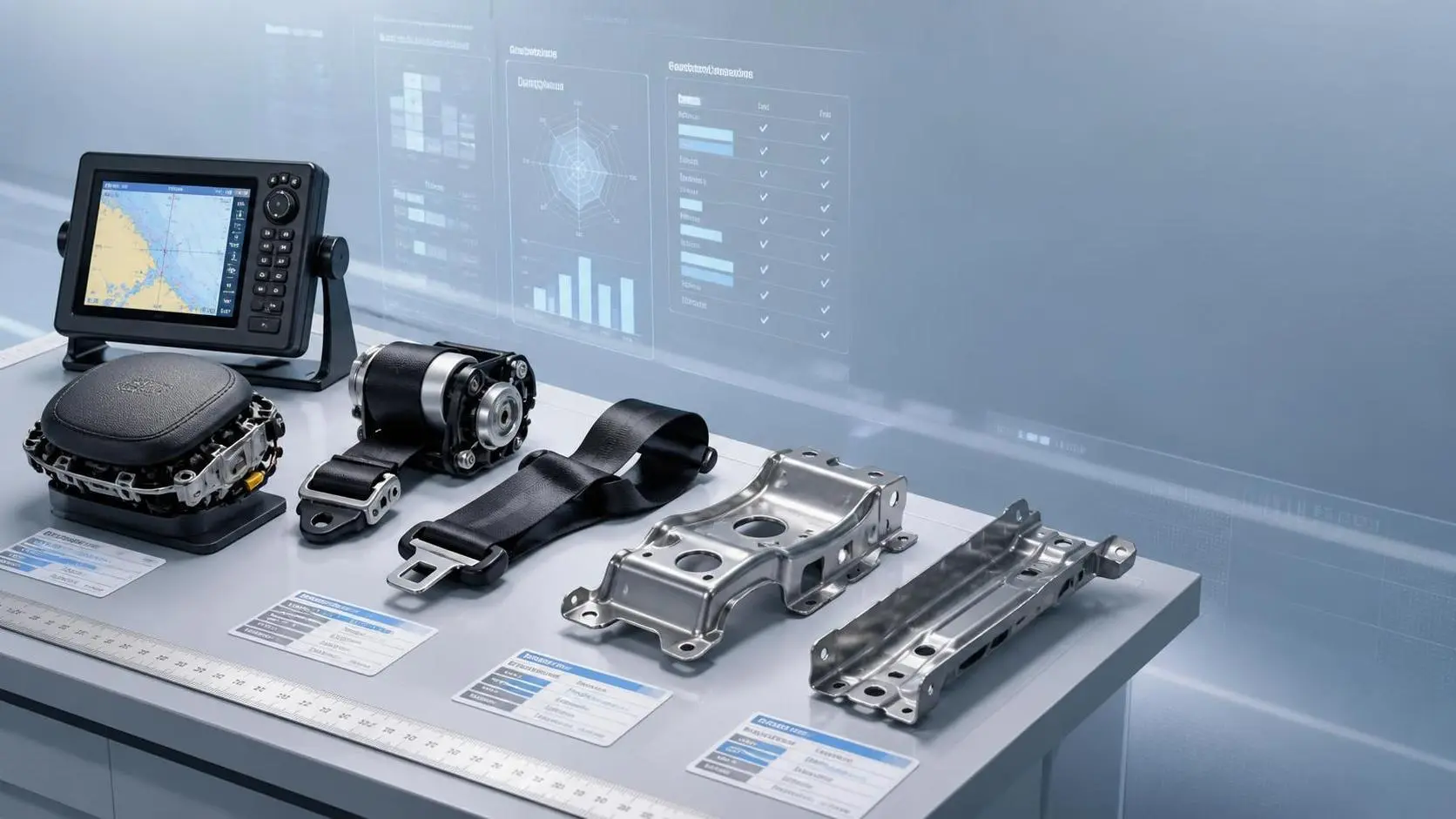
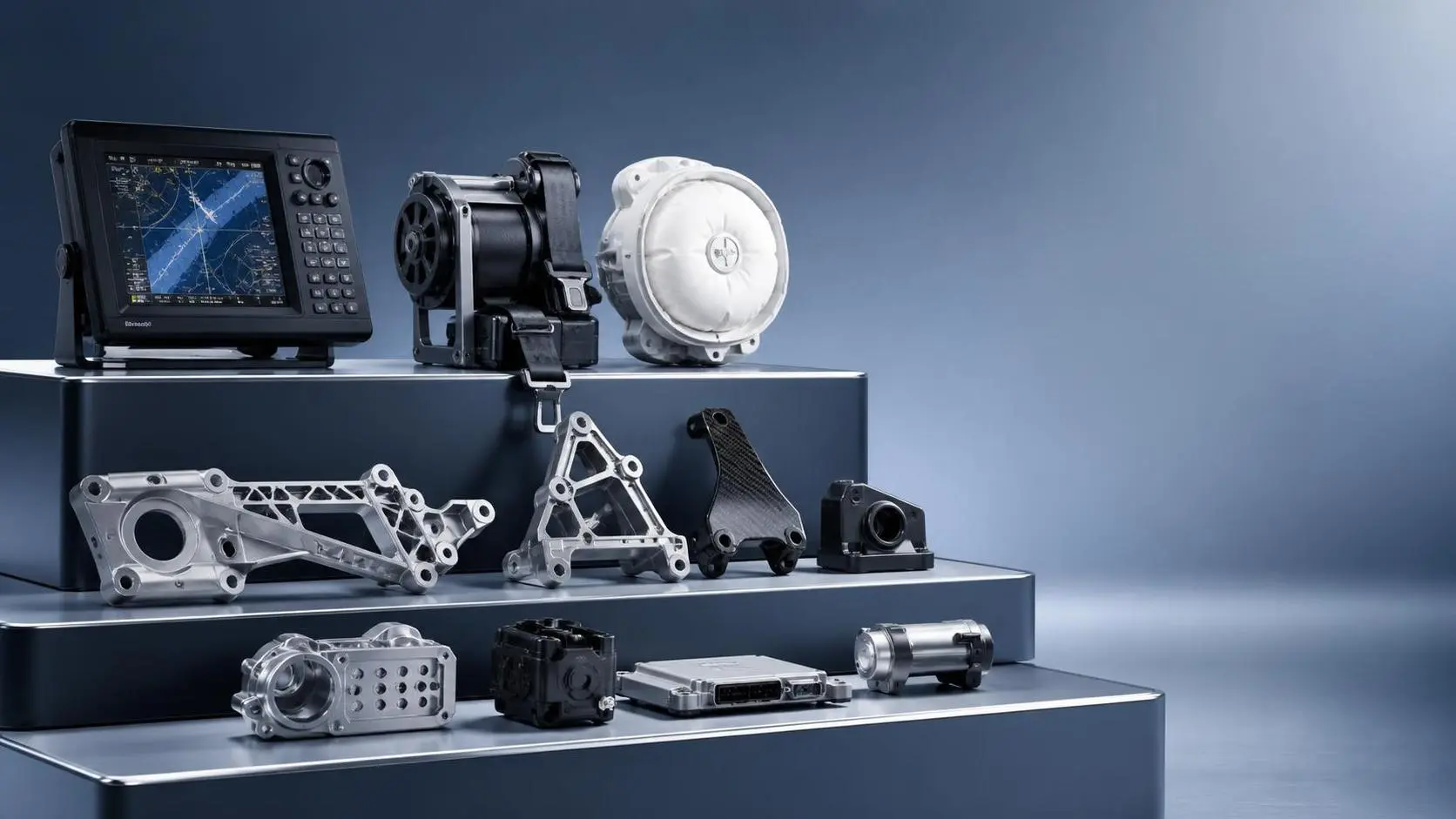
Many sourcing decisions go wrong not because buyers ignore risk, but because the early screening is too shallow. A competitive price and a responsive sales contact can create false confidence. In industries connected to marine electronics, stamped body parts, airbag modules, seatbelt systems, or seat assemblies, the gap between “can quote” and “can deliver consistently” is often wider than expected. That is where a disciplined supplier capability evaluation process becomes less of an administrative exercise and more of a practical way to protect cost, continuity, and downstream quality.
Where evaluation usually breaks down
A common pattern is that teams focus first on obvious items: unit price, lead time, payment terms, and whether the supplier has produced something similar before. Those points matter, but they rarely tell the full story. Two suppliers may both claim experience with high-precision parts or safety-related assemblies, yet one may rely heavily on manual controls while the other has stronger process discipline, change management, and testing routines.
Another frequent issue is evaluating every supplier with the same generic template. That sounds efficient, but it weakens judgment. A supplier producing non-critical packaging does not need the same depth of review as one supplying stamped structures, pyrotechnic-adjacent subcomponents, sensor-integrated modules, or parts exposed to harsh marine operating conditions. If the evaluation criteria do not reflect application risk, the result can look complete while missing the points that actually matter.
There is also a tendency to treat capability as a static label. In reality, capability is conditional. A supplier may be strong in prototyping but weak in serial production planning. They may perform well in one plant but not another. They may handle standard steel well, yet struggle with lightweight alloys, embedded electronics, or strict documentation trails. A useful review asks, “Capable under which conditions?” rather than “Capable or not?”
Start with the part, not the supplier brochure
Before comparing vendors, define the sourcing context with more precision than a standard RFQ summary usually provides. This step is often skipped because everyone wants to move quickly, but it saves time later. The capability review should be built around the real demands of the item being sourced.
For example, if you are reviewing a marine navigation-related component, the evaluation may need to emphasize signal integrity, environmental durability, software or firmware control discipline, update management, and documentation quality. If the item is an automotive body stamping, the focus shifts toward die capability, material behavior, dimensional repeatability, forming experience, and launch stability. If the purchase concerns restraint or seating systems, process traceability, safety-critical handling, sub-supplier control, and validation discipline become more important.
When buyers skip this translation from product risk to evaluation criteria, they end up with vague notes such as “good factory,” “reasonable experience,” or “acceptable quality system.” Those comments are hard to defend internally and even harder to compare across suppliers.
Build evaluation criteria around decision risk
A strong supplier capability evaluation process usually works better when grouped into a few major categories instead of a long, flat questionnaire. The exact format can vary, but the judgment should cover technical fit, manufacturing control, quality discipline, supply resilience, commercial realism, and communication behavior.
Technical fit
This is the first gate. Can the supplier actually make the product as specified, using the required materials, tolerances, interfaces, and validation methods? Look beyond broad claims like “we serve automotive” or “we support marine applications.” Ask what equipment, engineering methods, testing capability, and process know-how are directly relevant to your item.
For complex parts, it helps to ask how they handle design changes, process deviations, and early-stage manufacturability feedback. A supplier that can explain where problems usually emerge is often more credible than one that says everything is straightforward.
Manufacturing control
Capability is not just the presence of machines. It is the stability of the process around them. Review production flow, bottlenecks, maintenance discipline, setup control, operator training, and how special characteristics are managed. In safety-related or precision-driven sectors, consistency matters more than peak output claims.
If a supplier depends heavily on one shift, one engineer, one tool room, or one external processor, that concentration risk should be visible in the evaluation. It does not always disqualify them, but it changes the sourcing decision.
Quality discipline
Instead of asking only whether the supplier has a quality system, look at how quality problems are detected, escalated, contained, and prevented from repeating. Review incoming control, in-process checks, final inspection logic, calibration practices, nonconformance handling, and record retention. For critical parts, ask for examples of how they investigated a process issue or managed a specification change. The method tells you more than a certificate line ever will.
Supply resilience
Delivery risk often hides in places that are not obvious during quotation. Can the supplier secure raw materials reliably? Do they depend on a single sub-supplier for a key process? How do they manage forecast swings? What happens if demand increases faster than expected? In global sourcing, logistics exposure, export documentation readiness, and regional disruption planning deserve attention too.
This is where commercial intelligence can help frame better questions. Tracking sector movement, compliance shifts, and material trend signals can reveal whether a supplier’s promise is realistic or simply optimistic. A buyer does not need market commentary for its own sake, but timely industry intelligence can sharpen the evaluation, especially in categories affected by evolving standards or specialized materials.
Commercial realism
Low pricing is useful only if the supplier can sustain it without cutting corners, delaying investment, or renegotiating later. Review quotation assumptions, tooling boundaries, packaging conditions, logistics terms, warranty exposure, and cost drivers tied to volume bands or engineering changes. If the quote is significantly lower than others, the right question is not “How did they do it?” but “What might not be included?”
Communication behavior
This sounds soft, but it often predicts future pain better than a presentation deck does. During evaluation, note whether answers are specific, whether document versions are controlled, whether technical and sales teams are aligned, and whether difficult questions are answered directly. Suppliers do not need perfect English or polished templates. What matters is whether they communicate clearly enough to prevent avoidable mistakes.
How to compare suppliers without reducing everything to one score
Scoring models are useful, but they can create false neatness. A supplier strong in quality and weak in capacity should not automatically tie with one strong in capacity and weak in traceability just because the total score is similar. Some weaknesses are manageable; others are decision-changing.
A more practical approach is to separate findings into three layers. First, identify non-negotiables. These are points that must be met before approval, such as mandatory process controls, documentation ability, or required test capability. Second, identify manageable gaps that can be closed with timing, support, or phased sourcing. Third, note watch items that do not block award but require monitoring after nomination.
This prevents teams from approving a supplier simply because the average looks acceptable. It also helps when internal stakeholders disagree. Engineering may tolerate a capacity ramp challenge if the technical base is strong. Quality may accept a documentation gap if corrective action is already underway. But if a gap sits in a non-negotiable area, the decision becomes much clearer.
What to verify before the final sourcing decision
Once the shortlist is narrowed, the last stage should move from document review to evidence review. That does not always require a full on-site audit, but it does require more than email reassurance. Depending on the category, useful verification may include process walkthroughs, sample reviews, capability discussions with engineering staff, trial production observations, sub-supplier mapping, or a closer look at control documentation.
If you are buying into technically demanding segments, external intelligence sources can also help validate whether a supplier’s claimed strengths match broader industry direction. In fields where compliance interpretation, signal processing complexity, passive safety expectations, or lightweight material transitions affect sourcing risk, specialized reporting can help buyers ask better follow-up questions. That kind of information is not a substitute for supplier validation, but it can reduce blind spots when teams are comparing technically similar options.
It is also worth checking whether the supplier understands the full lifecycle of the business, not just launch. Some suppliers are convincing during quotation but less prepared for engineering revisions, service parts support, digital update requirements, or documentation retention over time. A good sourcing decision considers the effort needed after the purchase order, not only before it.
Signs you may be moving too fast
If internal discussions keep returning to price because no one feels confident discussing capability, the evaluation is probably incomplete. The same is true when the sourcing file contains many generic statements but few supplier-specific observations. Another warning sign is when the review depends heavily on a single contact person from the supplier side. If technical, quality, and planning functions are not visible during evaluation, future coordination may be fragile.
Rushed nominations also tend to show up through assumptions: assuming certifications equal process control, assuming prototype success equals production readiness, assuming a known customer list equals suitability for your program, or assuming responsiveness equals operational maturity. Those shortcuts are understandable under deadline pressure, but they are exactly why a structured supplier capability evaluation process is worth maintaining.
Keeping the process practical instead of bureaucratic
Buyers often worry that deeper evaluation will slow sourcing down. It can, if every supplier is reviewed with maximum intensity. A more workable method is to scale the depth of assessment to product criticality, complexity, and replacement difficulty. A low-risk, easy-to-switch item may need only basic checks. A critical component with safety, compliance, or high integration risk deserves a far more detailed review.
The goal is not to create paperwork. It is to improve the quality of the decision. In practice, that means documenting the reasoning clearly enough that another team member could understand why one supplier was preferred over another, where the risks remain, and what conditions were attached to approval.
When this is done well, supplier selection becomes less reactive. It is easier to explain internally why a slightly higher quote may carry lower total risk. It is also easier to challenge low bids that look attractive but rest on weak process foundations. Over time, this reduces repeated debates because the organization starts making sourcing decisions from evidence rather than optimism.
In the end, the most useful supplier capability evaluation process is the one that helps you see past the quote and into actual execution risk. For procurement teams dealing with precision, safety, traceability, and long-term supply obligations, that perspective is not extra work. It is the part that keeps a sourcing decision from becoming an expensive problem later.
Related News

How to Evaluate a Seat Sensing Technology Supplier for Safety and Integration?
Seat sensing technology supplier evaluation guide: compare safety maturity, integration fit, algorithm reliability, and validation support to choose a partner that reduces risk.

How to Evaluate Custom Smart Automotive Seating for Premium Vehicle Programs?
Custom smart automotive seating evaluation starts with safety, comfort, integration, and production readiness. Discover how premium vehicle teams choose smarter, lower-risk seat solutions.
B2B Product Intelligence Platforms: How to Compare Features, Data Coverage, and ROI
B2B product intelligence platform comparison: learn how to evaluate data coverage, feature depth, compliance visibility, and ROI to choose a sourcing tool that reduces risk and speeds decisions.

Climate Control Seats Cost: What Drives Price and Long-Term Ownership Value?
Climate control seats cost depends on materials, thermal tech, and integration. Learn what drives price and how to judge long-term value before you buy.

What Factors Drive Marine Navigation Components Cost in Commercial Vessel Projects?
Marine navigation components cost is shaped by integration, compliance, installation, and lifecycle support. Discover what drives pricing and how buyers can reduce risk while improving value.

How Much Does Seat Occupancy Sensing Cost? Key Pricing Factors for Buyers
Seat occupancy sensing price varies widely by technology, integration, and compliance needs. Learn the key cost drivers, avoid hidden fees, and make smarter buying decisions.

How to Specify Micro-Climate Control Cabins for Harsh Outdoor Worksites?
Micro-climate control cabins for harsh outdoor worksites: learn how to specify thermal control, filtration, pressurization, and durability for safer uptime and smarter buying.
How to Evaluate a B2B Product Knowledge Platform for Faster Procurement Decisions
B2B product knowledge platform procurement starts with reducing decision risk. Learn how to compare specs, compliance, and supplier data to speed sourcing with confidence.

How to Evaluate an Occupant Restraint Systems Exporter for Quality, Compliance, and Supply Risk
Occupant restraint systems exporter evaluation guide: learn how to verify quality controls, compliance evidence, and supply risk before sourcing to avoid recalls, delays, and hidden costs.
Related News
- 00
0000-00
Supplier Capability Evaluation Process: Key Criteria for B2B Sourcing Decisions - 00
0000-00
How to Evaluate a Seat Sensing Technology Supplier for Safety and Integration? - 00
0000-00
B2B Product Intelligence Platforms: How to Compare Features, Data Coverage, and ROI - 00
0000-00
What Factors Drive Marine Navigation Components Cost in Commercial Vessel Projects? - 00
0000-00
How Much Does Seat Occupancy Sensing Cost? Key Pricing Factors for Buyers
Weekly Insights
Stay ahead with our curated technology reports delivered every Monday.