
How Automotive Micro-Climate Control Improves Comfort in Heated and Ventilated Seats
How Automotive Micro-Climate Control Improves Comfort in Heated and Ventilated Seats
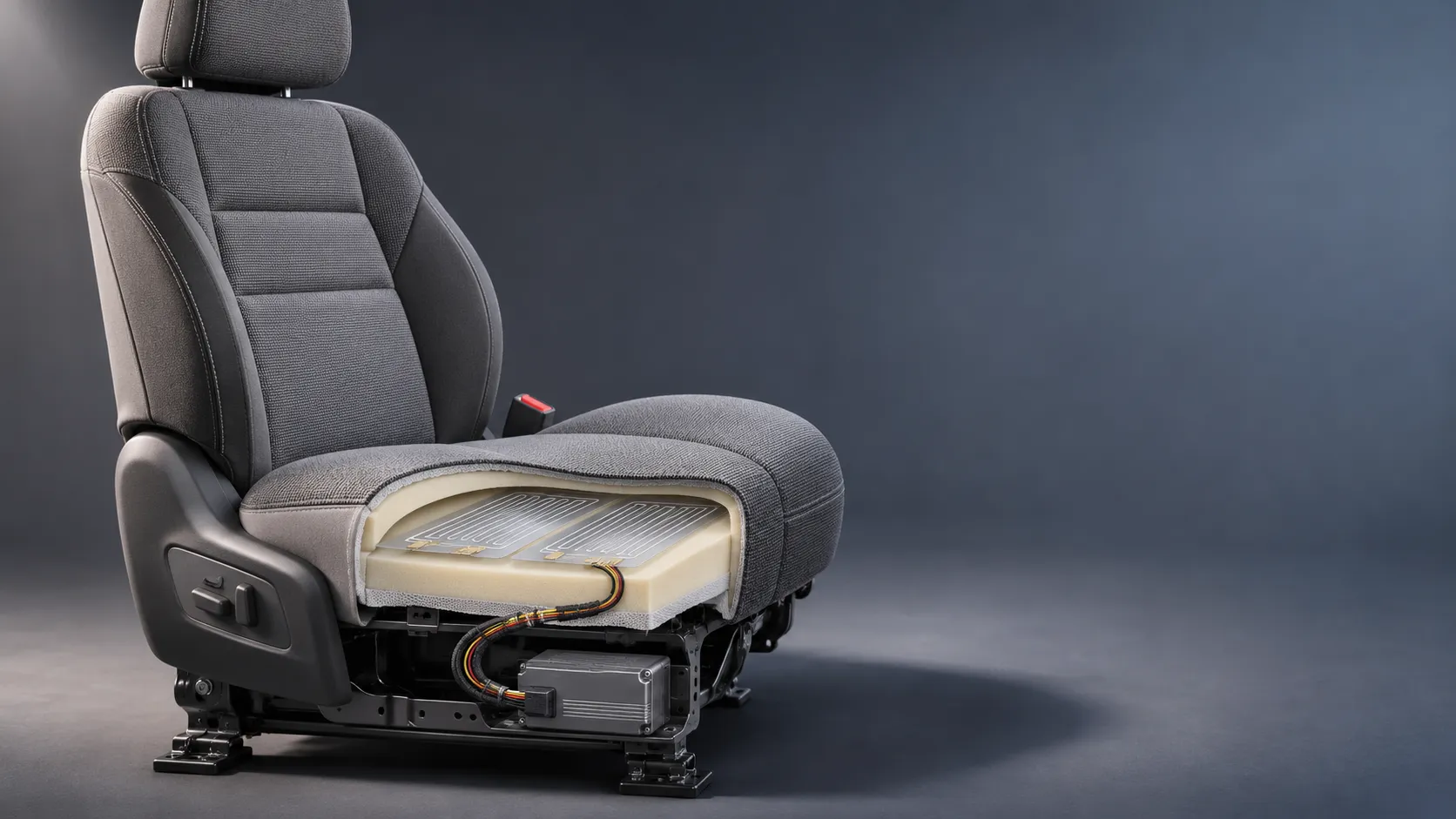
For technical evaluators, heated and ventilated seats should not be assessed as separate comfort features. Their real-world performance depends on whether the seat can manage the small thermal environment created between the occupant and the trim surface. This is the practical meaning of micro-climate control automotive technology: coordinated control of heat, airflow, moisture, material permeability, occupant contact pressure, and sensor feedback inside a tightly constrained seat package.
A seat can heat quickly yet create hot spots. It can move a noticeable volume of air yet leave the occupant’s back feeling damp after a long drive. It can also perform well in a laboratory with an unloaded cushion but become inconsistent once foam compression, garment thickness, body geometry, and vehicle HVAC conditions enter the picture. The evaluation challenge is therefore broader than checking whether heating wires warm up or whether a fan runs.
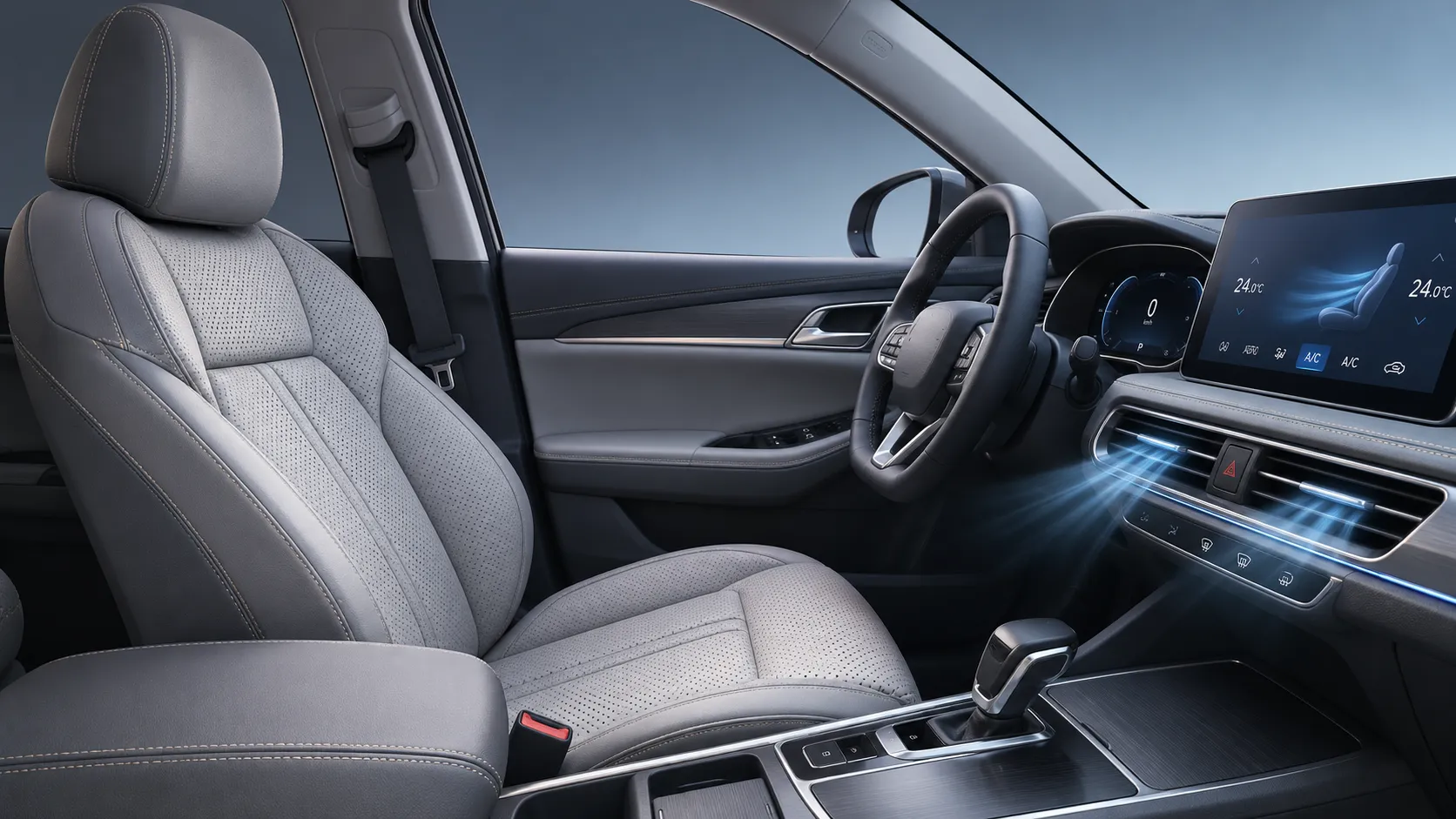
A mature system treats the seat as part of the cabin thermal strategy. That approach matters as vehicle cabins become quieter, more electrified, and more software-defined. When occupants are more aware of localized discomfort, the seat’s thermal behavior becomes a visible measure of perceived vehicle quality.
The Micro-Climate Is a System, Not a Feature
The relevant climate zone is only a few millimeters thick, but it is difficult to control. Heat enters from the seat heater, from the occupant’s body, and sometimes from solar loading on the trim. Moisture is generated at the skin and clothing interface. Air must pass through perforated trim, spacer layers, foam channels, and ducting before it can carry heat or humidity away. Every restriction changes the result.
This explains why ventilated seating is not simply “air conditioning in the seat.” Many systems use fans to draw cabin air through the seat surface rather than deliver refrigerated air directly to the occupant. Their effectiveness is linked to cabin air temperature, HVAC operating mode, trim permeability, fan pressure capability, and leakage control within the cushion. In a warm cabin, airflow may still improve evaporative comfort, but it cannot be expected to produce the same sensation as genuinely cooled supply air.
Heating presents a different control problem. Resistive elements must deliver usable warmth through layers of upholstery without creating localized peaks near seams, attachment points, or compressed foam regions. The best result is not necessarily the highest surface temperature. It is a stable and evenly perceived condition that can be maintained without repeated cycling, excessive energy draw, or uncomfortable contact zones.
For this reason, architecture decisions made early in seat development carry through to comfort performance. Perforation pattern, foam density, pad geometry, duct routing, heating-element placement, and ECU logic are interdependent. Late-stage calibration cannot fully compensate for an airflow path that is blocked by construction or a trim laminate that restricts vapor transport.
What Separates Ventilation From Useful Thermal Relief
A common evaluation mistake is to judge a ventilated seat by fan noise and perceived air movement at the trim before the seat is occupied. Once a person sits down, the foam compresses, contact zones expand, and the airflow network behaves differently. High airflow measured at an open outlet does not automatically translate into relief across the pelvis, lumbar region, and upper back.
The critical issue is pressure distribution. Fans need enough static-pressure capability to overcome losses through ducts, foam, trim, and body contact. Yet higher fan speed can introduce tonal noise, vibration, and energy consumption. A technically sound design balances flow rate with acoustic behavior and distributes air through channels that remain open under realistic occupant loading.
Seat trim is equally influential. Perforated leather or synthetic trim may provide the desired visual language, but the backing layer, adhesive pattern, scrim, and foam interface can limit the actual passage of air. A visually perforated surface can therefore perform poorly if the layers beneath it are not designed as a breathable stack. Conversely, a lower-flow system with a well-matched trim and spacer construction can feel more consistent than a powerful fan connected to a restrictive surface.
Evaluators should also distinguish between extraction and delivery concepts. Extraction systems can help remove warm, humid air from the contact zone and may reduce the sensation of stickiness. Delivery systems can create a more direct airflow sensation, but they require careful management to avoid drafts, uneven cooling, or contamination accumulation in supply paths. Neither approach is universally superior; occupant expectations, cabin HVAC architecture, available package space, and service requirements should guide the decision.
Heating Performance Depends on Uniformity and Control Authority
Traditional seat heaters are often assessed through warm-up time, but that metric alone can be misleading. The relevant questions are where heat is generated, how it spreads through the cushion and backrest, and how the controller responds when ambient conditions or occupant contact change. Thick garments, child seats, empty-seat operation, and partial occupancy can all alter the thermal path.
Heating mats or printed heating elements need to be located around structural features, listing wires, upholstery seams, and pressure-sensitive zones. If conductive paths are concentrated in a narrow area, the occupant may perceive a sharp thermal boundary even when the average surface condition appears acceptable. The same concern applies to backrest bolsters, where foam shape and trim tension can change local heat transfer.
Closed-loop control is valuable because the thermal state of a seat is dynamic. Temperature sensing may be integrated near the heating element, on the pad surface, or in a control model that estimates thermal response from several inputs. Each method has limitations. A sensor that is too distant from the occupant interface may react slowly; one placed near a localized source may not represent the broader contact area. Robust calibration normally requires testing across ambient temperatures, supply voltages, trim variants, and representative occupant loading.
The objective is not to make the system aggressively hot. It is to give the controller enough authority to reach a comfortable condition promptly, then maintain it with modest variation. This is especially relevant for electric vehicles, where localized seat heating can support comfort strategies that reduce dependence on whole-cabin heating during initial warm-up. The energy effect, however, depends on the vehicle’s HVAC strategy and cannot be assumed from seat technology alone.
A Practical Evaluation Framework
Comfort claims should be converted into measurable engineering questions. The table below does not replace an OEM test plan, but it helps separate visible feature content from the factors that determine durable performance.
Standards, Safety, and Validation Boundaries
There is no single global standard that certifies “seat comfort.” Instead, the system sits at the intersection of electrical, electromagnetic compatibility, materials, functional safety, and vehicle-level requirements. The applicable framework depends on the market, vehicle category, electrical architecture, and responsibility split between the seat supplier, thermal-system supplier, and vehicle manufacturer.
For example, environmental and electrical stress work may reference ISO 16750 series methods where relevant to road vehicles. Electromagnetic compatibility requirements may involve vehicle-level regulations such as UNECE R10 in applicable markets, alongside OEM-specific test requirements. Where control functions are safety-related, ISO 26262 analysis may be relevant, but the required automotive safety integrity level and safety concept cannot be inferred merely because a seat contains heating or ventilation. Flammability requirements for trim and interior materials also vary by target market; in the United States, FMVSS No. 302 is often part of the discussion for interior material burn resistance.
These references should not be treated as a generic compliance checklist. A heating element, blower, seat ECU, and trim stack must be evaluated in their assembled condition and within the final vehicle electrical network. Connector temperature rise, short-circuit protection, diagnostic coverage, electromagnetic emissions, liquid ingress exposure, and post-crash behavior are not isolated concerns. They affect package design and supplier responsibility from the beginning.
There is also a passive-safety constraint that comfort teams sometimes encounter too late. Air ducts, wiring, fans, and heating layers must coexist with seat-frame geometry, occupant sensing, side-airbag deployment paths where fitted, and restraint-system integration. A component that improves airflow but interferes with deployment clearance or introduces an uncontrolled hard point is not an acceptable trade.
The Seat Is an Interface Between Comfort and Cabin Safety
This cross-disciplinary view is central to the work observed by Global Navigation & Cabin Safety (GNCS). Its coverage of smart seating sits alongside automotive lightweight bodies, airbags, and seatbelt systems because cabin performance cannot be separated neatly into comfort and protection. The seat is the first sustained point of contact between occupant and vehicle, but it is also a structural and safety-relevant assembly that must perform during daily use and under extreme loading conditions.
The same discipline used to examine precision perception in navigation systems or energy management in crash structures is useful here: define the operating boundary, understand signal and material interactions, and avoid judging a complex system by one attractive output. For micro-climate control automotive development, that means tracing airflow, thermal response, control commands, occupant contact, and fault states through the whole seat rather than treating each subsystem as independent.
Where Programs Commonly Lose Performance
The most frequent failures are not dramatic. They appear as a seat that feels uneven after trim changes, a fan that becomes objectionable in a quiet cabin, or a heating strategy that is satisfactory in one climate chamber condition but inconsistent in customer use. These outcomes often originate in late supplier changes, unvalidated material substitutions, or an incomplete interface definition between seat and HVAC teams.
Three questions deserve early, documented answers: What occupant conditions define acceptable comfort? Which subsystem owns the control decision when cabin HVAC and seat climate functions conflict? And how will the program verify performance after aging, repeated loading, and trim variation? If those answers are vague, a prototype demonstration may look promising while production behavior remains uncertain.
The strongest technical decision is usually not the system with the highest heater rating or the loudest airflow sensation. It is the architecture that maintains thermal uniformity, moisture relief, acoustic acceptability, electrical robustness, and safety compatibility under the actual vehicle conditions it will face. Before committing to a seat micro-climate concept, confirm the test boundary, trim-stack specification, airflow path under load, control and diagnostic logic, and target-market compliance responsibilities. That is where comfort becomes an engineered outcome rather than a feature claim.
Related News

How to Evaluate Supplier Solution References Before Signing a Contract
Evaluate supplier solution references with confidence. Learn how to verify technical evidence, identify delivery risks, and close gaps before signing a contract.
How Capacitive Seat Occupancy Sensing Works in Automotive Airbag Systems
Discover how capacitive seat occupancy sensing supports automotive airbag systems, and explore the design, calibration, and validation challenges behind reliable performance.
Industrial Product References: How to Verify Specs Before Ordering
Use an industrial product reference for procurement to verify specs, compatibility, and certifications before ordering—and reduce costly purchasing risks.
Choosing a Private Label Partner in Europe: Key Supplier Criteria
Private label cooperation Europe buyers can trust starts with the right supplier. Explore key criteria for compliance, quality, traceability and supply resilience.
Integrated Cabin Comfort Systems: How Seat and Cabin Climate Controls Work Together
Discover how integrated cabin comfort systems coordinate seat and climate controls to balance occupant comfort, energy use, safety, and performance.
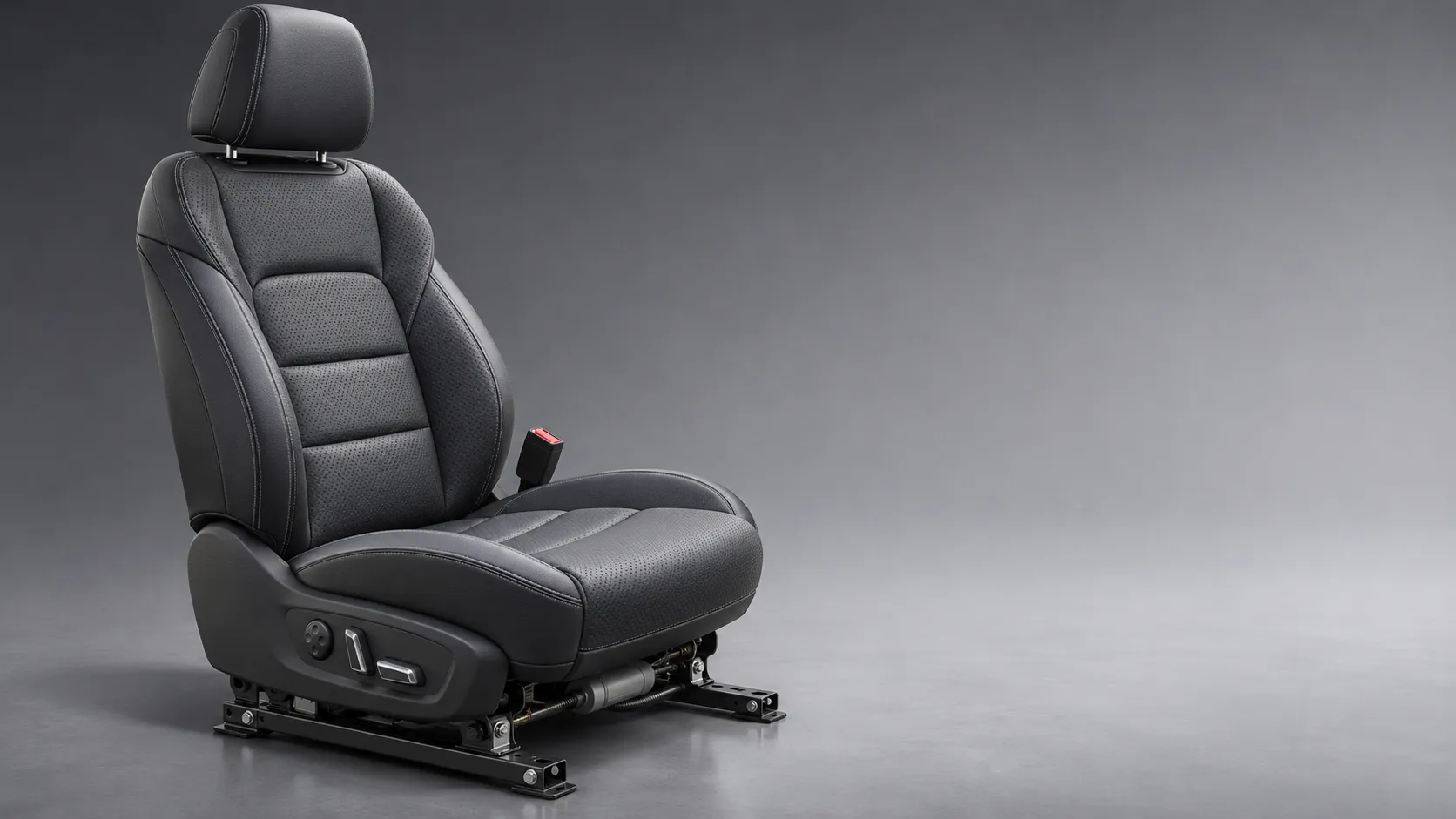
Automotive Ergonomics Pricing: What Drives Seat System Costs?
Discover what drives automotive ergonomics pricing, from seat mechanisms and safety systems to tooling and volume, and learn how to compare supplier quotes.
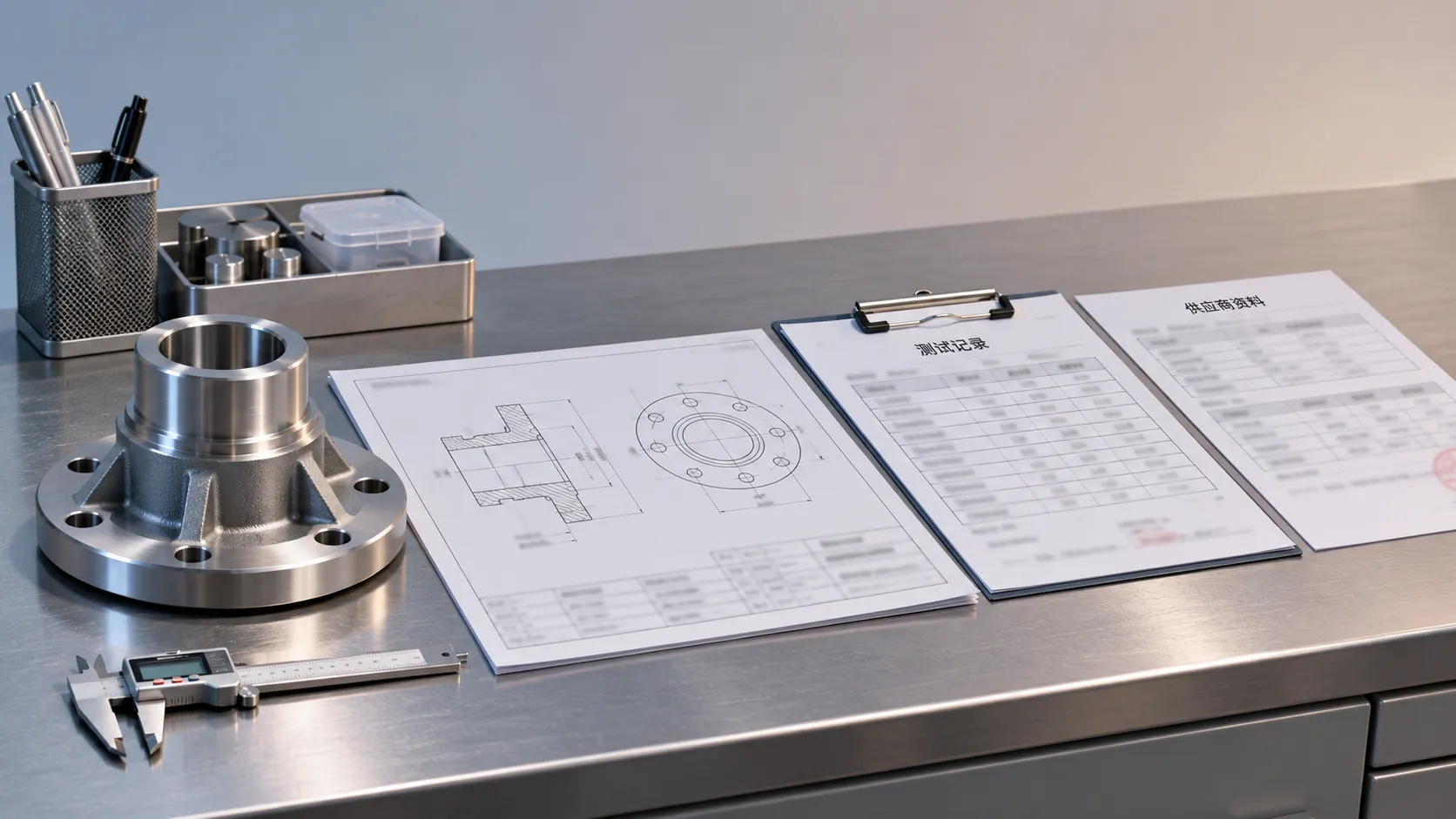
Evaluating Supplier Solutions: How to Verify References and Standards
Supplier solution references and standards can make or break a sourcing decision. Learn how to verify claims, assess compliance, and reduce risk before awarding a contract.
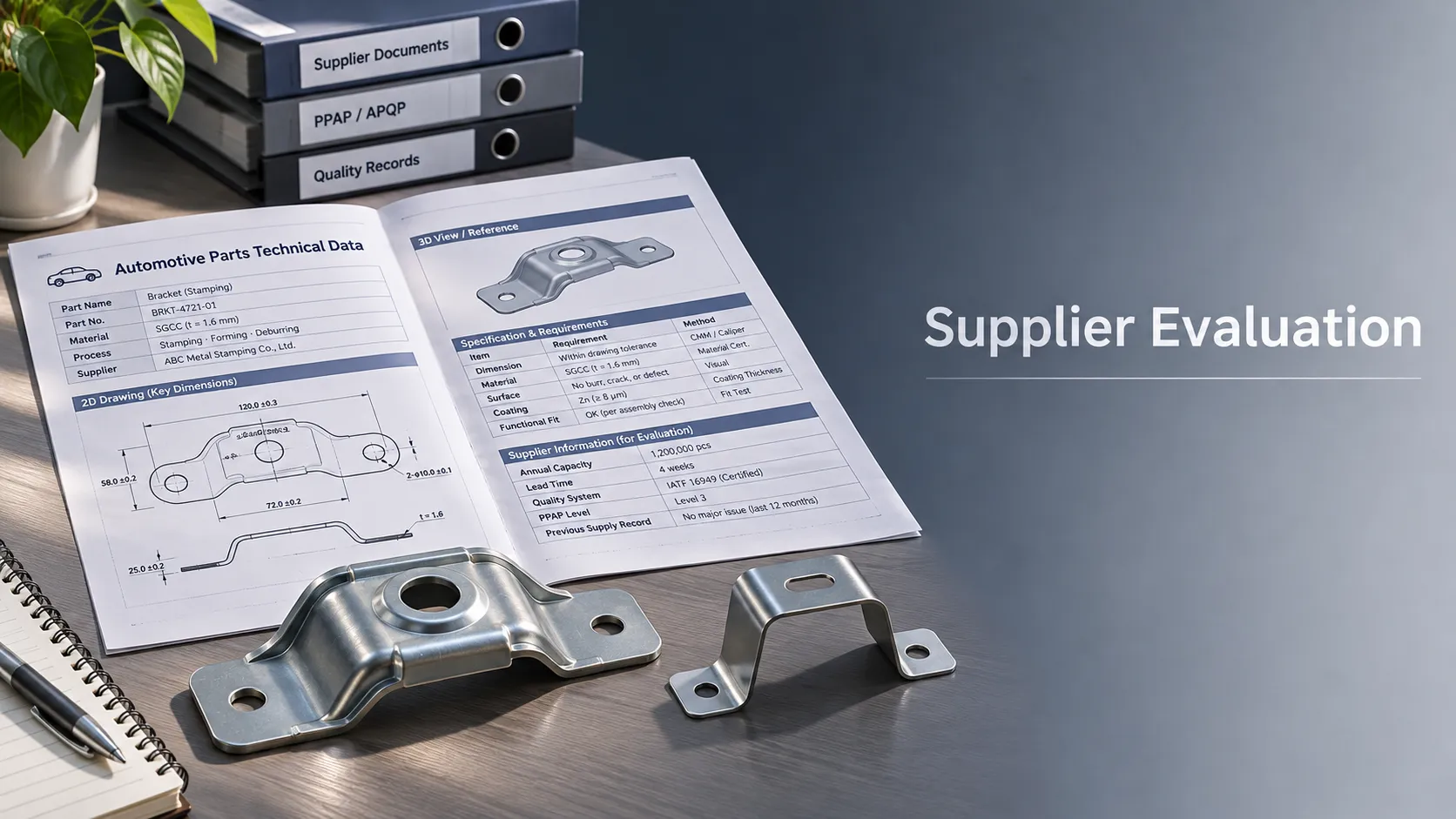
Choosing B2B Product Knowledge Platform Suppliers: Key Evaluation Criteria
Compare B2B product knowledge platform suppliers with confidence. Explore key criteria for data accuracy, supplier transparency, integrations, and value.

Choosing a Marine Radar Systems Supplier: What to Check Before Buying
Choosing a marine radar systems supplier? Compare installed costs, bridge compatibility, compliance evidence, and service support before you buy.
Related News
- 00
0000-00
Integrated Cabin Comfort Systems: How Seat and Cabin Climate Controls Work Together - 00
0000-00
Choosing a Seat Climate Systems Factory: Quality and Production Capacity - 00
0000-00
How Automotive Micro-Climate Control Improves Comfort in Heated and Ventilated Seats - 00
0000-00
How to Evaluate a Seat Comfort Solutions Supplier for OEM Program Requirements - 00
0000-00
Climate Control Seats Cost: What Drives Price and Long-Term Ownership Value?
0000-00
Weekly Insights
Stay ahead with our curated technology reports delivered every Monday.