Why high-precision marine navigation still fails at sea
Why high-precision marine navigation still fails at sea
Why does high-precision marine navigation still break down in rough, real-world waters?
The answer is rarely one failed sensor.
It is usually a chain of weak links.
Despite better GNSS, sonar fusion, ECDIS, and automated bridge tools, high-precision marine navigation remains vulnerable under hostile sea conditions.
Signal blockage, electromagnetic interference, poor system integration, and overloaded crews can erase precision exactly when precision matters most.
For maritime intelligence platforms such as GNCS, this topic matters beyond shipping alone.
It reflects a broader industry truth.
Advanced safety systems fail when sensing, structure, software, and human response stop working as one coordinated layer.
Scenario background: why failure risk changes from one voyage to another
High-precision marine navigation is not tested equally in every route.
A calm coastal transit and a congested northern passage create very different precision demands.
In open oceans, continuity and redundancy are the key judgment points.
Near ports, update speed, obstacle awareness, and pilot interaction become more critical.
In polar or high-latitude waters, geometry limits, ionospheric effects, and sparse infrastructure amplify risk.
This is why evaluating high-precision marine navigation by nominal accuracy alone is misleading.
The true question is whether the whole navigation stack stays trustworthy under stress, motion, weather, and time pressure.
Scenario 1: open sea operations where precision slowly degrades
On long ocean passages, failure often appears gradual rather than dramatic.
Satellite corrections may weaken, antenna alignment may drift, and inertial references may accumulate small errors.
Each deviation can seem harmless alone.
Together, they reduce confidence in high-precision marine navigation over several hours or days.
The core judgment point here is resilience over time.
Systems must maintain accuracy during vibration, salt exposure, multipath reflections, and intermittent correction loss.
A solution that performs perfectly in short testing may still underperform on a real crossing.
Scenario 2: port approach where complexity overwhelms precision
Port entry is where high-precision marine navigation faces compressed decision windows.
Traffic density rises, dredged channels narrow, and small timing errors become major maneuvering risks.
Bridge teams must cross-check radar, AIS, pilot advice, local notices, and chart data simultaneously.
If those layers are not synchronized, operators may trust a precise number with poor situational meaning.
This is a major reason high-precision marine navigation still fails at sea.
Accuracy without context does not guarantee safe action.
In some equipment discussions, reference materials such as 无 appear, but deployment quality still decides outcomes.
Scenario 3: harsh weather where sensor fusion loses coherence
Storms do not simply reduce visibility.
They disturb the assumptions behind sensor fusion.
Heavy roll, pitch, spray, and acoustic noise can degrade radar interpretation, sonar returns, and attitude compensation.
The system may still produce outputs, yet those outputs may no longer agree physically.
The critical judgment point is coherence, not just availability.
If bridge systems keep displaying conflicting truths, crews face a dangerous confidence gap.
High-precision marine navigation must therefore be measured by degraded-mode behavior as much as peak-mode accuracy.
Scenario 4: contested electromagnetic environments where trust becomes the real issue
Not every failure comes from weather or hardware wear.
Spoofing, jamming, and accidental interference can distort location certainty without obvious alarms.
This creates one of the hardest scenarios for high-precision marine navigation.
The vessel may appear well-guided while drifting from reality.
The key judgment point is trust validation.
Systems need independent timing checks, anomaly detection, and cross-sensor plausibility logic.
Without those layers, precision becomes fragile theater.
How different scenarios change navigation needs
Practical adaptation advice for more resilient performance
Improving high-precision marine navigation requires more than buying better sensors.
It requires scenario-based engineering and disciplined operating logic.
- Map failure modes by route type, weather profile, and traffic complexity.
- Test sensor fusion during motion extremes, not just calm calibration runs.
- Build fallback workflows for correction loss, chart mismatch, and pilot-data conflict.
- Use interface design that highlights uncertainty, not only estimated position.
- Audit software updates and data synchronization across bridge systems.
- Review reference options, including materials linked as 无, only within a full risk framework.
These actions align with broader GNCS thinking.
Whether in marine guidance or passenger protection, intelligence only works when integration survives hostile conditions.
Common misjudgments that keep repeating
Several mistakes explain why high-precision marine navigation still fails despite technical progress.
- Treating laboratory accuracy as operational reliability.
- Assuming more sensors automatically mean better judgment.
- Ignoring crew workload during high-speed information changes.
- Separating cybersecurity from navigational integrity.
- Relying on compliance minimums instead of hostile-environment validation.
These are not niche issues.
They affect research priorities, procurement logic, retrofit decisions, and safety reporting across the mobility equipment ecosystem.
Next-step action: evaluate precision by scenario, not by brochure
The future of high-precision marine navigation depends on a stronger evaluation habit.
Ask how the system behaves in crowded harbors, heavy seas, long-duration drift, and interference-prone waters.
Check whether uncertainty is visible, whether backups are independent, and whether crews can act before confidence collapses.
That approach turns precision from a marketing metric into a safety capability.
For anyone following maritime technology through GNCS, the lesson is clear.
High-precision marine navigation fails less when sensing, software, compliance, and human response are designed for the same hostile reality.
Related News

How to Evaluate Custom Smart Automotive Seating for Premium Vehicle Programs?
Custom smart automotive seating evaluation starts with safety, comfort, integration, and production readiness. Discover how premium vehicle teams choose smarter, lower-risk seat solutions.
B2B Product Intelligence Platforms: How to Compare Features, Data Coverage, and ROI
B2B product intelligence platform comparison: learn how to evaluate data coverage, feature depth, compliance visibility, and ROI to choose a sourcing tool that reduces risk and speeds decisions.

Climate Control Seats Cost: What Drives Price and Long-Term Ownership Value?
Climate control seats cost depends on materials, thermal tech, and integration. Learn what drives price and how to judge long-term value before you buy.
What Factors Drive Marine Navigation Components Cost in Commercial Vessel Projects?
Marine navigation components cost is shaped by integration, compliance, installation, and lifecycle support. Discover what drives pricing and how buyers can reduce risk while improving value.

How Much Does Seat Occupancy Sensing Cost? Key Pricing Factors for Buyers
Seat occupancy sensing price varies widely by technology, integration, and compliance needs. Learn the key cost drivers, avoid hidden fees, and make smarter buying decisions.

How to Specify Micro-Climate Control Cabins for Harsh Outdoor Worksites?
Micro-climate control cabins for harsh outdoor worksites: learn how to specify thermal control, filtration, pressurization, and durability for safer uptime and smarter buying.
How to Evaluate a B2B Product Knowledge Platform for Faster Procurement Decisions
B2B product knowledge platform procurement starts with reducing decision risk. Learn how to compare specs, compliance, and supplier data to speed sourcing with confidence.
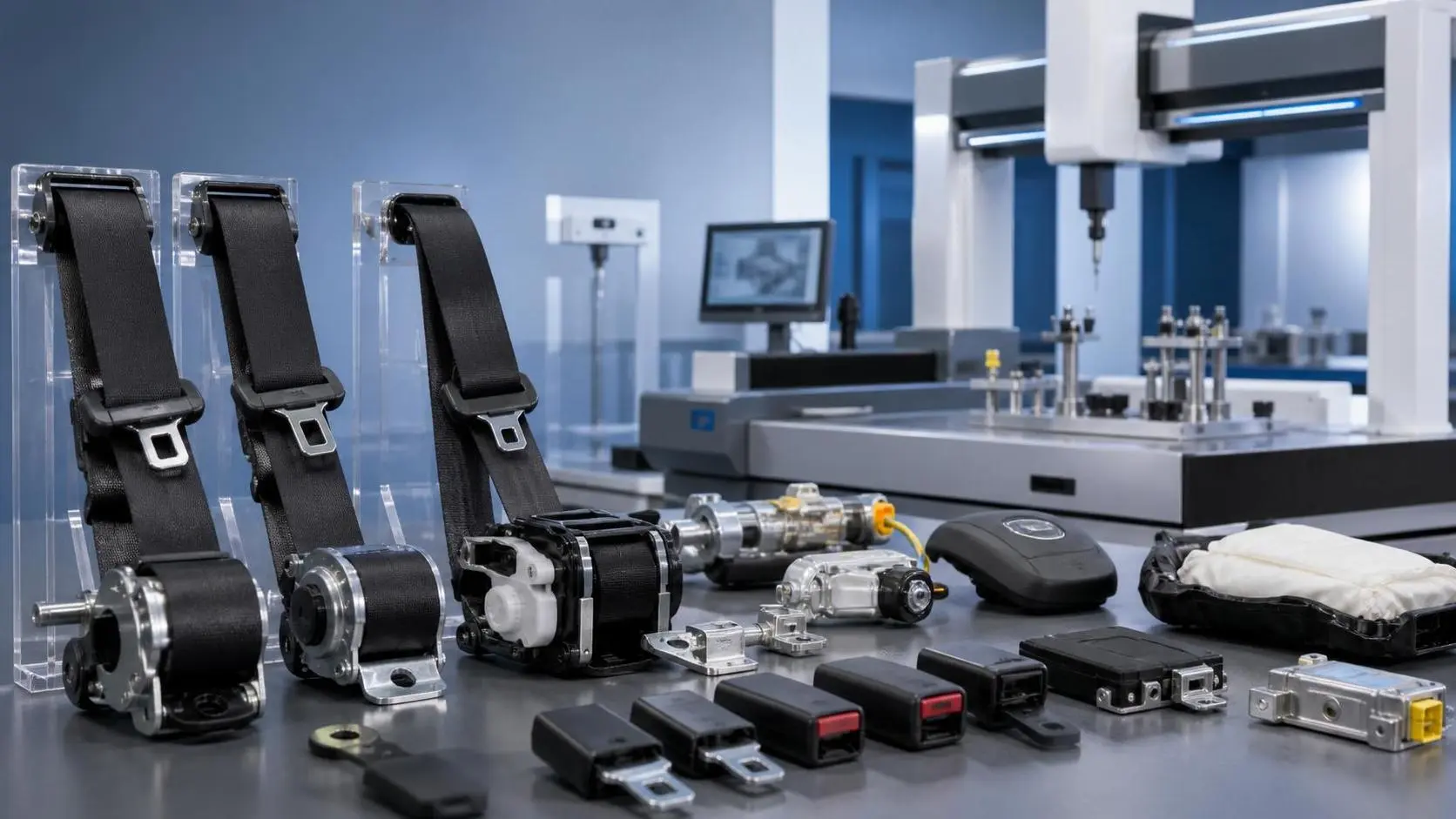
How to Evaluate an Occupant Restraint Systems Exporter for Quality, Compliance, and Supply Risk
Occupant restraint systems exporter evaluation guide: learn how to verify quality controls, compliance evidence, and supply risk before sourcing to avoid recalls, delays, and hidden costs.
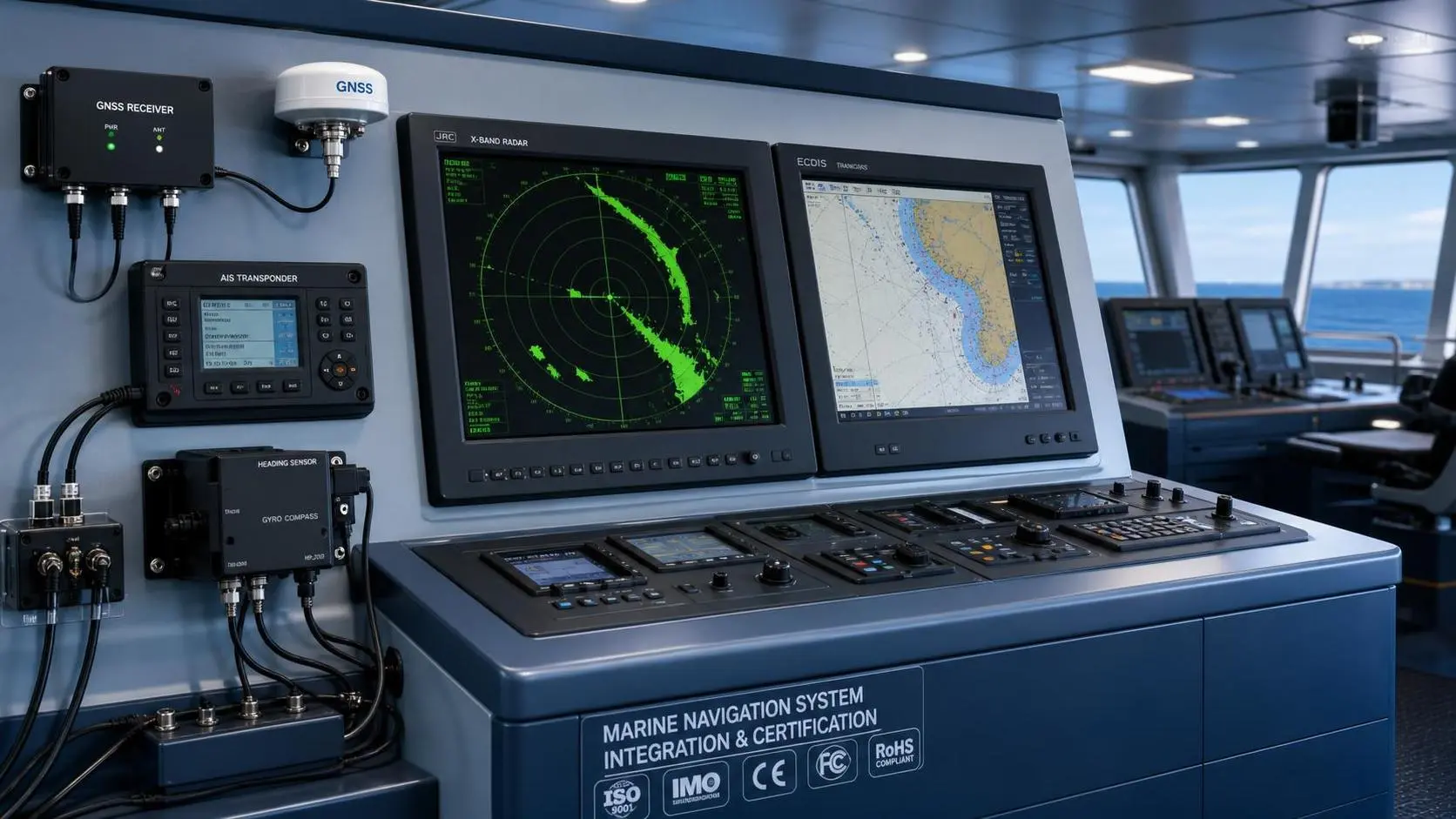
Navigation Compliance Certification: Which Marine Systems Need It and How to Prepare?
Navigation compliance certification explained: discover which marine systems need approval, what documents matter, and how to prepare early to avoid delays, rework, and costly project risks.
Related News
- 00
0000-00
How to Choose a Marine Positioning Solutions Supplier in Europe for Offshore and Port Operations - 00
0000-00
Marine Positioning Solutions Provider Comparison: GNSS, Accuracy, and Integration Factors - 00
0000-00
Marine Electromagnetic Navigation Accuracy vs GNSS: Which Performs Better Near Interference? - 00
0000-00
Marine Electromagnetic Navigation Accuracy: What Affects Position Stability at Sea? - 00
0000-00
Marine Positioning Systems Exporter Selection: What to Check in GNSS Accuracy, Compliance, and Support
Weekly Insights
Stay ahead with our curated technology reports delivered every Monday.