What Drives Marine Safety System Costs Across Vessel Types and Compliance Levels?
Marine safety system costs are driven less by the catalogue price of an individual radar, AIS transponder, ECDIS display, alarm panel, or life-saving appliance than by the vessel’s regulatory obligation and the work required to make every component function as one compliant system. A coastal workboat, an offshore support vessel, a chemical tanker, and a passenger ferry may all carry similar-looking equipment categories, yet their installed and lifetime costs can differ sharply.
The central cost question is not “What does the equipment cost?” but “What safety capability must be delivered, approved, installed, documented, maintained, and kept operational for this vessel’s trading profile?” Missing that distinction is how an apparently economical quotation becomes a costly variation order, delayed delivery, or repeated retrofit expense.
Vessel type sets the baseline, but operating profile determines the real specification
Vessel type is a useful starting point because it affects statutory equipment requirements, equipment redundancy, installation complexity, and the consequences of failure. It is not, however, a complete cost predictor. Gross tonnage, passenger capacity, flag, class notation, voyage area, cargo, and whether the vessel operates internationally can change the required safety package more than the vessel’s label alone.
For ships engaged on international voyages, the International Convention for the Safety of Life at Sea (SOLAS) is a core reference point. Its requirements interact with flag-state rules, classification society requirements, port-state control exposure, and local regulations. A ship may need equipment that is not strictly mandated by a single international convention but is required under its class notation, charter-party terms, customer safety standards, or operating permit.
A vessel operating only in protected domestic waters may use a more limited communication and navigation suite than one trading internationally. Conversely, a small vessel working offshore, near wind farms, in congested traffic lanes, or in poor visibility may need capabilities beyond its minimum statutory requirement. The cheapest compliant configuration is therefore not always the lowest-risk configuration for the actual voyage.
Compliance level changes both equipment cost and the cost of proving compliance
Compliance has two separate cost layers. The first is the physical equipment: approved radar, ECDIS, VHF, MF/HF or satellite communications where applicable, emergency position-indicating radio beacon (EPIRB), search and rescue transponder, fire detection, fixed firefighting systems, life rafts, immersion suits, alarms, and associated sensors. The second is the evidence that the system meets the applicable rule set and remains compliant after installation.
That second layer is frequently underestimated. It can include type-approval certificates, wheelmark or other conformity documentation where required, factory acceptance records, installation drawings, cable schedules, commissioning records, radio licensing support, surveyor attendance, test reports, manuals, software records, and crew familiarization documentation.
For navigation equipment, SOLAS Chapter V contains carriage requirements for navigational systems and equipment. The precise applicability depends on ship type, size, and voyage. For radio communications, SOLAS Chapter IV and the Global Maritime Distress and Safety System (GMDSS) establish obligations that depend in part on the vessel’s designated sea area. A quotation that simply says “GMDSS package” is incomplete unless it states the intended sea area, the required duplicated arrangements, battery autonomy assumptions, and the approved communication paths.
ECDIS illustrates why compliance cannot be treated as a one-time purchase. Where ECDIS is carried to meet carriage requirements, the installation must be supported by the correct charts, sensors, backup arrangements, software status, and operational procedures. The display unit is only one component of the cost. Position input, heading, speed, depth data, radar overlay interfaces, chart service arrangements, onboard updates, and crew competence all affect the actual expenditure.
Approval status should be checked against the vessel’s flag and class requirements before issuing a purchase order. “Marine-grade” is not equivalent to type-approved. An industrial display, commercial GNSS receiver, or generic alarm device may be technically capable but unusable for a statutory function if it lacks the necessary approval, documentation, environmental testing status, or accepted interface arrangement.
Integration is often the largest variable hidden behind low equipment prices
Standalone equipment can be priced clearly. Integrated safety systems cannot. A radar may need gyrocompass or heading input; an ECDIS needs reliable position, heading, speed, and depth data; an AIS must connect correctly to GNSS and shipborne sensors; bridge navigational watch alarm system functions may need to interact with the bridge arrangement and alarm philosophy. Fire detection panels, general alarm systems, public-address systems, emergency shutdowns, and monitoring systems may also have interdependencies.
The financial effect of integration comes from engineering and risk control rather than from connectors alone. Each interface must be identified, designed, tested, and documented. Signal standards, protocol compatibility, network architecture, alarm priority, power supply segregation, electromagnetic compatibility, and failure behavior all matter. Older vessels raise the cost further because drawings may be incomplete, legacy sensors may provide only limited outputs, and discontinued equipment can constrain replacement choices.
A low initial quote can conceal exclusions such as interface converters, junction boxes, marine cables, glands, antenna work, custom console fabrication, software licenses, network switches, commissioning travel, harbour trials, or class witnessing. These exclusions are not necessarily improper; they become a problem when they are not visible during bid comparison.
The correct comparison unit is usually an installed, commissioned, accepted system with defined interfaces—not the ex-works price of the major equipment item.
Newbuild and retrofit projects carry different cost risks
Newbuild projects offer the best opportunity to control marine safety systems cost because equipment locations, cable trays, power distribution, antenna positions, console layouts, and equipment-room access can be designed before construction is complete. Even in a newbuild, late changes in flag, class, trading area, or owner specifications can trigger expensive redesign because they affect cable runs, panel capacity, penetrations, and testing plans.
Retrofits are less predictable. The equipment may be physically affordable but difficult to install without disrupting operations. Cost exposure is shaped by access restrictions, asbestos or hazardous-material controls on older vessels, corroded foundations, unavailable spare panel capacity, cable tray congestion, watertight penetration work, antenna mast access, and the availability of an approved shutdown window.
Drydock timing has a major commercial effect. Work that requires hull penetrations, transducer installation, external antennas, or extensive cable routing may be much more economical when coordinated with a scheduled docking. Deferring scope until an emergency repair or a short port stay can add mobilization costs, overtime, logistics charges, and operational delay risk.
Retrofit scope should also distinguish between replacement in kind and functional replacement. Replacing an obsolete radar with a current model can require new scanners, foundations, cabling, display mounting, interface conversion, or changes to the bridge layout. A nominal “like-for-like” replacement may not be like-for-like at the system level.
Environmental duty and redundancy raise costs for valid reasons
Marine electronics and emergency equipment are exposed to vibration, salt spray, humidity, temperature variation, shock, and unstable power. Equipment intended for enclosed inland operation may not withstand an exposed bridge wing, an offshore deck area, or a high-vibration engine-room boundary. Environmental suitability affects not only product selection but enclosure ratings, mounting design, cable protection, heating or cooling arrangements, and spare-part strategy.
Redundancy is another cost driver that should be examined by function rather than by unit count. A duplicated sensor does not necessarily provide a redundant safety function if both sensors use the same power source, cable route, network switch, or antenna location. Effective redundancy may require separate power feeds, independent data paths, battery backup, physical separation, and failure alarms. These measures add cost, but they prevent a single-point failure from disabling navigation or emergency communications.
For tankers, gas carriers, offshore vessels, and ships with hazardous-area requirements, certified equipment and installation methods can materially increase costs. The governing question is whether equipment is installed within a classified hazardous zone or connected to systems that require intrinsically safe or explosion-protected arrangements. Applying hazardous-area specifications where they are not required wastes budget; omitting them where they are required creates a severe compliance and safety exposure.
Lifecycle cost is shaped by service access, software, and certification intervals
Capital expenditure is only the opening cost. Safety equipment must remain serviceable throughout the vessel’s operating life, and certain equipment requires scheduled inspections, testing, replacement, or approved servicing. Batteries, hydrostatic release units, pyrotechnic devices, life raft servicing, fire extinguishing media checks, detector calibration, EPIRB battery replacement, and radio surveys can all create planned maintenance obligations.
Digital navigation systems add their own recurring requirements. Electronic chart services, software updates, cybersecurity patching, license management, and compatible sensor support can become material operating expenses. A system that is inexpensive to acquire but depends on a restricted service network, proprietary consumables, or a short product-support horizon can prove more expensive than a higher-priced alternative with stronger lifecycle support.
Service geography deserves the same scrutiny as warranty duration. A manufacturer may offer a standard warranty, but the commercial value depends on whether qualified technicians, approved service agents, spare parts, and calibration capability are accessible along the vessel’s normal trading routes. For vessels calling remote ports, the cost of a service visit may exceed the cost of a minor component.
Obsolescence planning is especially important for bridge electronics. The useful life of a cable route, console, or power distribution board can exceed the supported life of displays, processors, software, and sensors. Selecting an open, documented interface architecture can reduce future conversion costs, though proprietary systems are not automatically unsuitable if the supplier provides credible support commitments and a clear migration path.
How to compare quotations without creating false savings
Comparing equipment schedules line by line is necessary but insufficient. A more reliable evaluation separates mandatory scope, included integration work, exclusions, acceptance responsibility, and recurring obligations. The quotation should identify the exact equipment models, approval basis, sensor inputs, interface protocols, cable and installation assumptions, delivery terms, commissioning location, and the party responsible for correcting failed tests.
Particular attention should be given to the boundary between equipment supplier, shipyard, electrical contractor, system integrator, class representative, and owner’s technical team. Cost overruns often arise where no party clearly owns the interface. If a radar cannot receive valid heading data, or an ECDIS cannot use a required sensor input, the commercial dispute usually concerns scope ownership rather than the price of the missing cable.
- Is the proposed configuration compliant with the vessel’s flag, class, voyage area, and statutory function?
- Are all required certificates, manuals, drawings, licenses, and test records included?
- Which existing sensors and systems are assumed to remain in service, and has their compatibility been verified?
- Does the price include cables, glands, foundations, antennas, junction boxes, network hardware, and power modifications?
- Who is responsible for harbour acceptance tests, sea trials, survey support, defect correction, and final documentation?
- What recurring costs apply to charts, licenses, batteries, inspection, servicing, software, and spare parts?
- What is the confirmed support life of the equipment, and where can approved service be obtained?
The lowest evaluated cost is rarely the lowest equipment price. It is the cost of a compliant system that can be delivered on schedule, accepted by the relevant authority or class body, supported in operation, and upgraded without rebuilding the vessel’s electrical and data infrastructure. That is the basis on which marine safety investments should be compared across vessel types and compliance levels.
Related News

How to Evaluate Supplier Solution References Before Signing a Contract
Evaluate supplier solution references with confidence. Learn how to verify technical evidence, identify delivery risks, and close gaps before signing a contract.

How Capacitive Seat Occupancy Sensing Works in Automotive Airbag Systems
Discover how capacitive seat occupancy sensing supports automotive airbag systems, and explore the design, calibration, and validation challenges behind reliable performance.
Industrial Product References: How to Verify Specs Before Ordering
Use an industrial product reference for procurement to verify specs, compatibility, and certifications before ordering—and reduce costly purchasing risks.

Choosing a Private Label Partner in Europe: Key Supplier Criteria
Private label cooperation Europe buyers can trust starts with the right supplier. Explore key criteria for compliance, quality, traceability and supply resilience.

Integrated Cabin Comfort Systems: How Seat and Cabin Climate Controls Work Together
Discover how integrated cabin comfort systems coordinate seat and climate controls to balance occupant comfort, energy use, safety, and performance.

Automotive Ergonomics Pricing: What Drives Seat System Costs?
Discover what drives automotive ergonomics pricing, from seat mechanisms and safety systems to tooling and volume, and learn how to compare supplier quotes.

Evaluating Supplier Solutions: How to Verify References and Standards
Supplier solution references and standards can make or break a sourcing decision. Learn how to verify claims, assess compliance, and reduce risk before awarding a contract.
Choosing B2B Product Knowledge Platform Suppliers: Key Evaluation Criteria
Compare B2B product knowledge platform suppliers with confidence. Explore key criteria for data accuracy, supplier transparency, integrations, and value.
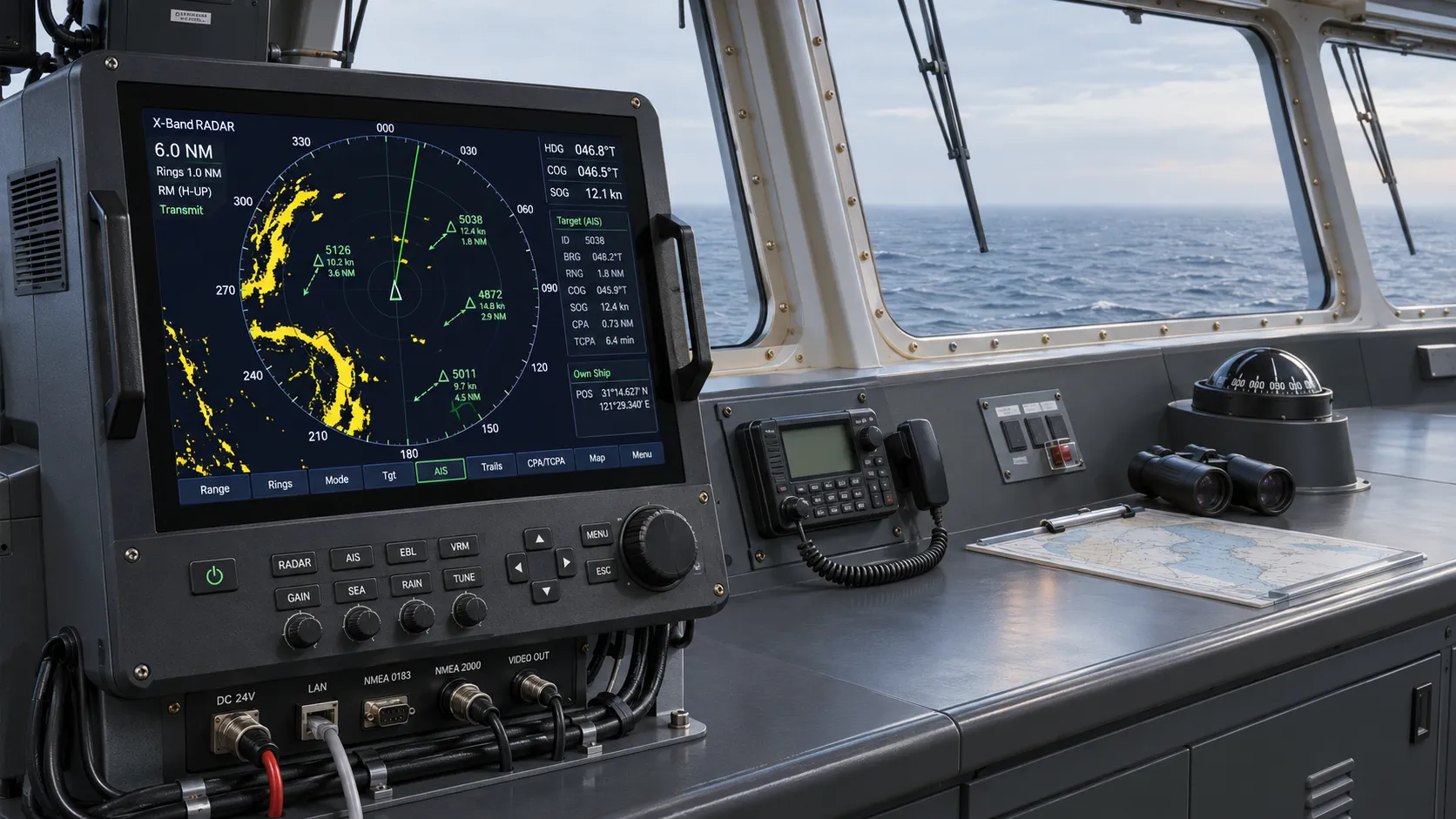
Choosing a Marine Radar Systems Supplier: What to Check Before Buying
Choosing a marine radar systems supplier? Compare installed costs, bridge compatibility, compliance evidence, and service support before you buy.
Related News
- 00
0000-00
How to Evaluate Supplier Solution References Before Signing a Contract - 00
0000-00
Industrial Product References: How to Verify Specs Before Ordering - 00
0000-00
Choosing a Private Label Partner in Europe: Key Supplier Criteria - 00
0000-00
Automotive Ergonomics Pricing: What Drives Seat System Costs? - 00
0000-00
Evaluating Supplier Solutions: How to Verify References and Standards
0000-00
Weekly Insights
Stay ahead with our curated technology reports delivered every Monday.