
How to Review Product Specifications Before Selecting Components for Production
A component specification is not a description of what a part can do under favorable conditions. It is the technical boundary that determines whether the part can be released into a production system, validated in its installed state, sourced consistently, and supported through its service life.
That distinction matters most when the component sits inside a safety, navigation, structural, or electronically controlled system. A radar receiver with an impressive detection range may be unsuitable if its environmental rating excludes the vessel installation zone. A high-strength stamped bracket may meet tensile-strength targets but fail dimensional capability after coating. A seatbelt retractor may carry a valid approval marking yet be incompatible with the intended anchorage geometry, webbing angle, or vehicle restraint logic. The critical issue is not whether a datasheet contains many numbers; it is whether those numbers correspond to the production requirement.
A reliable specification guide therefore starts by converting a broad requirement into verifiable acceptance conditions. The review should connect function, interface, environment, compliance, manufacturing variation, and lifecycle control before commercial comparison begins.
Read the specification as a controlled requirement, not a supplier brochure
Specifications often combine three very different kinds of information: nominal product characteristics, tested performance limits, and optional product-family capabilities. Treating them as equivalent is a frequent source of selection errors.
A nominal value describes a typical design point. It is useful for system calculations, but it is not necessarily a production guarantee. A limit value defines the boundary within which the component is intended to operate or survive. A verified requirement should also state the test method, test condition, sample state, tolerance, and revision status. Without those elements, a value may be technically interesting but not usable as an acceptance criterion.
Consider an automotive seat frame material specified with a yield strength. That number alone does not establish crash performance. The relevant question is whether the specified material grade, thickness range, forming condition, weld condition, corrosion-protection process, and heat history match the validated design state. In high-strength steels and aluminum alloys, processing can materially affect formability, springback, local properties, and joining behavior. A material certificate cannot substitute for confirmation of the formed and assembled part.
The same principle applies to electronic and navigation equipment. “Operating temperature: −20°C to +70°C” is incomplete if it does not clarify whether the limit applies during powered operation, storage, startup, display performance, radio-frequency accuracy, or long-duration exposure. For a bridge-mounted marine device, vibration, salt mist, enclosure ingress, power quality, electromagnetic behavior, and antenna installation may be more decisive than the headline temperature range.
Each specification should be identified by document number, revision, issue date, approval status, and ownership. A controlled drawing, customer requirement, interface control document, approved test plan, and supplier data sheet do not have equal authority. Where conflicts exist, the precedence order must be explicit. Otherwise, an obsolete drawing or a generic catalogue sheet can silently govern a production decision.
Start with the installed function
The useful unit of review is not the component in isolation but the component in its intended installed condition. This requires a concise functional statement that answers what the part must do, what could happen if it does not do it, and what surrounding systems constrain its behavior.
For a navigation module, the function may include position acquisition, heading input handling, alarm output, data transmission, and continuity during defined power disturbances. For an airbag assembly, it may include controlled deployment under commanded conditions, compatibility with the restraint control system, mechanical fit within the trim environment, and retained performance after environmental exposure. For a hot-stamped body reinforcement, its role may be to preserve load paths and intrusion resistance while meeting package, joining, and mass constraints.
This framing prevents a common mistake: choosing the component with the strongest isolated metric. Higher sensor resolution, higher tensile strength, lower mass, or lower electrical consumption does not automatically improve system performance. A component may create a new interface burden, reduce diagnostic coverage, require a process not available at the plant, or shift risk to another subsystem.
Functional review should distinguish between:
- Required performance: the output or behavior needed for the system to work.
- Boundary conditions: temperature, voltage, load, vibration, humidity, contamination, mounting, and usage states.
- Failure behavior: what happens when the component degrades, loses power, receives invalid data, or is used outside its normal state.
- Verification evidence: how compliance will be demonstrated for the actual part and application.
Where safety functions are involved, a specification must not reduce failure behavior to a generic statement such as “fail-safe.” The intended safe state depends on the system. An unavailable navigational display, a sensor fault, an airbag circuit failure, and a seat adjuster malfunction do not share the same acceptable response. The required diagnostic reaction, warning behavior, fault containment, and recovery logic need to be defined at system level.
Separate mandatory requirements from preferences
Specification reviews become inefficient when every parameter is treated as equally important. A practical requirement set separates hard gates from negotiable characteristics.
Hard gates are conditions that disqualify a component if unmet: regulatory applicability, required approval, electrical interface, dimensional envelope, material restrictions, environmental class, safety integrity requirement, or a defined production-process capability. Preferences may include lower mass, extra communication options, broader operating margins, lower calibration effort, or a preferred connector family.
This distinction is especially important when comparing suppliers whose datasheets use different conventions. One supplier may quote peak power, another continuous power. One may state a maximum load, another a recommended working load. One may provide a performance value at laboratory temperature, another after conditioning. If the requirement hierarchy is not established before comparison, the evaluation can reward better presentation rather than better compliance.
A requirements matrix is valuable when it captures more than “pass” or “fail.” For each item, record the required value or condition, unit, tolerance, applicable test method, source document, evidence submitted, evidence status, and any assumptions. Assumptions deserve their own field because they often become hidden obligations. For example, a supplier may state ingress protection based on a specified cable gland, mounting orientation, or enclosure assembly. If the production design uses a different configuration, the claimed rating may no longer apply.
Interrogate limits, tolerances, and test conditions
The gap between a component’s stated rating and its real production suitability often appears in the qualifiers around the number.
Electrical specifications should be reviewed across the actual supply envelope, including nominal voltage, transient conditions, reverse polarity where relevant, inrush current, startup behavior, grounding scheme, and load interactions. A module that works at nominal bench voltage may reset under a vehicle cranking event or under a vessel power disturbance. Stating a broad input-voltage range is not sufficient unless behavior across that range is defined.
Mechanical specifications need the same discipline. Torque, pull force, fatigue life, stiffness, elongation, and impact resistance are meaningful only with fixture details, loading direction, rate, number of cycles, temperature, preconditioning, and failure definition. In seatbelt systems, a retractor or webbing value cannot be assessed independently from the complete restraint geometry and anchorage arrangement. In body stampings, a forming simulation result cannot establish final capability without considering die condition, blank variation, lubrication, trimming, joining, and inspection strategy.
Environmental claims should distinguish operation, storage, transport, and survival. Exposure sequence also matters. A part may pass vibration and corrosion tests separately but behave differently when vibration follows corrosion exposure or when thermal cycling precedes a sealing test. For marine electrical equipment, IEC 60945 is commonly relevant to environmental and electromagnetic testing for certain maritime navigation and radiocommunication equipment, but applicability depends on the equipment category and installation context. A reference to the standard is not proof that every configuration, cable arrangement, or connected accessory has been assessed.
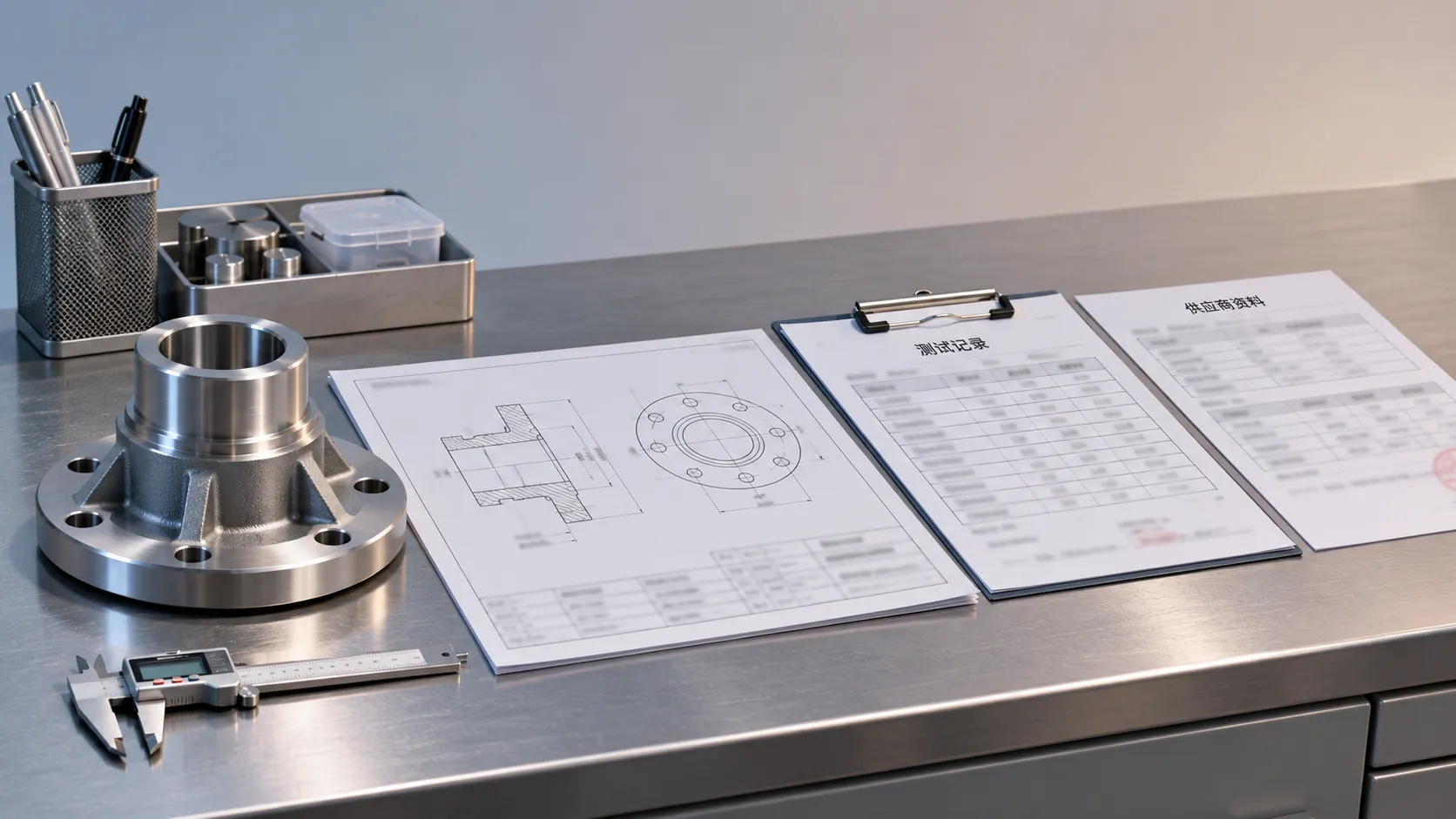
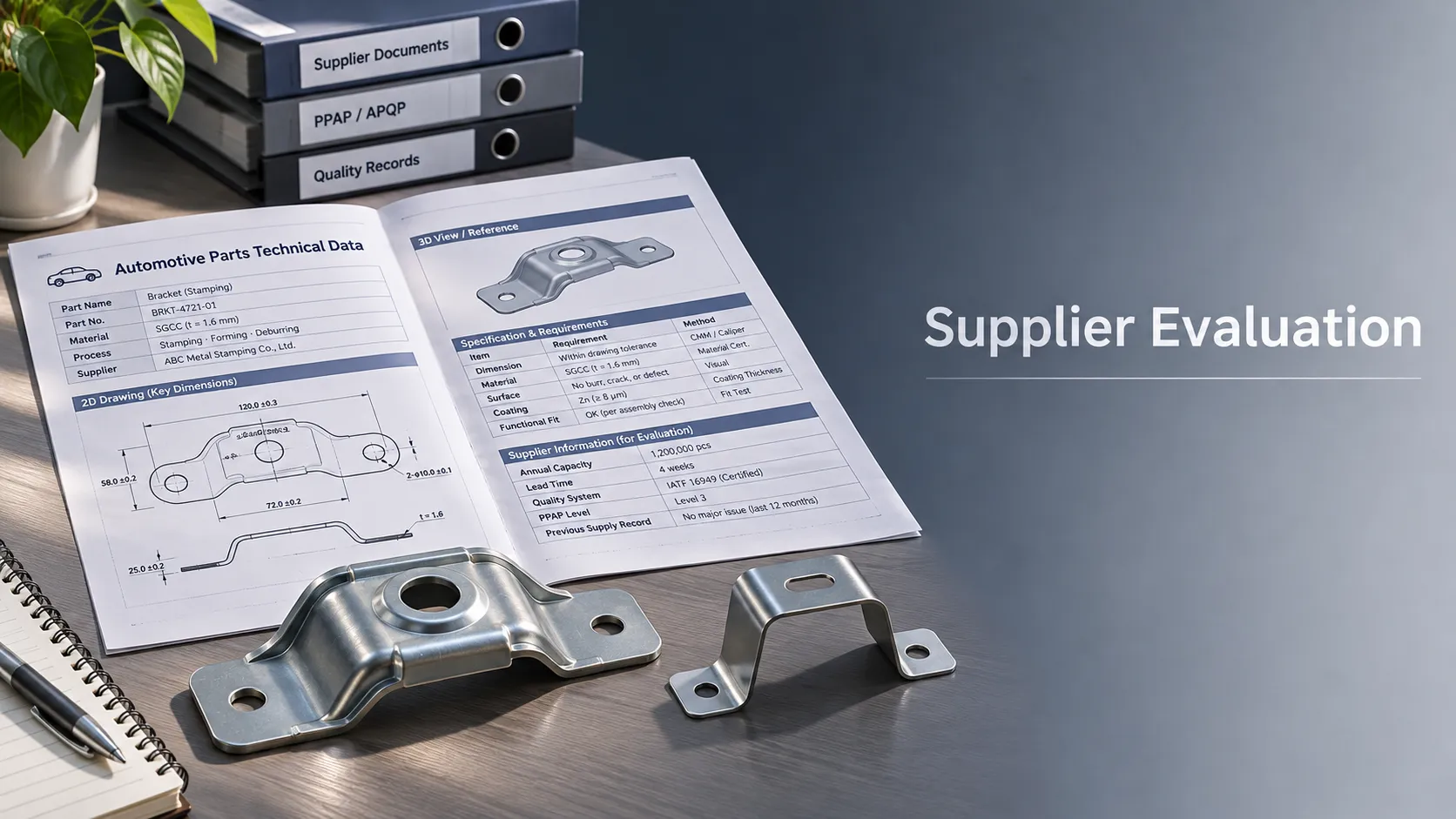
Do not accept “compliant with” as a complete technical statement. Ask whether compliance is based on type testing, analysis, material declaration, a certificate, an approval, or supplier self-declaration; identify the tested configuration; and confirm the applicable edition of the requirement. The evidence must correspond to the proposed manufacturing part number, not merely to a related product family.
Review interfaces as failure points, not connection details
Many component substitutions fail at the interface even when the substitute meets the core performance requirement. Mechanical fit, electrical mating, data protocol, software behavior, service access, and assembly sequence can all invalidate an otherwise strong comparison.
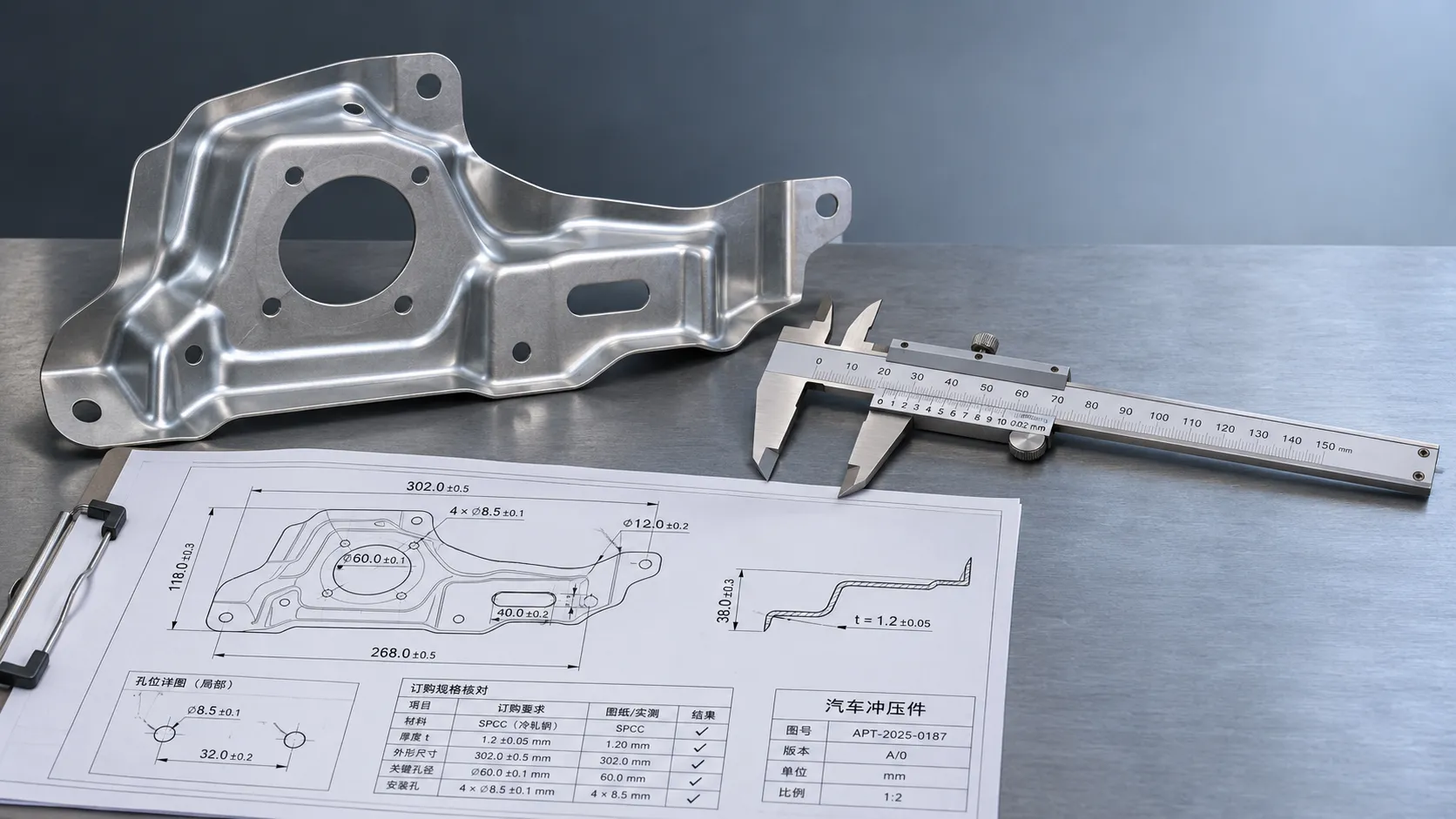
Dimensional review should include datum scheme, geometric tolerances, stack-up sensitivity, mounting stiffness, fastener access, connector clearance, tool access, and allowable assembly variation. A CAD envelope alone rarely captures production reality. For stamped and welded assemblies, the critical question is often not whether the nominal geometry fits, but whether the worst-case part variation remains compatible with the adjacent assembly.
For electronic modules, examine connector keying, pin assignment, shielding, grounding, wake-up states, baud rates, message timing, diagnostic identifiers, firmware dependencies, and fault reporting. A communication interface described as CAN, Ethernet, NMEA 0183, or NMEA 2000 does not guarantee interoperability by itself. The implementation profile, message set, timing behavior, certification or licensing conditions where applicable, and error handling must be compatible with the host system.
Software-controlled components add a configuration problem that conventional datasheets may obscure. The reviewed item must include hardware revision, firmware version, parameter set, calibration data, cybersecurity-relevant update path where connected systems are involved, and rules for change notification. A validated hardware part can become a different functional component after a firmware change.
Compliance must be mapped to the actual market and system claim
Compliance review should begin with the legal and customer claim being made, then work backward to the component evidence required. It should not begin with a collection of certificates.
For automotive restraint components, approval requirements can depend on the jurisdiction, vehicle category, and system application. UN Regulations, including UN R16 for safety belts, restraint systems, child restraint systems, and ISOFIX child restraint systems, may be relevant in markets using the UN type-approval framework. Other markets may apply different regulatory pathways. An approval mark on a component does not remove the need to verify that the installed vehicle configuration matches the approved scope.
For functional safety-related automotive electronics, ISO 26262 provides a framework for managing functional safety across the product lifecycle. It does not mean that every electronic component needs a standalone “ISO 26262 certificate.” The relevant review concerns the supplier’s safety documentation, assumptions of use, failure-rate data where needed, diagnostic behavior, development evidence, and fit with the item-level safety concept.
Quality management certification also has limits. ISO 9001 or IATF 16949 certification can indicate that a supplier operates an assessed management system; it does not demonstrate that a particular component meets a particular drawing, regulation, or validation plan. Product evidence remains necessary.
Material compliance should be equally specific. If restricted substances, recyclability declarations, flame performance, corrosion resistance, or traceability are required, define the applicable regulation or customer standard, the homogeneous-material scope, test or declaration method, and reporting format. Generic statements about “environmentally friendly materials” have no acceptance value.
Assess manufacturability before approving the part
A technically compliant prototype may still be unsuitable for series production. The specification review must ask whether the part can be made repeatedly within the required variation, at the intended rate, using controlled processes and available inspection methods.
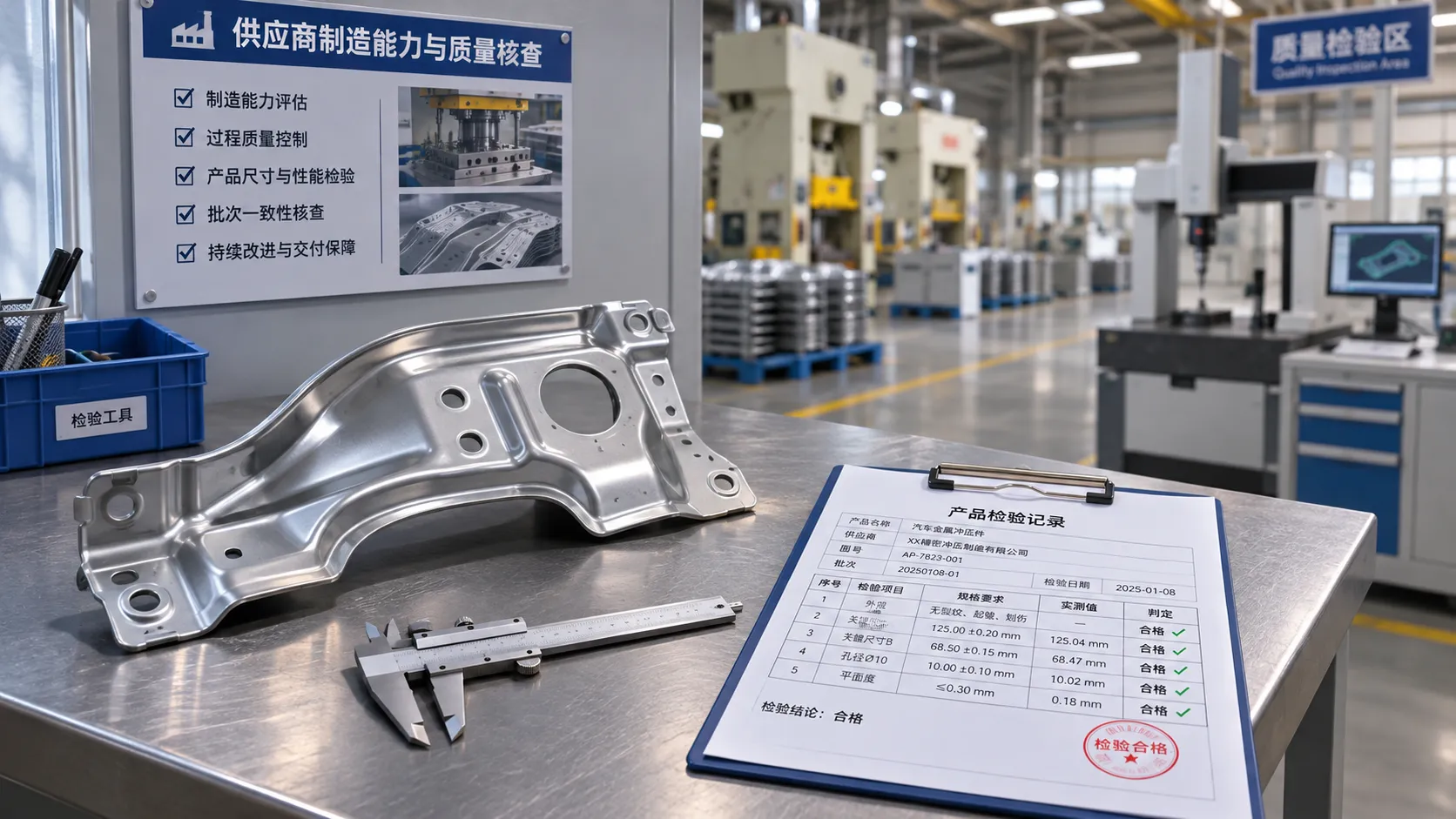
For formed metal components, this means reviewing material-source controls, coil or sheet properties, tool wear sensitivity, springback control, heat-treatment window where applicable, weld schedule, coating effects, and gauge strategy. A tight dimensional tolerance that can be achieved only by selective rework is not a production-capable requirement.
For electromechanical assemblies, attention shifts to connector insertion forces, terminal crimp controls, automated test coverage, torque traceability, sealing-process validation, end-of-line calibration, and error-proofing. For safety-critical devices, serial traceability and containment rules following a nonconformance may be as important as the normal acceptance test.
Inspection requirements must be measurable. “No defects,” “high accuracy,” and “stable performance” cannot be audited. A usable specification defines the characteristic, measurement system, sampling or inspection regime where applicable, acceptance limit, reaction plan, and record retention requirement. Measurement uncertainty should be considered when a tolerance approaches the practical capability of the selected method.
Use lifecycle evidence to expose hidden selection risk
The lowest-risk component is not necessarily the one with the highest initial margin. It is the one whose configuration, supply chain, validation evidence, and change process remain controllable over the program life.
Review the manufacturer’s part-number structure, approved alternates, second-source status where permitted, obsolescence communication, revision-control process, counterfeit-prevention controls for electronic parts, and retention of validation records. For components subject to software, chemical formulation, material grade, or tooling changes, determine which changes require notification and which require revalidation.
Serviceability also belongs in the specification. Can the part be identified after installation? Are diagnostic codes available? Is replacement restricted by calibration, coding, torque sequence, or pairing requirements? For maritime equipment, updates and chart or sensor dependencies may affect continued operation. For cabin safety components, replacement controls may be required to preserve the validated restraint system configuration.
A disciplined review ends with a clear technical disposition: accepted against stated requirements, accepted with controlled deviations, conditionally acceptable pending evidence, or rejected due to an unclosed requirement gap. The most important output is not a filled-in comparison table. It is an auditable record of what the selected component is proven to do, under which conditions it is proven to do it, and which assumptions must remain true in production.
That is the difference between selecting a component that appears suitable and selecting one that can withstand design release, manufacturing variation, compliance scrutiny, and lifecycle change.
Related News

How to Evaluate Supplier Solution References Before Signing a Contract
Evaluate supplier solution references with confidence. Learn how to verify technical evidence, identify delivery risks, and close gaps before signing a contract.

How Capacitive Seat Occupancy Sensing Works in Automotive Airbag Systems
Discover how capacitive seat occupancy sensing supports automotive airbag systems, and explore the design, calibration, and validation challenges behind reliable performance.
Industrial Product References: How to Verify Specs Before Ordering
Use an industrial product reference for procurement to verify specs, compatibility, and certifications before ordering—and reduce costly purchasing risks.
Choosing a Private Label Partner in Europe: Key Supplier Criteria
Private label cooperation Europe buyers can trust starts with the right supplier. Explore key criteria for compliance, quality, traceability and supply resilience.

Integrated Cabin Comfort Systems: How Seat and Cabin Climate Controls Work Together
Discover how integrated cabin comfort systems coordinate seat and climate controls to balance occupant comfort, energy use, safety, and performance.

Automotive Ergonomics Pricing: What Drives Seat System Costs?
Discover what drives automotive ergonomics pricing, from seat mechanisms and safety systems to tooling and volume, and learn how to compare supplier quotes.
Evaluating Supplier Solutions: How to Verify References and Standards
Supplier solution references and standards can make or break a sourcing decision. Learn how to verify claims, assess compliance, and reduce risk before awarding a contract.
Choosing B2B Product Knowledge Platform Suppliers: Key Evaluation Criteria
Compare B2B product knowledge platform suppliers with confidence. Explore key criteria for data accuracy, supplier transparency, integrations, and value.

Choosing a Marine Radar Systems Supplier: What to Check Before Buying
Choosing a marine radar systems supplier? Compare installed costs, bridge compatibility, compliance evidence, and service support before you buy.
Related News
- 00
0000-00
How to Evaluate Supplier Solution References Before Signing a Contract - 00
0000-00
Industrial Product References: How to Verify Specs Before Ordering - 00
0000-00
Choosing a Private Label Partner in Europe: Key Supplier Criteria - 00
0000-00
Automotive Ergonomics Pricing: What Drives Seat System Costs? - 00
0000-00
Evaluating Supplier Solutions: How to Verify References and Standards
0000-00
Weekly Insights
Stay ahead with our curated technology reports delivered every Monday.