
OEM Cooperation Specifications: What Procurement Teams Should Define Before Contracting
An OEM agreement fails most often because the commercial terms are settled before the operating rules are defined. Unit price, annual volume, and payment terms matter, but they do not explain what happens when a drawing changes, a test fails, a shipment is short, a sub-supplier changes material, or a regulatory requirement shifts during a program.
That is why OEM cooperation guidance specifications should be prepared before contracting, not assembled after a supplier has been nominated. They turn a broad promise to manufacture a component into an agreed working system: what will be made, how it will be validated, who owns each decision, what evidence is required, and what consequences apply when the plan changes.
This is especially important for marine navigation equipment, automotive body stampings, airbags, seatbelt systems, and seat assemblies. In these categories, a low quoted price can become expensive quickly if the supplier’s process capability, traceability, engineering response, or delivery recovery process is unclear.
Start with the part boundary, not the quotation
A usable specification begins by defining the exact supply boundary. “Manufacture to drawing” is rarely enough. It leaves unanswered questions about tooling, purchased subcomponents, packaging, test fixtures, software configuration, labels, service parts, and documentation.
For each item or assembly, state whether the supplier is responsible only for production, or also for design support, tooling development, validation coordination, sourcing of child parts, testing, and logistics preparation. A stamped structural part, for example, may appear simple in a bill of materials, yet its supply scope can include blank material selection, die maintenance, welding operations, corrosion protection, inspection gauges, and returnable packaging. Each element can affect cost, lead time, and quality accountability.
The same discipline applies to electronic or electro-mechanical products. A marine navigation unit may require hardware manufacture, firmware control, calibration procedures, interface compatibility, documentation, and repair support. If those responsibilities are not allocated clearly, a supplier can meet the narrow purchase description while the delivered system still fails to meet the intended operating need.
A practical scope section should answer:
- Which drawings, models, specifications, and revisions control the product?
- Which components, materials, software, tooling, gauges, and packaging are included in the quoted scope?
- Which activities are performed by the supplier, approved sub-suppliers, or the buyer?
- Who owns tooling, production records, test data, and technical documentation?
- What is excluded, and how will new work be quoted and approved?
Scope clarity prevents a common cost mistake: comparing quotations that appear equivalent but contain different assumptions. The cheapest quote may exclude validation support, specialized packaging, spare tooling, or inspection equipment that another supplier has already included.
Translate technical intent into measurable acceptance criteria
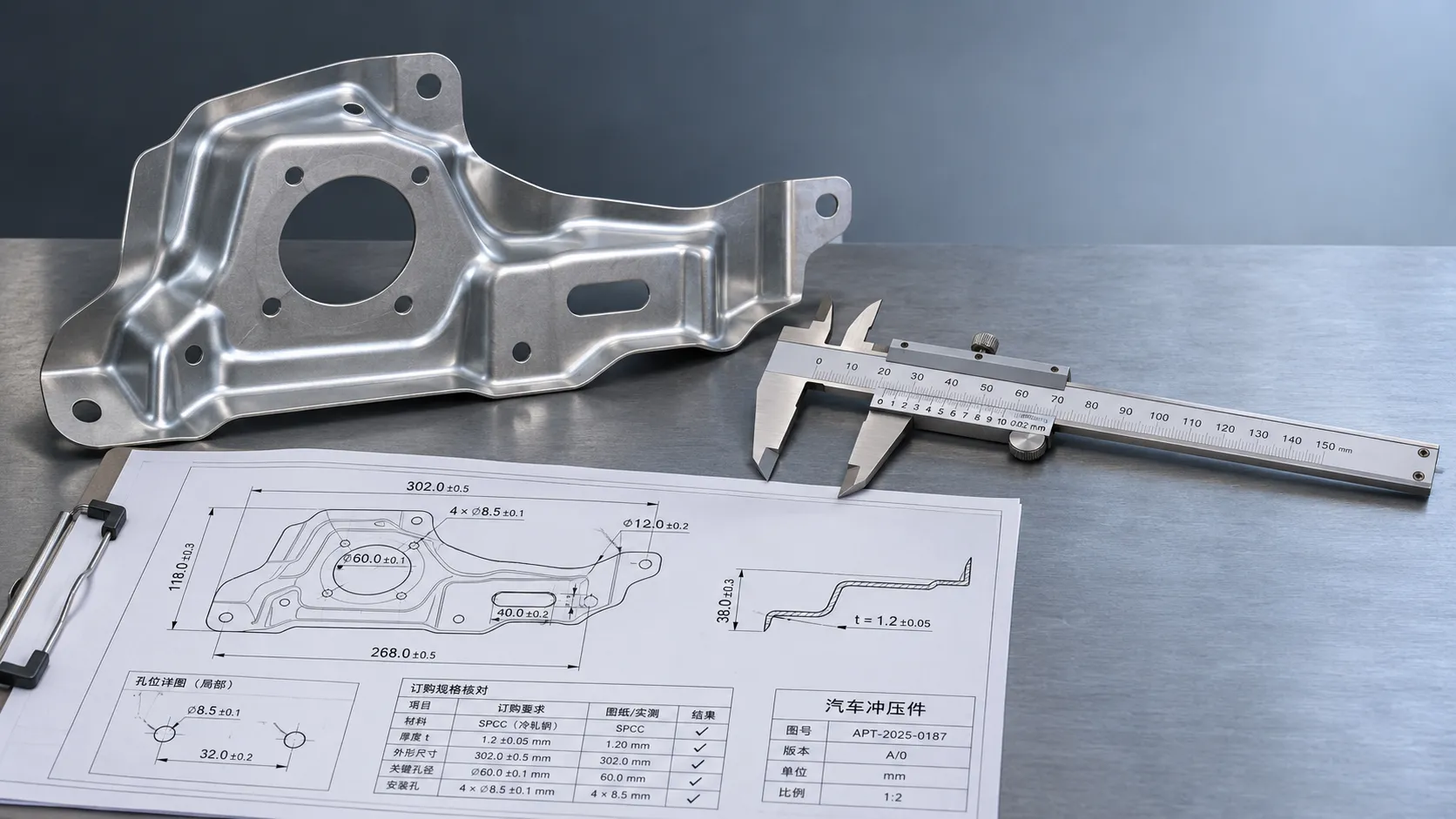
Technical requirements should be written so that two competent parties would reach the same conclusion about whether a part is acceptable. A drawing dimension alone may not achieve that. The production specification should link the part to its functional purpose, critical characteristics, inspection method, sampling logic, and release evidence.
For passive safety parts, this normally means treating material properties, assembly integrity, traceability, and controlled processes as part of the product requirement rather than optional factory practices. For seating systems, functional performance can depend on the interaction of frames, recliners, tracks, foam, trim, sensors, and electrical features. For navigation equipment, stable positioning or signal-processing performance depends not only on the finished device but also on configuration control and defined calibration conditions.
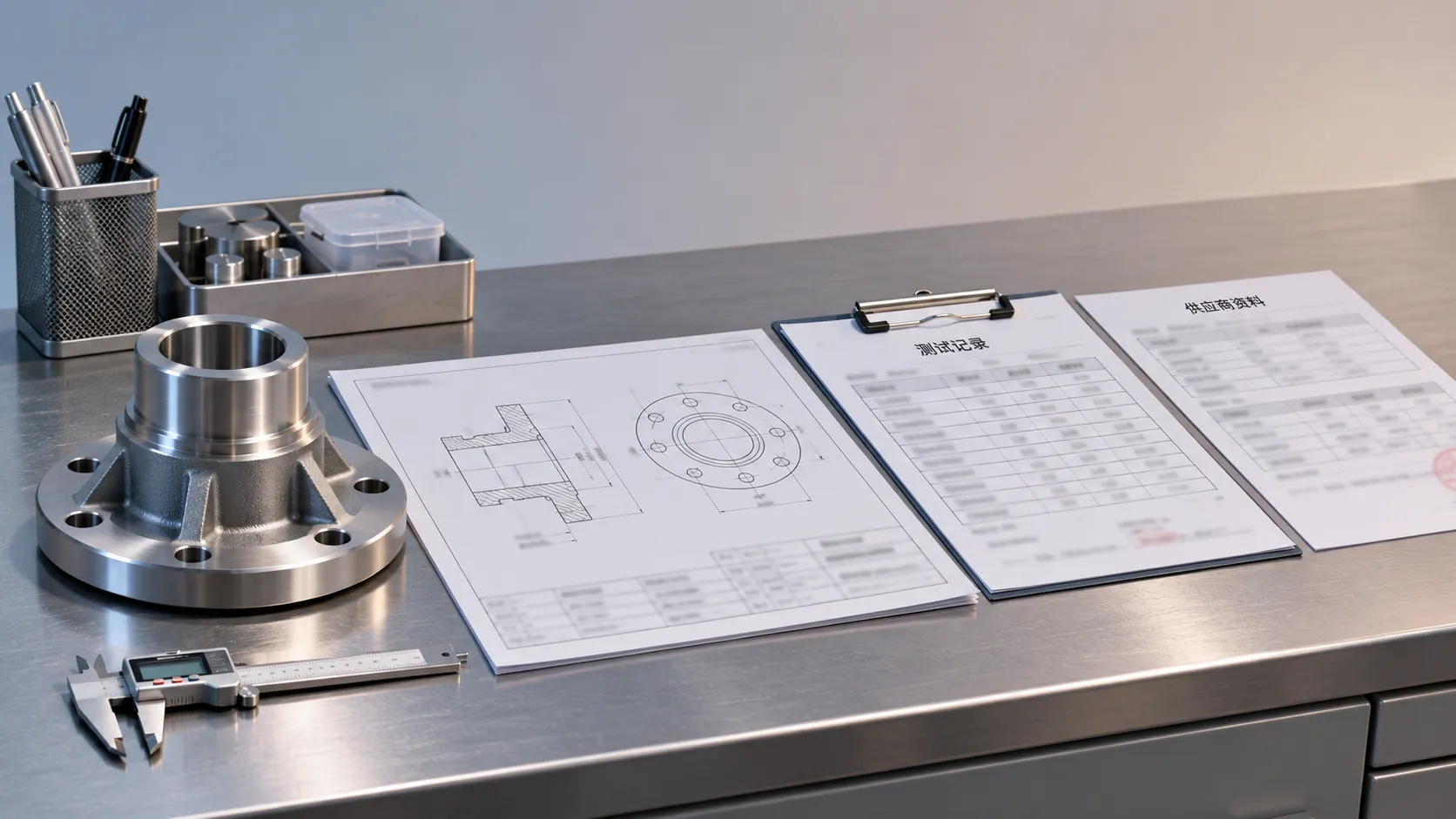
Do not ask a supplier to “meet all applicable quality standards” without identifying the documents and records that demonstrate compliance. That language sounds protective but creates room for disagreement. Better specifications identify the required deliverables: approved samples, inspection reports, material declarations where relevant, process flow documentation, control plans, test reports, traceability records, and packaging approval.
Not every dimension or test needs the same level of control. The most effective approach distinguishes between:
Over-specification also has a cost. Requiring intensive inspection for non-critical cosmetic variation can inflate labor and reject usable output. The goal is not maximum control everywhere; it is the right control for the consequence of failure.
Make quality planning a contractual deliverable
Supplier qualification should not end with a factory visit or a sample approval. The contract should define how the supplier proves that production output will remain consistent after launch.
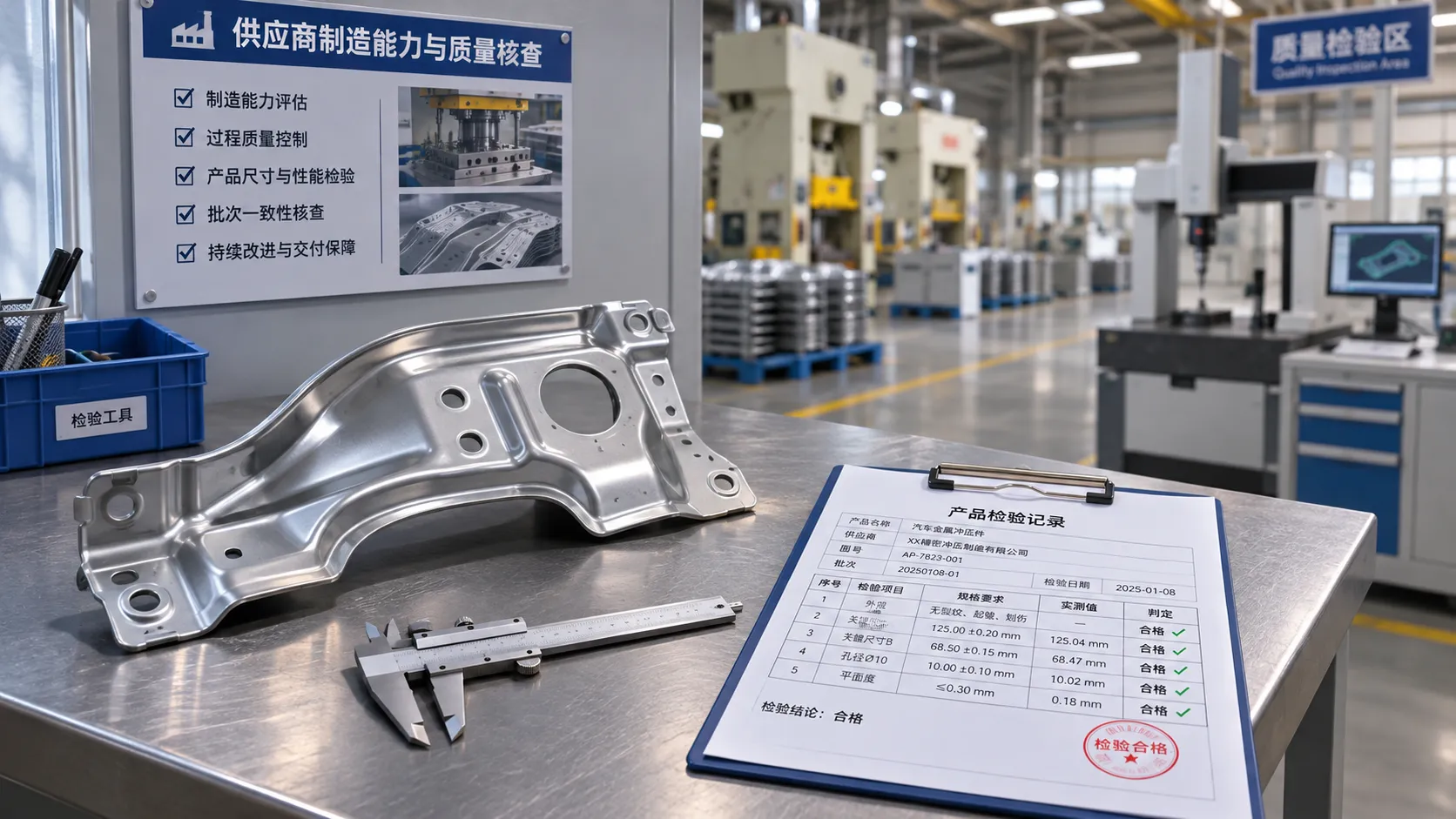
Require a documented manufacturing route from incoming material through final shipment. This should identify process steps, inspection points, special operations, containment actions, and escalation responsibilities. The level of detail should match the product risk. A simple machined bracket may need a focused plan around material identity and critical dimensions. An airbag assembly or seatbelt component needs much stricter control over traceability, controlled operations, test status, and nonconforming material segregation.
Define the approval gates before production begins. These may include tool trials, sample submission, measurement reports, process capability evidence where appropriate, functional validation, packaging validation, and pilot-run approval. Avoid treating approval as a single event. Manufacturing readiness is stronger when product validation, process readiness, logistics readiness, and document completion are checked separately.
The agreement should also specify what happens when nonconforming product is found. Clarify containment timing, sorting responsibility, root-cause analysis expectations, replacement arrangements, rework authorization, and cost allocation. A supplier may accept responsibility in principle but still leave the buyer exposed to line stoppage costs if the response procedure is undefined.
Separate price from total landed program cost
Quoted piece price is only one part of the commercial decision. A sound OEM specification exposes the cost drivers that can move after nomination, particularly for long-running programs or products with dedicated tooling.
Break the commercial model into recurring and non-recurring elements. Recurring cost may include material, conversion, purchased parts, testing, packaging, logistics assumptions, and scrap allowance. Non-recurring cost may include tooling, fixtures, inspection gauges, validation support, engineering work, and launch preparation. Each category should have an owner, payment trigger, and ownership rule.
Tooling deserves special attention. State who owns it, where it is located, how it is identified, who pays for maintenance, what happens if capacity needs to increase, and how it can be transferred if the relationship ends. Tool ownership without access rights, maintenance obligations, or release documentation does not provide much practical protection.
Price-adjustment language should be narrow enough to avoid open-ended renegotiation and realistic enough to address genuine changes. Define which events may trigger a review, what evidence is needed, whether savings are shared, and whether changes apply prospectively or retroactively. A vague clause such as “prices subject to market conditions” creates uncertainty for both sides.
Cost transparency is most useful before a dispute occurs. It helps distinguish a legitimate change in scope from an attempt to recover poor yield, unplanned rework, or weak process control through pricing.
Delivery commitments need operating rules
Delivery performance cannot be managed solely through a stated lead time. The agreement should define forecast horizons, firm-order periods, minimum order quantities, capacity commitments, inventory strategy, shipping terms, packaging quantities, and the escalation route for supply interruptions.
For highly engineered components, capacity should be discussed in terms of the actual bottleneck: press capacity, welding cells, inflator integration, calibration stations, test equipment, skilled assembly labor, or approved sub-supplier output. A supplier can have sufficient floor space and still lack capacity at the critical process step.
Specify how demand changes will be handled. A forecast is not a guarantee, but neither should it be meaningless. Establish the period during which quantities are binding, the response expected for volume increases, and the process for identifying capacity constraints early. This is more valuable than relying on optimistic assurances during supplier selection.
Packaging is often treated as an administrative detail, then becomes a source of damage, handling loss, line-side disruption, or excess freight. Define protection requirements, label content, lot identification, returnable-packaging responsibility, and any environmental or storage restrictions relevant to the part.
Control engineering changes before they become quality events
Change management is one of the most important parts of OEM cooperation guidance specifications because manufacturing conditions rarely remain static. Material availability changes, equipment is replaced, a sub-supplier is nominated, a process is moved, a design revision is issued, or a software version is updated.
The specification should make clear that no change affecting form, fit, function, material, performance, approved process, manufacturing location, tooling, sub-supplier, or software configuration may be implemented without a defined review and written authorization. It should also define the required lead time for notification and the evidence needed for approval.
Not every change requires the same response. A drawing revision that affects a mounting interface may require new samples and functional checks. A change in label layout may need only document approval. The agreement should classify changes by risk so that critical changes receive proper validation without making routine administration unmanageable.
Version control matters just as much. Production, inspection, purchasing, and logistics teams need one unambiguous method to confirm which drawing, software build, work instruction, and packaging standard applies to each shipment. Mixed revisions can be difficult and expensive to contain once they enter assembly or field inventory.
Assign compliance, traceability, and information duties
Compliance responsibilities should be divided according to who can control them. The manufacturer should be accountable for its processes, records, controlled materials, and declared product attributes. The buyer should provide current technical requirements, intended application information when necessary, and decisions within agreed review times. Shared obligations should not be left as broad statements of cooperation.
Traceability must match the consequence of a defect. A low-risk commodity may only need lot identification. Safety-related assemblies and critical navigation components may require tighter linkage among incoming materials, production batches, test status, and shipment records. The specification should state what traceability is required, how long records are retained, and how quickly information can be retrieved during an investigation.
Confidentiality and intellectual-property terms should also be practical. Define who owns buyer-provided designs, supplier-developed process know-how, jointly developed improvements, test reports, and embedded software elements. Ambiguity here can limit a future supplier transfer or create disagreement over what can be reused after a program ends.
GNCS coverage of marine navigation, lightweight body structures, passive safety, and smart seating highlights why this cannot be handled with one generic template. The evidence needed for a hot-stamped structural component differs from that needed for a navigation device or a seat assembly, even though the underlying governance principles are similar: controlled inputs, validated output, traceable changes, and clear accountability.
Use the contract review to test the supplier relationship
Before signing, run a cross-functional review of the specification with engineering, quality, operations, logistics, finance, and legal stakeholders. The purpose is not to make the document longer. It is to find contradictions between the commercial offer and the operating assumptions.
A useful final test is to walk through realistic disruptions: a failed incoming-material batch, an urgent design change, a missed shipment, a suspected field issue, a tooling breakdown, or a request to move production. If the contract does not identify who acts, who approves, what records are needed, and how cost is handled, the cooperation model is incomplete.
The strongest OEM agreements do not assume that problems will never occur. They establish a disciplined way to handle them before time pressure, production loss, and cost exposure make every decision harder.
Related News

How to Evaluate Supplier Solution References Before Signing a Contract
Evaluate supplier solution references with confidence. Learn how to verify technical evidence, identify delivery risks, and close gaps before signing a contract.

How Capacitive Seat Occupancy Sensing Works in Automotive Airbag Systems
Discover how capacitive seat occupancy sensing supports automotive airbag systems, and explore the design, calibration, and validation challenges behind reliable performance.
Industrial Product References: How to Verify Specs Before Ordering
Use an industrial product reference for procurement to verify specs, compatibility, and certifications before ordering—and reduce costly purchasing risks.
Choosing a Private Label Partner in Europe: Key Supplier Criteria
Private label cooperation Europe buyers can trust starts with the right supplier. Explore key criteria for compliance, quality, traceability and supply resilience.

Integrated Cabin Comfort Systems: How Seat and Cabin Climate Controls Work Together
Discover how integrated cabin comfort systems coordinate seat and climate controls to balance occupant comfort, energy use, safety, and performance.

Automotive Ergonomics Pricing: What Drives Seat System Costs?
Discover what drives automotive ergonomics pricing, from seat mechanisms and safety systems to tooling and volume, and learn how to compare supplier quotes.
Evaluating Supplier Solutions: How to Verify References and Standards
Supplier solution references and standards can make or break a sourcing decision. Learn how to verify claims, assess compliance, and reduce risk before awarding a contract.
Choosing B2B Product Knowledge Platform Suppliers: Key Evaluation Criteria
Compare B2B product knowledge platform suppliers with confidence. Explore key criteria for data accuracy, supplier transparency, integrations, and value.

Choosing a Marine Radar Systems Supplier: What to Check Before Buying
Choosing a marine radar systems supplier? Compare installed costs, bridge compatibility, compliance evidence, and service support before you buy.
Related News
- 00
0000-00
How to Evaluate Supplier Solution References Before Signing a Contract - 00
0000-00
Industrial Product References: How to Verify Specs Before Ordering - 00
0000-00
Choosing a Private Label Partner in Europe: Key Supplier Criteria - 00
0000-00
Automotive Ergonomics Pricing: What Drives Seat System Costs? - 00
0000-00
Evaluating Supplier Solutions: How to Verify References and Standards
0000-00
Weekly Insights
Stay ahead with our curated technology reports delivered every Monday.