
How Industrial Product Reference Databases Improve Specification and Supplier Decisions
How Industrial Product Reference Databases Improve Specification and Supplier Decisions
For procurement professionals in marine navigation and automotive safety, an industrial product reference database turns fragmented technical data into more confident specification and supplier decisions. It connects compliance requirements, performance parameters, material capabilities, and supplier intelligence in one decision context. That matters when buyers are comparing equipment whose failure is not merely inconvenient: a navigation radar may affect operational awareness at sea, while a seatbelt retractor, airbag inflator, or hot-stamped reinforcement can affect crash performance and vehicle approval.
The purchasing challenge is rarely “find a supplier.” Most established categories already have many suppliers, distributors, engineering firms, and component specialists. The harder question is whether two apparently similar offers are genuinely comparable. A lower quoted price may exclude validation support, traceability records, software maintenance, tooling changes, regional compliance documentation, spare-parts commitments, or the engineering capacity needed when a design changes late in the program.
A well-maintained reference database does not replace engineering judgment, supplier audits, or contractual due diligence. It gives those activities a stronger starting point. Instead of working from scattered data sheets, old quotations, email attachments, and informal market knowledge, procurement teams can build a clearer line from application requirements to a defensible sourcing decision.
The Cost of Comparing Incomplete Information
Industrial specifications often look complete until the purchasing process begins. A radar requirement may define a frequency band, display interface, and nominal range, but leave uncertainty around vessel integration, antenna configuration, software update practices, environmental operating conditions, or service coverage at intended ports. In automotive safety, a drawing may define geometry and material grade for a stamped component while the commercial decision still depends on forming feasibility, coating compatibility, joining strategy, die-life assumptions, and the supplier’s ability to control variation at production volume.
These gaps create a familiar pattern. Suppliers submit offers that comply with the visible request but interpret the unstated requirements differently. Procurement then spends weeks clarifying whether a bid includes the same validation scope, engineering ownership, packaging standard, warranty basis, or change-control responsibility as another. The original unit-price comparison becomes unreliable because the underlying scope is not equivalent.
This is especially sensitive for safety-related components. Airbag assemblies involve interactions among inflator chemistry, electronics, cushions, housings, and vehicle-level deployment logic. Seatbelt systems combine webbing, retractors, buckles, pretensioners, load limiters, sensors, and mounting interfaces. An isolated part number cannot tell a buyer whether a proposed solution fits the intended restraint architecture. The same principle applies to smart seats, where structural performance, occupant sensing, thermal features, electrical architecture, and trim materials may be sourced through different tiers.
An industrial product reference database makes these hidden differences visible before negotiation becomes locked around an attractive but incomplete price.
What a Useful Reference Database Should Actually Contain
A supplier directory alone is not a reference database. Nor is a library of unstructured PDFs. Useful intelligence links a component to its application, relevant technical attributes, evidence source, standards context, commercial constraints, and supplier capability. The objective is not to collect every available field; it is to retain the fields that change a sourcing decision.
The provenance of each record matters as much as the content. A database should distinguish a supplier’s published statement from a third-party test reference, a regulatory document, a current quotation, or an internal engineering assessment. Without that distinction, old information can appear more certain than it is. Dates, document versions, intended markets, and assumptions should be visible, particularly where regulations or software requirements evolve.
From Technical Data to a Better Request for Quotation
One of the most practical benefits appears before the RFQ is sent. Reference intelligence helps procurement challenge ambiguous requirements with engineers and quality teams. It can separate mandatory criteria from preferences, identify which parameters must be verified through documentation, and show where an alternative material or architecture may require a separate technical review.
For example, when sourcing automotive body stampings, a database can help organize the questions that determine real cost: Which steel or aluminum grades are under consideration? Is the requirement compatible with conventional stamping, hot forming, or another process route? Does the part depend on a particular coating or heat-treatment window? Are dimensional tolerances tied to joining, crash load paths, or downstream assembly? These are not details to leave for a supplier’s commercial team to infer.
For marine navigation systems, the equivalent questions may involve interoperability among radar, satellite positioning, sonar, automatic identification, and electronic charting equipment. Procurement should clarify whether the purchase concerns a standalone device, a bridge-level integration package, or a service-supported navigation architecture. Software update procedures, cybersecurity expectations, onboard training, and availability of support in relevant operating regions can materially alter cost and operational risk.
The result is a more disciplined RFQ: suppliers are asked to respond to the same defined scope, identify deviations explicitly, and attach evidence where evidence is required. Price analysis becomes more meaningful because it follows specification alignment rather than trying to repair misalignment afterward.
Supplier Selection Requires More Than Capability Labels
“Can manufacture” is not the same as “can supply this program reliably.” Procurement databases are most valuable when they capture the relationship between a supplier’s claimed capabilities and the exact sourcing need. A supplier may have experience in stamped structures but not in the particular material thickness, forming severity, or tooling ownership model required. Another may assemble seats with advanced comfort functions but rely on external sources for sensors, electronics, or critical structural subassemblies.
This does not disqualify either supplier. It changes the questions. Buyers need to know where responsibility sits when an interface fails, when a sub-tier changes a material, or when a program requires a late design revision. In safety-critical categories, commercial accountability and technical accountability should not be separated accidentally.
A structured supplier record can also reveal concentration risk. If several shortlisted sources rely on the same sub-tier for a critical electronic element, fabric, chemical input, or specialized process, the appearance of multi-sourcing may be misleading. The database will not solve the dependency, but it gives the sourcing team a reason to assess it early and decide whether contingency planning, second-source development, or inventory strategy is warranted.
The Right Cost View Is Total Decision Cost
Cost pressure is real, and reference data should make cost conversations sharper rather than slower. The issue is that an industrial component’s quoted price is only one element of the decision. Tooling, qualification activities, integration engineering, inspection requirements, packaging, logistics, service parts, software support, and the cost of managing changes can all matter. Their relative weight depends on the project, but ignoring them does not make them disappear.
Consider a comparison between two restraint-system offers. One may have a lower unit quote but a narrower documented scope around testing support or program changes. Another may cost more initially while providing clearer interface ownership and lifecycle commitments. Neither is automatically preferable. The database gives teams a common record for discussing the trade-off with engineering, quality, finance, and program management instead of allowing each function to work from different documents.
It also helps prevent false precision. A database can show a cost driver, such as a material choice, an electronic function, a specialized forming process, or a required documentation package. It should not pretend to predict an exact savings figure without current project quotations and volume assumptions. Procurement credibility improves when the team can explain what is known, what is estimated, and what requires supplier confirmation.
Keeping Reference Intelligence Current in Fast-Moving Categories
Reference databases deteriorate when they are treated as archives. In mobility equipment, product designs, material strategies, regulations, software practices, and supply conditions can move at different speeds. An engineering record may remain useful while its commercial data becomes obsolete; a supplier capability statement may be current while the supporting approval evidence needs reconfirmation. The practical answer is not constant data collection. It is a governance model that identifies which records are decision-critical and when they must be refreshed.
GNCS approaches this problem through the connected fields of precision spatial perception and physical containment protection. Its coverage spans marine navigation systems, lightweight automotive body structures, airbag assemblies, seatbelt systems, and automotive seat assemblies. The value of this breadth is not simply category coverage. It is the ability to examine how engineering parameters, compliance expectations, and supplier developments interact across the systems that guide vehicles and protect occupants.
For buyers, intelligence around developments such as ECDIS update practices, evolving crash-test expectations associated with programs such as IIHS or Euro NCAP, changing inflator technologies, or lightweight seat-frame materials should be used as a prompt for verification—not as a substitute for project-specific approval. A relevant trend may justify revisiting a sourcing assumption, asking for updated evidence, or evaluating whether a component architecture remains appropriate for the target market.
Using the Database Without Creating a New Bottleneck
The best reference process is selective. A procurement team does not need a perfect data record for every possible supplier before beginning market engagement. It needs enough verified information to form a technically coherent sourcing strategy, write a comparable RFQ, and identify where deeper validation is necessary. High-risk or high-value decisions deserve more scrutiny than routine purchases with stable specifications.
Before nomination, a useful final review asks a small set of direct questions: Are the offers comparable in scope? Which specifications are confirmed and which remain assumptions? Does the proposed supplier own the critical processes or depend on undisclosed sub-tiers? Are compliance and test obligations appropriate for the intended market? What change-control, service, and supply-continuity commitments are actually documented?
An industrial product reference database cannot make these decisions automatic, nor should it. Its purpose is to ensure that procurement decisions about a radar system, hot-stamped structure, airbag, seatbelt, or smart seat rest on connected evidence rather than fragmented impressions. When parameters, supplier capability, compliance needs, and lifecycle costs are considered together, teams can negotiate with more clarity—and recognize the risks that a low initial price may conceal.
- marine navigation systems
- airbag assemblies
- seatbelt systems
- satellite positioning
- navigation radar
- automotive safety
- automotive body stampings
- automotive seat assemblies
- marine navigation
- body stampings
- automotive body structures
- industrial product reference
- industrial product reference database
- lightweight automotive body structures
Related News

How to Specify Integrated Marine Electronics for Reliable Bridge Operations
Integrated marine electronics: learn how to specify reliable bridge systems with clear data flows, redundancy, alarm control, lifecycle interfaces, and operational testing.

How to Evaluate Navigation Radar Manufacturers for Commercial Vessel Projects
Navigation radar manufacturers: learn how to compare performance, compliance, integration, support, and lifecycle cost for commercial vessel projects.

How Adjustable Cabin Ergonomics Reduce Operator Fatigue in Long-Shift Vehicles
Adjustable cabin ergonomics reduces operator fatigue through better seating, reach, visibility, vibration control, and climate comfort for safer long-shift vehicles.

How Rear-Impact Safety Components Work Together to Protect Vehicle Occupants
Explore how automotive safety components for rear impact work together—from crash structures and seats to head restraints and belts—to enhance occupant protection.
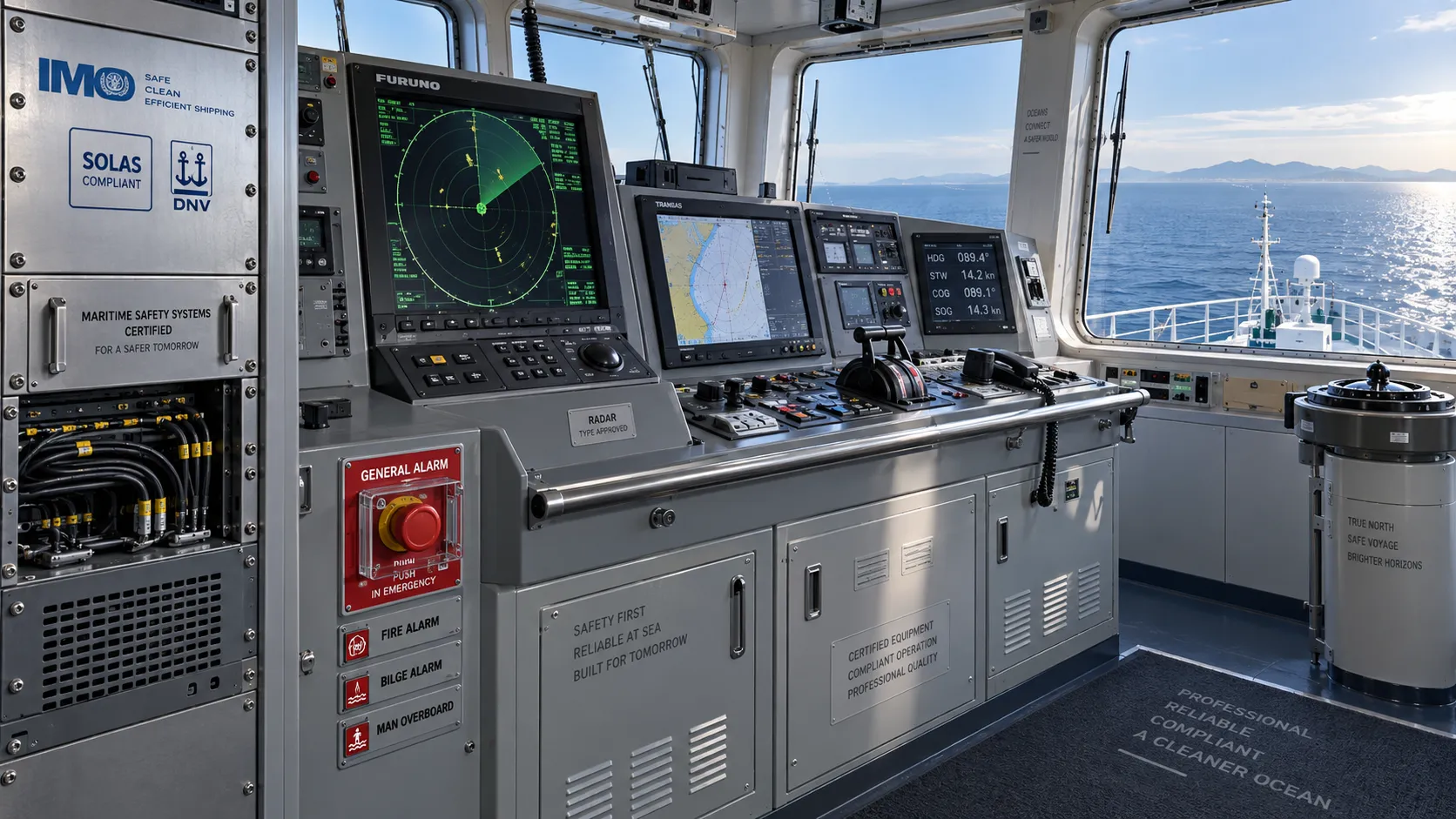
How to Evaluate a Marine Safety Systems Manufacturer for Vessel Compliance and Reliability
Marine safety systems manufacturer evaluation guide: verify compliance, engineering quality, lifecycle costs, and global service support for safer, reliable vessel operations.
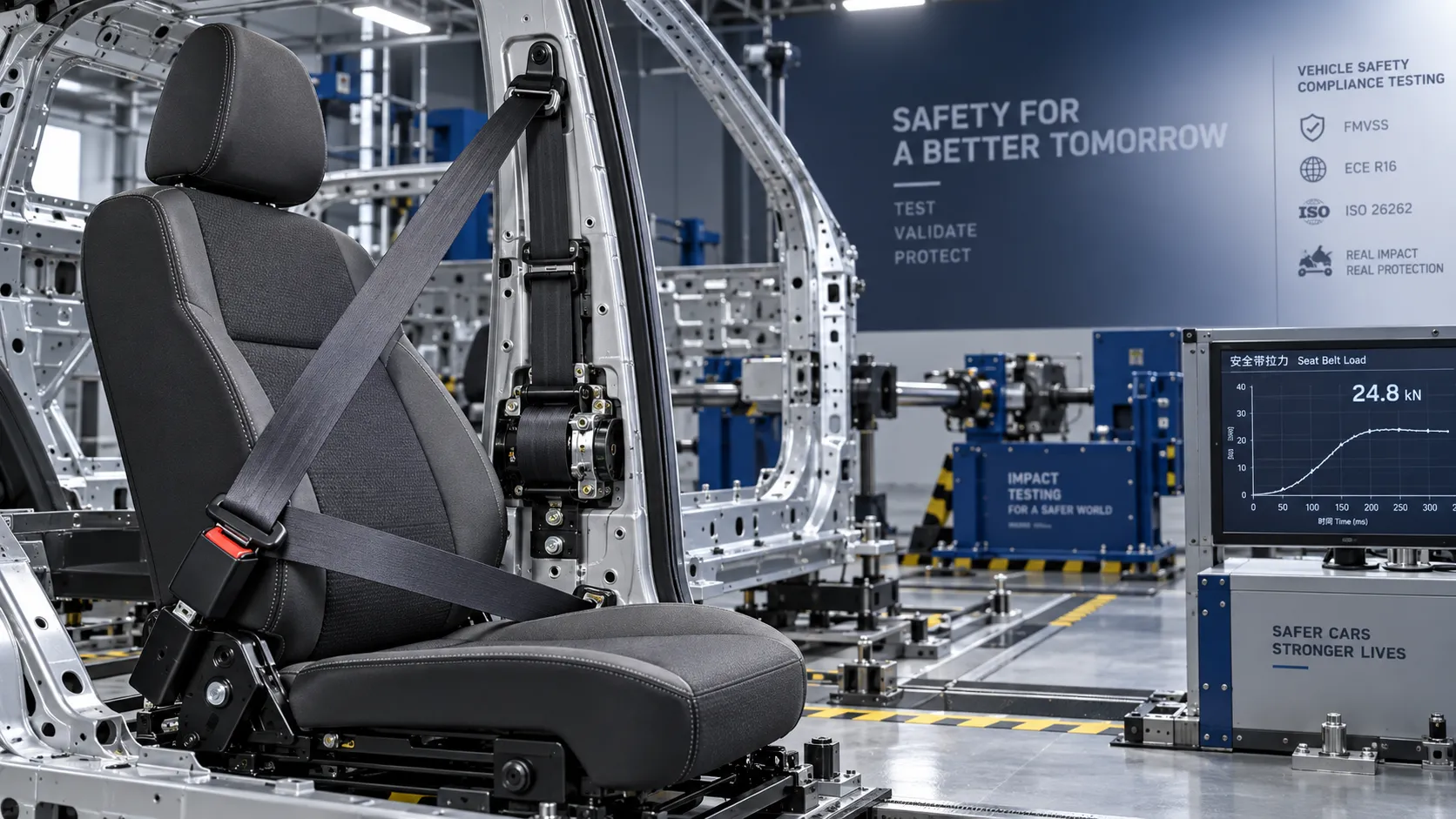
Crash Test Regulations for Seatbelts: Key Compliance Requirements Explained
Crash test regulations seatbelts explained: explore FMVSS, UN rules, anchorage strength, and dynamic restraint testing for safer, compliant vehicle systems.

How to Calculate the Total Cost of Automotive Lightweighting for a Vehicle Program
Automotive lightweight solutions cost: learn how to calculate program-level costs, including materials, tooling, joining, validation, risk, and vehicle-level value.

How Automotive Seat Occupancy Sensing Improves Airbag Deployment Decisions
Automotive seat occupancy sensing helps optimize airbag deployment decisions, improving passenger classification, safety diagnostics, and compliance across real-world conditions.

What Drives Lightweight Body Component Costs in High-Volume Vehicle Programs?
Lightweight body components cost depends on material yield, forming, joining, tooling, validation, and logistics. Explore proven ways to optimize total vehicle program cost.
Related News
- 00
0000-00
How to Specify Integrated Marine Electronics for Reliable Bridge Operations - 00
0000-00
How Adjustable Cabin Ergonomics Reduce Operator Fatigue in Long-Shift Vehicles - 00
0000-00
How to Evaluate a Marine Safety Systems Manufacturer for Vessel Compliance and Reliability - 00
0000-00
How to Calculate the Total Cost of Automotive Lightweighting for a Vehicle Program - 00
0000-00
What Drives Lightweight Body Component Costs in High-Volume Vehicle Programs?
Weekly Insights
Stay ahead with our curated technology reports delivered every Monday.