
A Decision Framework for Comparing Technical Solutions by Cost, Risk, and Performance
A defensible technical comparison does not begin with a feature matrix. It begins by defining what failure looks like in the intended operating environment, what evidence is needed to rule out unacceptable options, and which trade-offs the system owner is genuinely able to absorb.
This distinction matters because a solution can lead on a visible specification and still be the weaker choice. A marine navigation platform with excellent positioning accuracy may create unacceptable operational exposure if sensor integrity degrades without clear alarm logic. A lightweight automotive structure may reduce mass but introduce forming variability, joining constraints, or repair limitations that undermine programme economics. A restraint system with a strong nominal crash response may be difficult to tune across occupant sizes, seating positions, and vehicle variants.
Cost, risk, and performance are not separate scoring columns. They interact. The practical task is to compare technical solutions as operating systems: their measurable output, their failure behaviour, their integration burden, their compliance path, and their lifetime demand on engineering, service, and supply-chain control.
Start with the decision boundary, not the available specifications
Before comparing alternatives, establish the boundary conditions that the selected solution must satisfy. These are not aspirational requirements or supplier claims; they are the conditions under which a solution is considered viable. In safety-critical applications, this commonly includes operating environment, applicable regulation, system interfaces, fault tolerance, maintenance access, service life, and validation obligations.
A navigation comparison, for example, should distinguish between position accuracy in favourable conditions and navigational availability under antenna obstruction, multipath effects, weather interference, sensor disagreement, or degraded communications. A radar, GNSS receiver, AIS interface, heading sensor, and electronic chart display may each meet their individual requirements while producing a weak integrated bridge solution if timing, alert prioritisation, or data integrity handling is inconsistent.
For automotive components, the boundary is similarly broader than a material grade or component mass. A hot-stamped reinforcement, aluminium stamping, or mixed-material body part must be assessed against crash-load paths, corrosion protection, joining method, dimensional repeatability, manufacturing window, downstream assembly, and repair strategy. A lower-mass part is not automatically a lower-risk part when it requires tightly controlled thermal processing or specialised joining that the manufacturing network cannot consistently support.
Any option that fails a non-negotiable condition should be removed before weighted scoring begins. A weighted model can conceal disqualifying weaknesses: a low score for certification uncertainty may be offset mathematically by a high score for peak performance, even though the solution cannot be released or deployed safely.
Translate performance claims into mission-relevant evidence
Performance should be expressed as a measurable response to a defined duty cycle, not as a catalogue maximum. The most useful question is not “Which solution has the highest rating?” but “Which solution retains sufficient function across the conditions that govern the actual mission?”
That requires examining at least four characteristics of performance evidence:
- Operating range: the environmental, load, temperature, vibration, electromagnetic, speed, occupancy, or fatigue conditions covered by the evidence.
- Repeatability: whether the result is stable across units, production lots, software versions, calibration states, and test repetitions.
- Degradation behaviour: how output changes near operating limits, after ageing, or when one input becomes unreliable.
- System contribution: whether the measured gain survives integration with adjacent components and control logic.
Consider an airbag assembly. Inflator output, cushion volume, deployment timing, venting strategy, and sensing algorithm cannot be evaluated as independent attributes when the actual objective is occupant injury mitigation. The relevant comparison is the restraint system’s managed response across a defined crash pulse, occupant condition, seating geometry, belt use state, and vehicle architecture. A component-level advantage may disappear when calibration margins become narrow or when a proposed module imposes sensor or electronic control unit changes.
The same principle applies to smart seats. Comfort features, sensing functions, and adjustment range are meaningful only when assessed alongside packaging space, structural stiffness, belt anchorage loads where applicable, wiring architecture, thermal management, electromagnetic compatibility, and long-term durability. A seat that performs well in a static demonstration can create a programme-level compromise if its mechanisms reduce available crash packaging or its sensing function lacks a stable diagnostic strategy.
Requesting raw or traceable test evidence is more useful than relying on a single pass/fail statement. The comparison record should identify test method, configuration, sample condition, instrumentation, acceptance criteria, relevant deviations, and whether the data applies to the exact proposed configuration. Where simulation is used, the model’s correlation basis and sensitivity to critical assumptions deserve scrutiny. Simulation can rank concepts efficiently, but it does not eliminate the need to understand material behaviour, boundary conditions, and model uncertainty.
Model lifecycle cost as a consequence of technical choices
Purchase price is often the least informative cost number in a technical selection. It is visible, comparable, and easy to negotiate, but it rarely captures the costs generated by integration, qualification, maintenance, downtime, rework, redesign, and end-of-life obligations.
A lifecycle cost comparison should separate one-time costs from recurring and contingent costs. One-time costs may include engineering adaptation, tooling, software integration, validation, certification support, test fixtures, operator training, and documentation conversion. Recurring costs may include consumables, calibration, service labour, licensing, inspection, replacement units, and higher production cycle time. Contingent costs are tied to risk: field intervention, warranty exposure, production disruption, delayed approval, parts obsolescence, or a redesign caused by an unanticipated interface conflict.
Technical teams should be wary of assumptions that make lifecycle cost appear precise when its inputs remain uncertain. A better approach is to define a cost range and show which assumptions drive it. For example, the cost of adopting a new lightweight material route may depend less on raw material price than on scrap recovery, blank handling, die wear, joining consumables, corrosion-control steps, and the yield rate achieved after ramp-up. These factors may be known only within a range during early concept selection.
Comparing options under a common ownership horizon also prevents distortion. A low-cost marine sensor with a shorter service interval and constrained spares availability should not be measured against a higher-priced alternative solely at delivery. Conversely, a premium solution should not receive credit for hypothetical service savings unless the maintenance model, access conditions, and service network can support that assumption.
Risk is not a single category
Risk registers frequently become too broad to guide a selection. A more useful comparison separates risks by mechanism, because each mechanism requires a different control and has a different relationship to cost and performance.
Functional risk deserves particular attention in navigation and passive-safety systems because a solution’s fault response may be more consequential than its nominal output. The relevant evidence includes diagnostics coverage, alarm design, plausibility checks, fault isolation, fallback mode, and the human-machine interface used to communicate a degraded state. A system that gives an operator or controller a late, ambiguous, or nuisance-prone warning can undermine the benefit of an otherwise accurate sensor.
For vehicle safety components, risk must also be assessed at the configuration level. A seatbelt pretensioner, load limiter, buckle sensor, airbag control logic, and seat structure operate as a coordinated restraint environment. A change in one element can alter timing, occupant kinematics, load transfer, or diagnostic requirements. The risk comparison should therefore identify interfaces that need revalidation, rather than treating approved component status as proof of approval for the final vehicle application.
Compliance is an engineering input, not a release-stage check
Compliance requirements influence architecture, documentation, test planning, and change control. Treating them as a final gate is a common source of avoidable rework.
The applicable framework depends on product category and destination market. Marine navigation equipment may need to align with flag-state, class, and international performance requirements depending on the equipment and vessel application. Automotive safety and body systems may be subject to type-approval requirements, market-specific vehicle regulations, and assessment protocols used by organisations such as Euro NCAP or IIHS. These are not interchangeable: regulatory approval, consumer-assessment performance, and customer engineering requirements can impose different evidence thresholds.
The critical comparison question is not simply whether a supplier states that a solution is compliant. It is whether the proposed configuration, including software version, material specification, manufacturing location, interfaces, and intended use, is covered by the available evidence. Certification attached to a predecessor design, an alternative market variant, or a different installation condition may reduce effort, but it does not automatically close the approval path.
Configuration control is especially important where software, sensing, or electronics are involved. A solution that depends on frequent updates should be evaluated for update authority, cybersecurity controls, validation process, rollback capability, compatibility management, and documentation retention. The technical attractiveness of remote update capability is reduced if the organisation cannot maintain disciplined release governance.
Use weighted scoring only after evidence has been normalised
A scoring model can make a comparison transparent, but it cannot compensate for inconsistent inputs. Before assigning weights, normalise the evidence: use common operating conditions, align cost horizons, define equivalent performance measures, and identify unknowns explicitly. Comparing one option’s validated production data with another option’s concept simulation produces a false sense of precision.
Weights should reflect the consequence of being wrong. In a collision-restraint decision, occupant protection, functional safety, and validation confidence may carry more decision value than a modest unit-cost advantage. In a high-volume body structure programme, manufacturing robustness and dimensional capability may materially outweigh a small theoretical mass reduction. For marine bridge equipment, availability, data integrity, and alarm usability can be more relevant than a maximum detection range achieved under ideal conditions.
It is often useful to score both expected performance and confidence in the evidence. An option may have the highest projected result but low confidence because it depends on incomplete testing, a novel joining process, or unproven software integration. Keeping those dimensions separate prevents uncertain upside from being presented as an established advantage.
Sensitivity analysis is the discipline that reveals whether a decision is robust. If a small change in assumptions about service interval, production yield, calibration effort, or integration time reverses the ranking, the selection is not yet stable. The appropriate response is not to defend the original score; it is to identify the uncertainty that matters and obtain better evidence.
Make the decision record capable of surviving challenge
A selection decision should be traceable months later, when a programme review, incident investigation, supplier change, or cost escalation raises questions about why one solution was chosen. The record should show the decision boundary, alternatives considered, excluded options and reasons, source data, assumptions, unresolved uncertainties, compliance basis, risk controls, and conditions attached to approval.
Conditional approval is often more rigorous than a premature final choice. A technically promising option may be acceptable subject to defined evidence: a correlated simulation update, a durability result, confirmation of a software interface, a process-capability demonstration, or clarification of regional approval coverage. Conditions should be specific enough to verify and linked to the risk they are intended to close.
The strongest comparison is therefore not the one with the most detailed spreadsheet. It is the one in which measurable performance is tied to real operating conditions, lifecycle cost is linked to technical consequences, risks are separated by mechanism, and compliance evidence is evaluated at the actual configuration level. That approach produces decisions that remain credible when specifications change, integration begins, and the system is exposed to the conditions that the original comparison was meant to anticipate.
Related News

How to Evaluate Supplier Solution References Before Signing a Contract
Evaluate supplier solution references with confidence. Learn how to verify technical evidence, identify delivery risks, and close gaps before signing a contract.

How Capacitive Seat Occupancy Sensing Works in Automotive Airbag Systems
Discover how capacitive seat occupancy sensing supports automotive airbag systems, and explore the design, calibration, and validation challenges behind reliable performance.
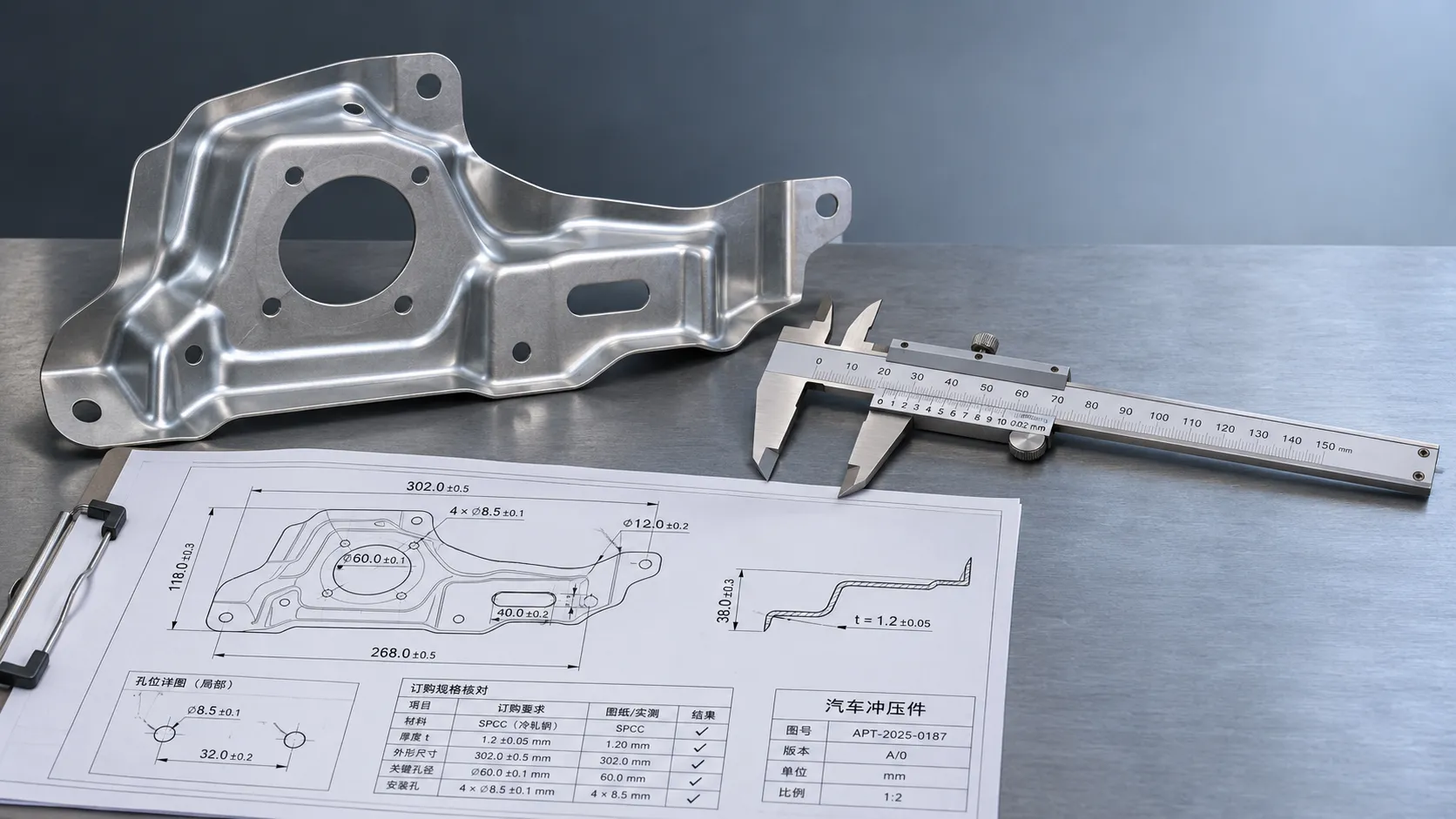
Industrial Product References: How to Verify Specs Before Ordering
Use an industrial product reference for procurement to verify specs, compatibility, and certifications before ordering—and reduce costly purchasing risks.

Choosing a Private Label Partner in Europe: Key Supplier Criteria
Private label cooperation Europe buyers can trust starts with the right supplier. Explore key criteria for compliance, quality, traceability and supply resilience.

Integrated Cabin Comfort Systems: How Seat and Cabin Climate Controls Work Together
Discover how integrated cabin comfort systems coordinate seat and climate controls to balance occupant comfort, energy use, safety, and performance.

Automotive Ergonomics Pricing: What Drives Seat System Costs?
Discover what drives automotive ergonomics pricing, from seat mechanisms and safety systems to tooling and volume, and learn how to compare supplier quotes.

Evaluating Supplier Solutions: How to Verify References and Standards
Supplier solution references and standards can make or break a sourcing decision. Learn how to verify claims, assess compliance, and reduce risk before awarding a contract.
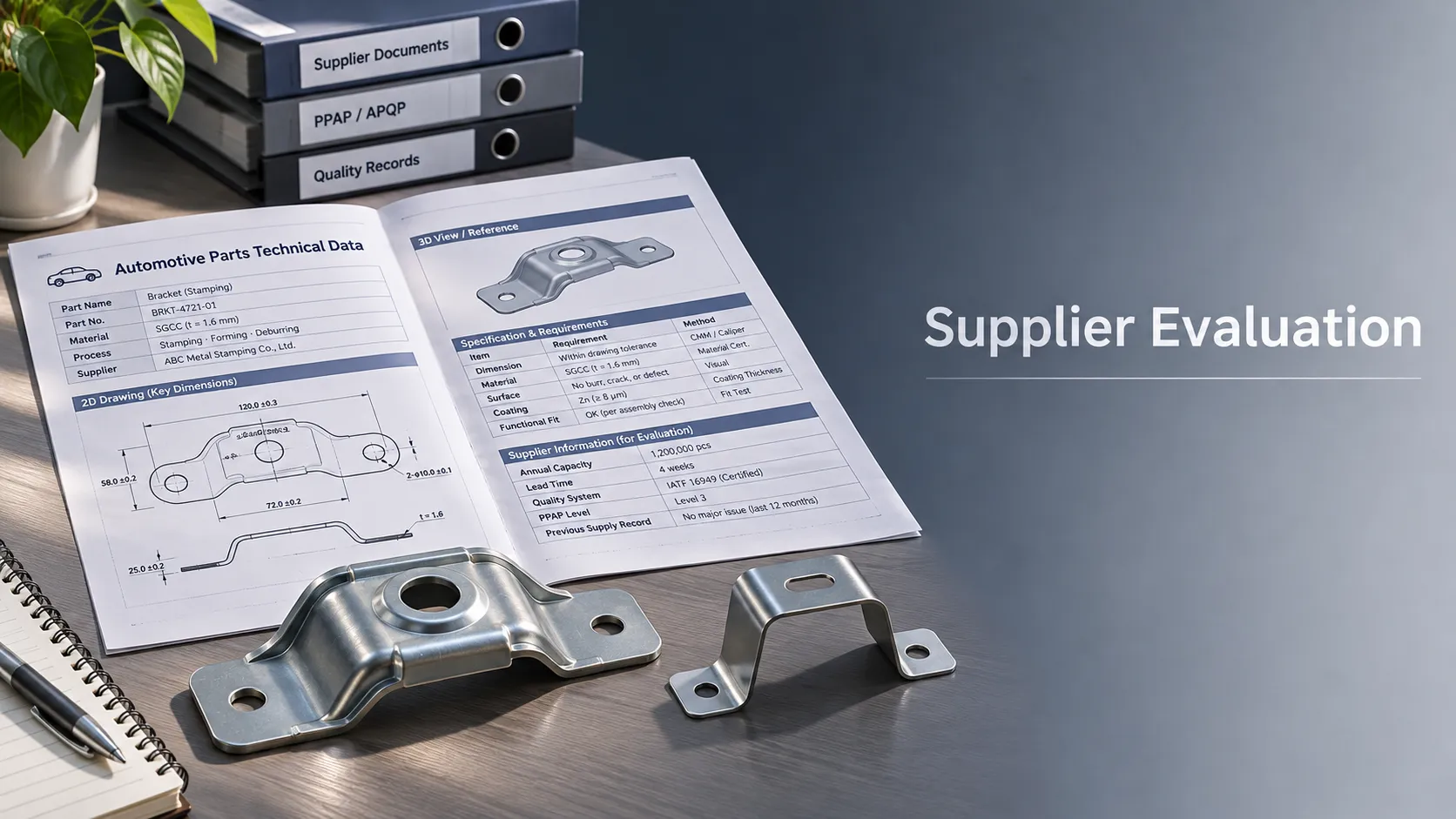
Choosing B2B Product Knowledge Platform Suppliers: Key Evaluation Criteria
Compare B2B product knowledge platform suppliers with confidence. Explore key criteria for data accuracy, supplier transparency, integrations, and value.
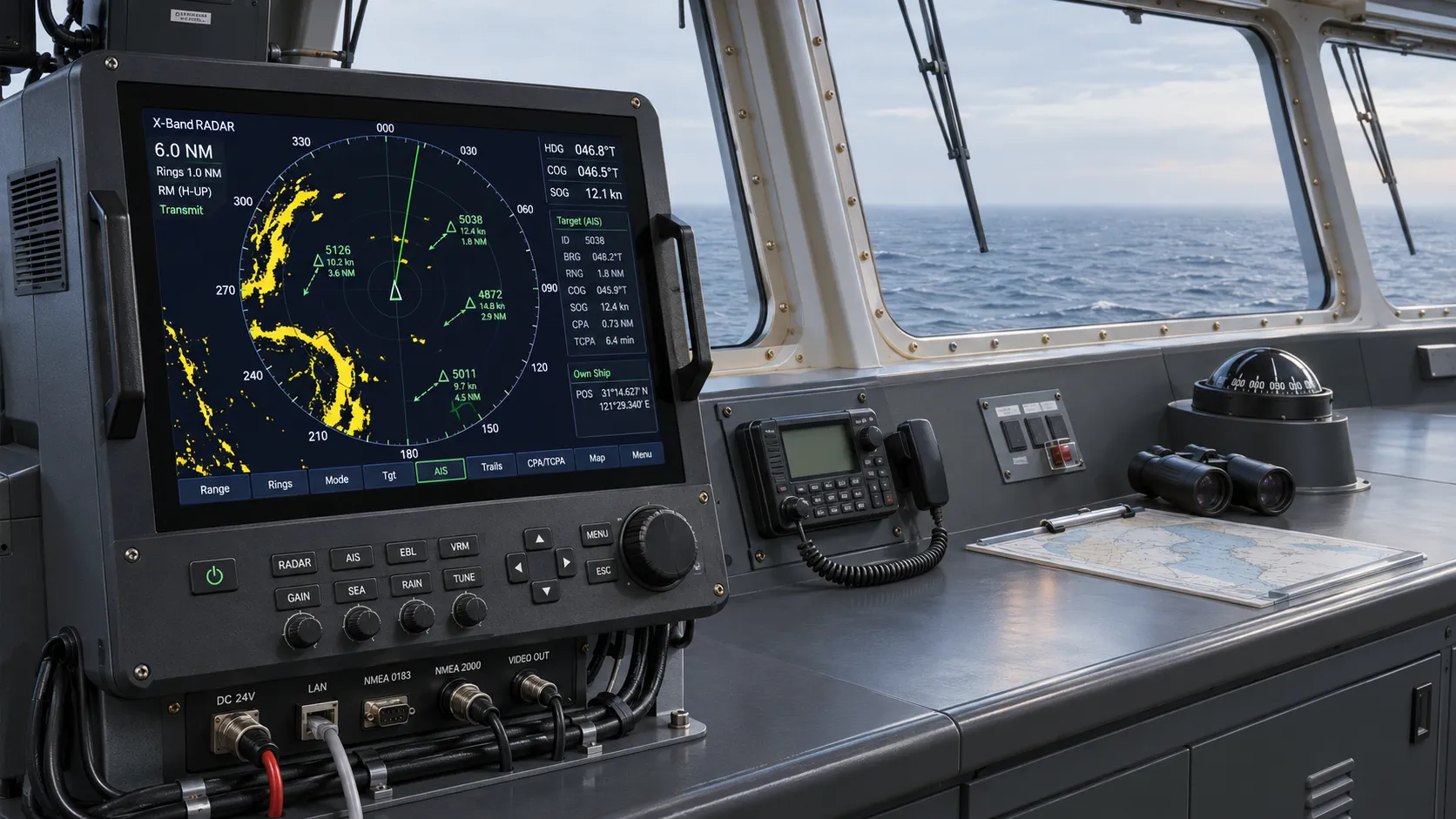
Choosing a Marine Radar Systems Supplier: What to Check Before Buying
Choosing a marine radar systems supplier? Compare installed costs, bridge compatibility, compliance evidence, and service support before you buy.
Related News
- 00
0000-00
How to Evaluate Supplier Solution References Before Signing a Contract - 00
0000-00
Industrial Product References: How to Verify Specs Before Ordering - 00
0000-00
Choosing a Private Label Partner in Europe: Key Supplier Criteria - 00
0000-00
Automotive Ergonomics Pricing: What Drives Seat System Costs? - 00
0000-00
Evaluating Supplier Solutions: How to Verify References and Standards
0000-00
Weekly Insights
Stay ahead with our curated technology reports delivered every Monday.