
OEM Aluminum Automotive Stampings: What to Check When Selecting a Supplier
OEM Aluminum Automotive Stampings: What to Check When Selecting a Supplier
Selecting a supplier for OEM aluminum automotive stampings involves more than comparing piece prices. Procurement teams must assess material traceability, stamping capabilities, dimensional consistency, quality controls, and the supplier’s ability to meet automotive program requirements at scale. Tooling costs, production capacity, lead times, and change-management processes can also affect total cost and supply continuity. The challenge is to compare bids on the same technical and commercial basis before a low quote becomes an expensive production problem.
Start with the part’s function, not the press list
An aluminum bracket, an exposed body panel, and a crash-load-bearing member may all be stamped parts, but they do not present the same sourcing problem. A cosmetic panel may be judged heavily on surface finish and appearance after painting. A structural component may demand tighter control of material properties, geometry, joining features, and process changes because its performance depends on the surrounding assembly.
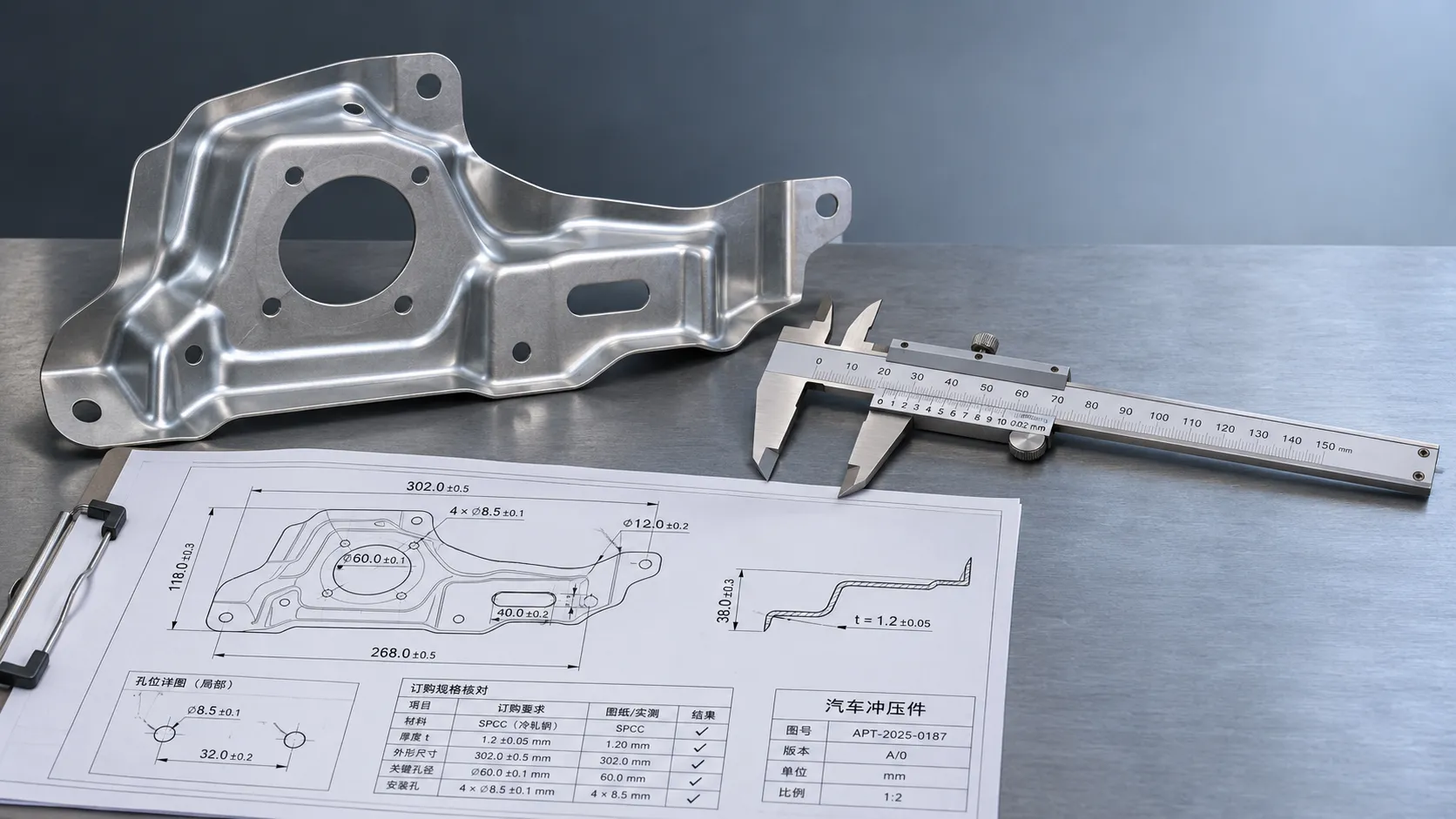
Before issuing a request for quotation, identify the characteristics that matter in service and assembly. These can include datums, hole positions, flange geometry, thickness, surface condition, and the locations where the part will be bonded, riveted, welded, or otherwise joined. Provide the applicable drawing, specifications, expected annual volumes, program duration, delivery locations, and forecast ramp-up. If requirements are still provisional, label them clearly so suppliers do not price different assumptions as if they were the same scope.
For components associated with crash performance or occupant protection, include the relevant customer-specific validation and approval requirements. A supplier’s ability to form the shape does not, by itself, establish that the finished assembly will meet vehicle-level performance targets. GNCS’s coverage of lightweight bodies and passive safety reflects this distinction: a stamping decision must be understood in the context of the complete load path and the interfaces around it.
Verify material control from the mill to the finished part
Aluminum is not a single interchangeable material. Alloy, temper, thickness, surface treatment, and rolling direction can influence formability, springback, joining behavior, and final properties. The correct choice depends on the engineering specification and the intended application; a substitution that appears attractive on price may require renewed validation.
Ask prospective suppliers how they identify incoming coils or blanks, verify material certificates against the purchase specification, and connect finished lots to the material consumed. Traceability should also cover outsourced processing when it affects the part. In a containment event, the practical question is not simply whether records exist, but how quickly the supplier can identify affected material, production dates, tooling, and customer shipments.
Review storage and handling as well. Surface damage, contamination, mixed material, or poor segregation can create scrap or downstream joining problems. For visible or bonded surfaces, request an explanation of protective film, lubrication, cleaning, and handling controls, including who is responsible for removing or disposing of any protection.
Look beyond nominal stamping capacity
Press tonnage is useful information, but it is not a complete capability assessment. Bed size, stroke, press speed, feeding equipment, die protection, part transfer, and available automation must suit the geometry and production plan. Ask which press line is proposed, whether it is already committed to other programs, and what happens if that line is unavailable.
Aluminum can spring back after forming, so a part that looks acceptable in the die may move outside tolerance when released. Suppliers should be able to explain how they predict and compensate for this behavior, how they validate the compensation, and how they respond when incoming material varies within specification. Forming simulation can support that work, but a simulation result is not a substitute for production trials and measured parts.
Discuss risks such as splitting, wrinkling, galling, and surface marking in the context of the actual design. A useful supplier review includes specific observations: which radii or flanges are difficult, where lubricant control matters, and whether a proposed design change would reduce risk without compromising function. If a bidder offers no technical questions on a demanding component, that deserves as much attention as an unusually low price.
Also establish which operations are included. Blanking, forming, trimming, piercing, deburring, cleaning, heat treatment, joining, and inspection may occur at different sites or subcontractors. The quoted process route should show where each step takes place and who owns the interfaces. For processes involving heat, confirm how temperature exposure affects the specified material condition and what validation is required.
Compare total landed cost, not only unit price
A credible cost comparison separates recurring part cost from one-time investment and conditional charges. Request a common quotation format, while allowing suppliers to explain legitimate differences in their manufacturing routes. At a minimum, clarify these items:
- Material basis: alloy and temper, assumed blank size, yield, scrap treatment, and the mechanism for material price adjustments.
- Tooling and launch: design, die manufacture, tryout, engineering changes, checking fixtures, validation samples, and any production readiness activities.
- Piece price: included operations, inspection, packaging, expected order quantities, and the volume assumptions behind the quote.
- Logistics: freight terms, delivery location, returnable packaging, inventory arrangements, duties where applicable, and premium freight responsibility.
- Lifecycle charges: tool maintenance, refurbishment, storage, service parts, engineering changes, and end-of-program obligations.
Pay particular attention to material yield. A lower forming price can be offset by a larger blank or a less efficient nesting plan. Equally, a quote that assumes an aggressive yield may not survive a tooling trial. Ask bidders to identify their assumptions and explain how a change in yield would affect the commercial agreement.
Material adjustment clauses deserve careful reading. Define the reference basis, review frequency, timing, and treatment of existing inventory. Where scrap value is credited, confirm who retains it and how it is calculated. The intention is not to eliminate all price movement; it is to prevent two parties from discovering after launch that they had different expectations.
Treat tooling as a program asset
Tooling often determines both the launch schedule and the long-term stability of a stamping program. Establish whether the proposed die is progressive, transfer, or another arrangement, and ask why that approach fits the part and forecast. The cheapest initial tool is not necessarily the least expensive choice if it increases handling, limits capacity, or makes dimensional control difficult.
The agreement should state who owns the tool, where it will be built and stored, what is included in the purchase price, and what happens if production moves. Define access to designs and maintenance records, responsibility for repair and refurbishment, and the conditions under which the tool can be released or transferred. Confirm whether fixtures, spare components, and software or design files are included rather than assuming they follow the die automatically.
Tooling lead time should be presented as a schedule with dependencies: design approval, material procurement, die build, tryout, dimensional corrections, customer approval, and production ramp-up. A single delivery date hides where the schedule has little room for engineering changes. If a launch date is fixed, ask suppliers to identify decisions needed from the customer and the latest dates for those decisions.
Ask for evidence of a repeatable quality process
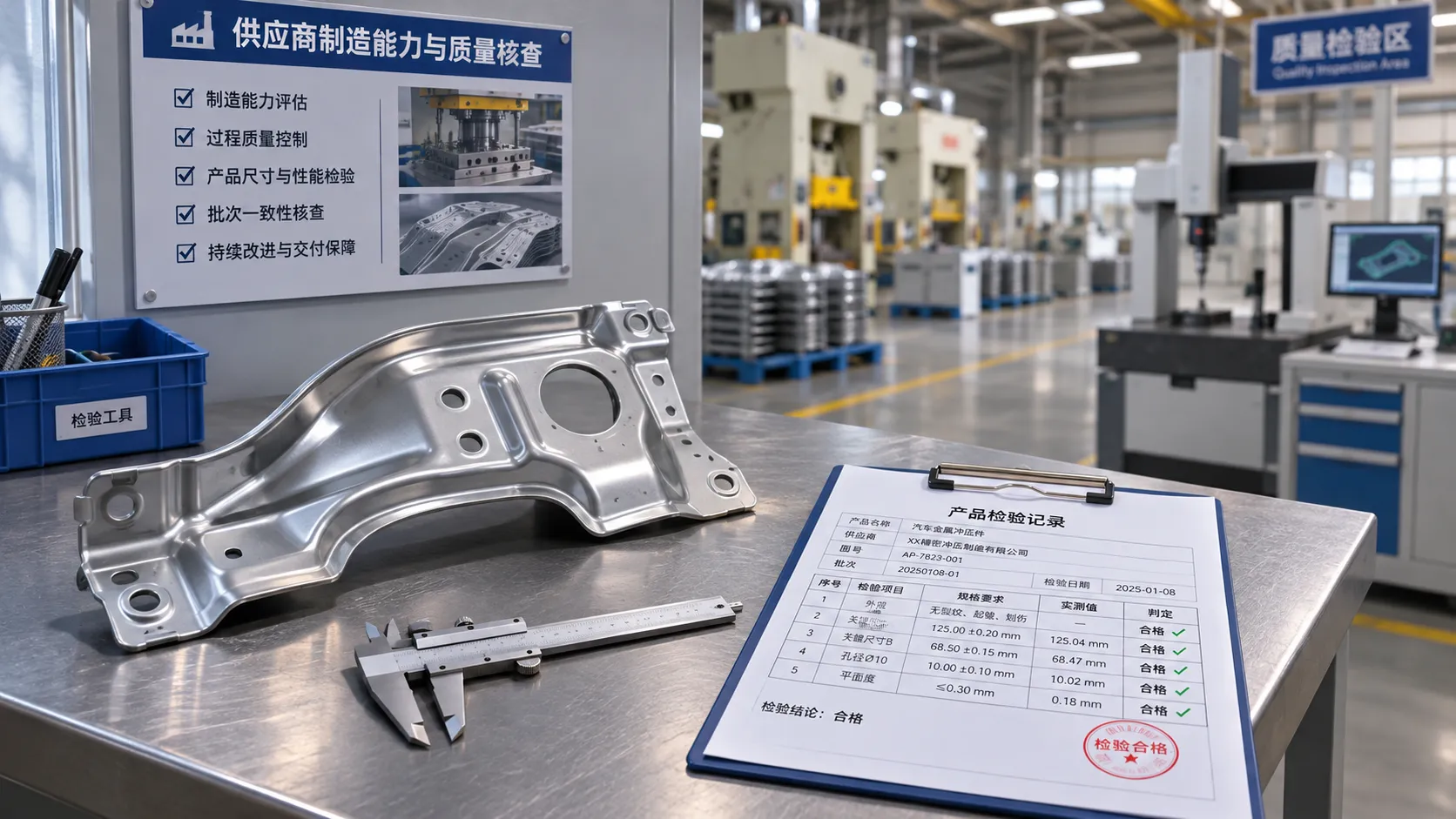
A sample that meets the drawing is encouraging, but buyers need evidence that the process can continue to produce conforming parts. Review the proposed control plan, inspection methods, measurement equipment, reaction plans, and approach to nonconforming material. For important dimensions, ask how parts are located during measurement and whether the checking method reflects the way the part is restrained in assembly.
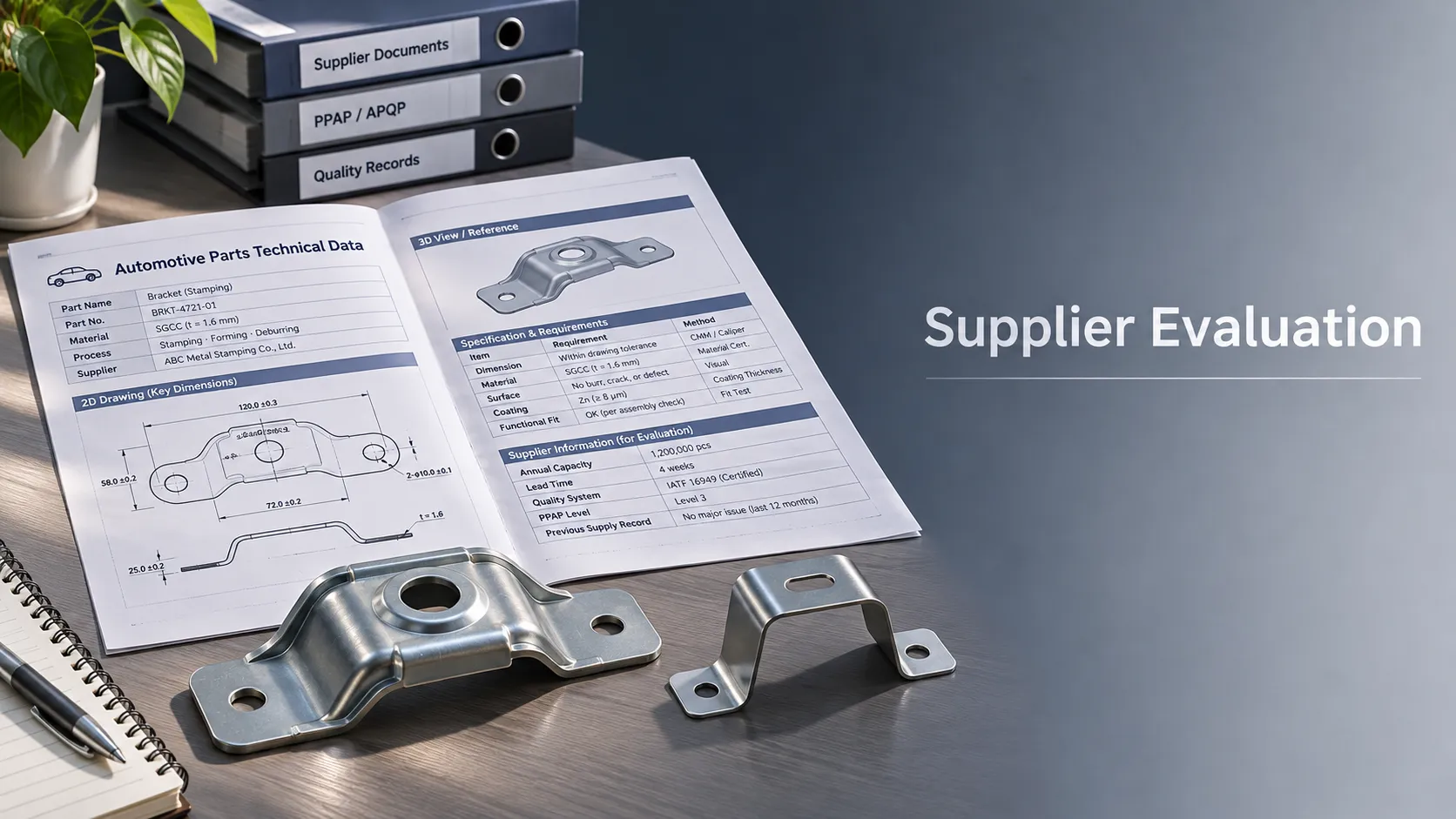
Where required by the customer, confirm the supplier’s ability to complete Production Part Approval Process documentation and related automotive quality planning activities. IATF 16949 certification may be a sourcing requirement for a particular program, but its applicability, scope, site, and current status should be verified rather than assumed. Certification does not replace a review of the specific process or guarantee that a particular component is approved.
Request examples of the information the supplier would provide for dimensional studies, material verification, and process capability where specified. Agree on sample quantities, acceptance criteria, and who pays for additional trials. For a safety-related part, identify special characteristics through the customer’s defined process and ensure the supplier understands the required controls and escalation path.
Change management is equally important after approval. Changes to material source, manufacturing site, tooling, equipment, process parameters, or subcontractors may require notification or customer approval under the applicable agreement. The purchase order and quality agreement should state which changes trigger review, what evidence is needed, and whether shipments can continue while approval is pending.
Test the delivery plan against disruption
A supplier may have sufficient annual capacity on paper and still struggle during a launch peak. Ask for capacity by constrained operation, including tool availability, planned shifts, maintenance, downstream processing, and competing commitments. Compare that capacity with the forecast by period, not just the annual total. The plan should account for prototype builds, ramp-up, normal demand, and service parts where relevant.
Then ask what the supplier would actually do after a press breakdown, material interruption, or quality hold. An alternative press is useful only if the tool fits, the process can be validated as required, and the necessary approvals are obtainable. A second material source is useful only if it can supply the specified product and any qualification conditions are met.
Inventory can buffer disruption, but it also has a cost and requires clear ownership. Agree on stock location, replenishment triggers, shelf-life or surface-protection considerations where applicable, and who bears the cost of obsolete parts after a design change. Packaging should protect edges and appearance while allowing the receiving plant to unload and present parts efficiently; damage discovered at the assembly line can erase savings made in freight.
Make the award decision with open assumptions
Before nomination, put the leading bids through the same review with purchasing, engineering, quality, manufacturing, and logistics. Record unresolved issues separately from confirmed capabilities. A supplier that requests a realistic tooling correction or a clearer tolerance may be a stronger candidate than one that accepts every requirement without explaining how it will be met.
The final comparison should show the expected landed cost at the agreed volume, the exposure if volume changes, the launch schedule, and the principal technical and supply risks. Where a bid depends on a material substitution, an unproven process route, or a future capacity increase, make approval of that assumption an explicit condition rather than treating it as a completed capability.
A practical next step is to issue a consolidated clarification sheet to shortlisted suppliers: confirm the part revision, material specification, process route, tooling ownership, quality deliverables, capacity, and price-adjustment terms. Closing those gaps before the award gives both sides a more reliable basis for launch and a clearer way to manage cost throughout the program.
Related News

How to Evaluate Supplier Solution References Before Signing a Contract
Evaluate supplier solution references with confidence. Learn how to verify technical evidence, identify delivery risks, and close gaps before signing a contract.

How Capacitive Seat Occupancy Sensing Works in Automotive Airbag Systems
Discover how capacitive seat occupancy sensing supports automotive airbag systems, and explore the design, calibration, and validation challenges behind reliable performance.
Industrial Product References: How to Verify Specs Before Ordering
Use an industrial product reference for procurement to verify specs, compatibility, and certifications before ordering—and reduce costly purchasing risks.
Choosing a Private Label Partner in Europe: Key Supplier Criteria
Private label cooperation Europe buyers can trust starts with the right supplier. Explore key criteria for compliance, quality, traceability and supply resilience.

Integrated Cabin Comfort Systems: How Seat and Cabin Climate Controls Work Together
Discover how integrated cabin comfort systems coordinate seat and climate controls to balance occupant comfort, energy use, safety, and performance.

Automotive Ergonomics Pricing: What Drives Seat System Costs?
Discover what drives automotive ergonomics pricing, from seat mechanisms and safety systems to tooling and volume, and learn how to compare supplier quotes.
Evaluating Supplier Solutions: How to Verify References and Standards
Supplier solution references and standards can make or break a sourcing decision. Learn how to verify claims, assess compliance, and reduce risk before awarding a contract.
Choosing B2B Product Knowledge Platform Suppliers: Key Evaluation Criteria
Compare B2B product knowledge platform suppliers with confidence. Explore key criteria for data accuracy, supplier transparency, integrations, and value.

Choosing a Marine Radar Systems Supplier: What to Check Before Buying
Choosing a marine radar systems supplier? Compare installed costs, bridge compatibility, compliance evidence, and service support before you buy.
Related News
- 00
0000-00
How to Evaluate Supplier Solution References Before Signing a Contract - 00
0000-00
Industrial Product References: How to Verify Specs Before Ordering - 00
0000-00
Choosing a Private Label Partner in Europe: Key Supplier Criteria - 00
0000-00
Automotive Ergonomics Pricing: What Drives Seat System Costs? - 00
0000-00
Evaluating Supplier Solutions: How to Verify References and Standards
0000-00
Weekly Insights
Stay ahead with our curated technology reports delivered every Monday.