
How to Evaluate a Manufacturing Supplier's Capacity, Quality, and Delivery Reliability
A manufacturing supplier is ready for an award when evidence connects the proposed production route to sufficient capacity, controlled quality, and repeatable delivery performance. A polished factory tour, an approved sample, or a short quoted lead time proves only part of that case. The decisive question is whether the same operation can repeatedly ship conforming products at the required volume while handling normal production interruptions.
Start with the exact part family, manufacturing site, process route, and demand profile under consideration. Capacity demonstrated on another line or delivery performance from a different facility has limited value unless the supplier can explain why the conditions are comparable. A useful supplier capability evaluation ties every major claim to records, observed production, or a representative trial.
Define the production commitment before comparing suppliers
Supplier comparisons become unreliable when quotations assume different responsibilities. One manufacturer might include final testing, protective packaging, and subcontracted finishing in its lead time; another might quote only the period between material receipt and assembly completion.
Establish a common evaluation basis covering the drawing revision, material specification, expected product mix, order frequency, release quantities, packaging requirements, and delivery destination. Separate regular demand from temporary peaks. A supplier that supports a stable monthly schedule might struggle with the same annual volume released in irregular batches.
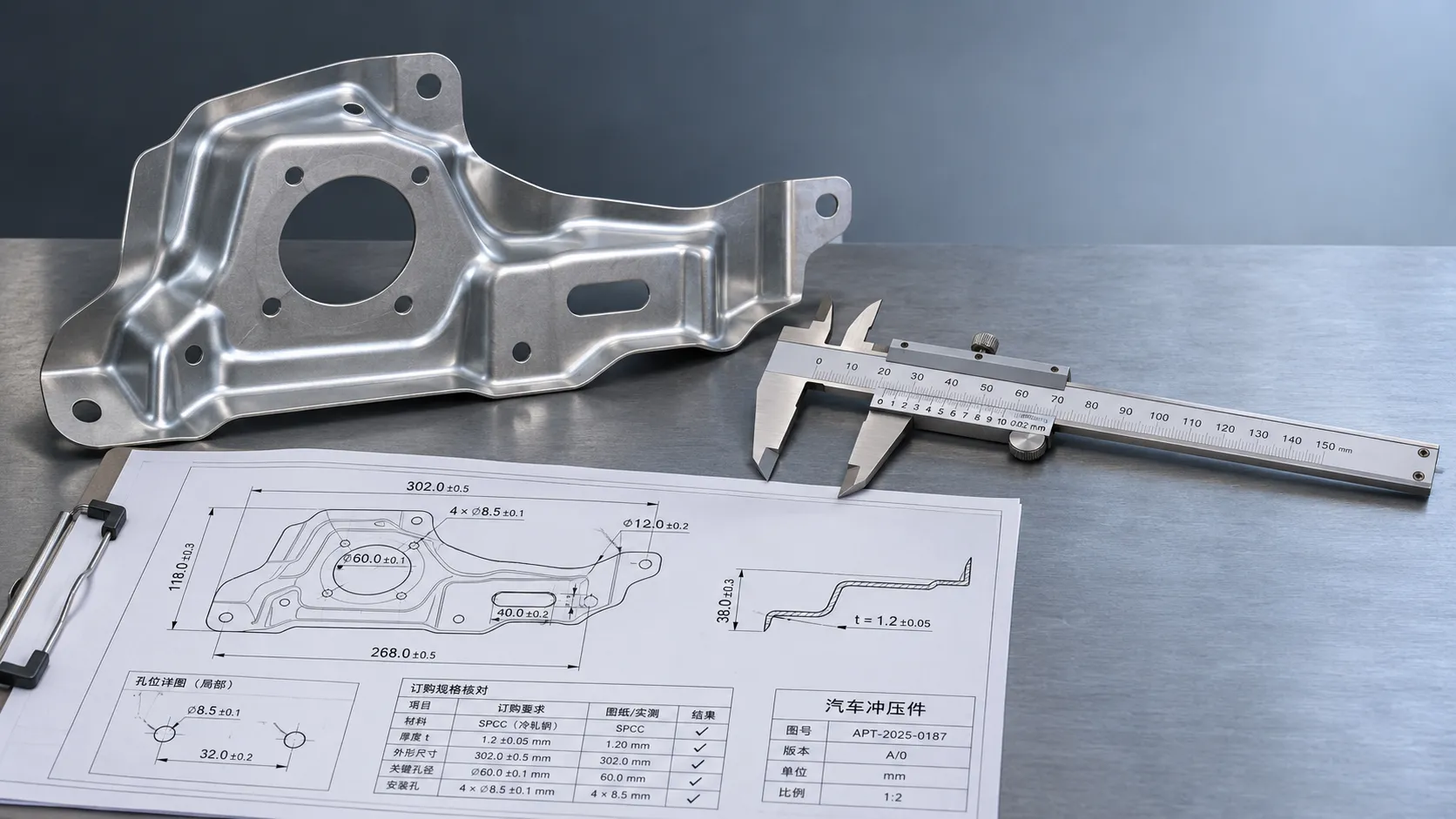
Also identify which characteristics affect product acceptance. For a stamped component, these could include material properties, critical geometry, and weld integrity. For marine navigation electronics, the focus could include environmental sealing, calibration, and functional performance. These requirements determine which production steps deserve the closest scrutiny.
Record assumptions that remain unresolved. A quotation based on customer-supplied tooling, for example, cannot be compared directly with one that includes tool development and production validation.
Find the constraint that governs usable capacity
Installed equipment and floor space provide little evidence of available output. Usable capacity comes from the slowest necessary operation after existing commitments, process losses, maintenance, and staffing constraints are considered.
Follow the proposed route from incoming material to shipment. Identify shared presses, machining centers, heat-treatment services, assembly stations, test equipment, and inspection resources. The constraint is sometimes a laboratory or final test station rather than a production machine. Additional assembly labor will not increase shipments if every finished unit waits for the same limited test capacity.
Reconstruct capacity from operating records
Request recent records for comparable work: scheduled hours, completed quantities, rejected output, downtime, changeovers, and actual cycle times. Compare those records with the capacity calculation in the quotation.
A practical starting point is: available conforming output = available production time ÷ demonstrated cycle time × first-pass yield. Use production time remaining after existing commitments and planned interruptions. Account for changeovers, downtime, and losses once; if the demonstrated rate already includes them, applying another reduction would understate capacity.
For batch processes, include loading limits and complete batch duration. For multi-cavity tooling, verify how many cavities are qualified and operating. For shared equipment, assess the proposed production slot against the full schedule. A technically achievable rate has limited commercial value when no production window is reserved.
Ask how capacity changes across the requested product mix. A stamping line running one material and thickness continuously faces different constraints from a schedule requiring frequent die changes and material substitutions. Likewise, an electronics assembly line can have adequate placement capacity while software loading and functional testing create a queue.
Use a representative production run
A trial becomes meaningful when it uses the intended tooling, material, staffing, inspection methods, and production rate. Record conforming output, interruptions, scrap, rework, and the queue at each major operation. Include setup and changeover where these materially affect the order pattern.
A short run establishes process feasibility; it provides weaker evidence of sustained output, tool wear, or shift-to-shift consistency. Match the trial duration to the uncertainty being tested. Where a longer run is impractical, examine historical records from genuinely comparable production and state what remains unproven.
Expansion plans deserve separate treatment. Additional equipment, recruitment, or a second shift counts as future capacity until installation, qualification, staffing, and scheduling are complete.
Trace quality evidence from the requirement to the shipped part
A quality certificate helps establish the scope of a management system. It does not establish that a particular part meets its requirements. Verify that the certificate covers the relevant site and activities, then examine how the product requirements become controls on the actual production route.
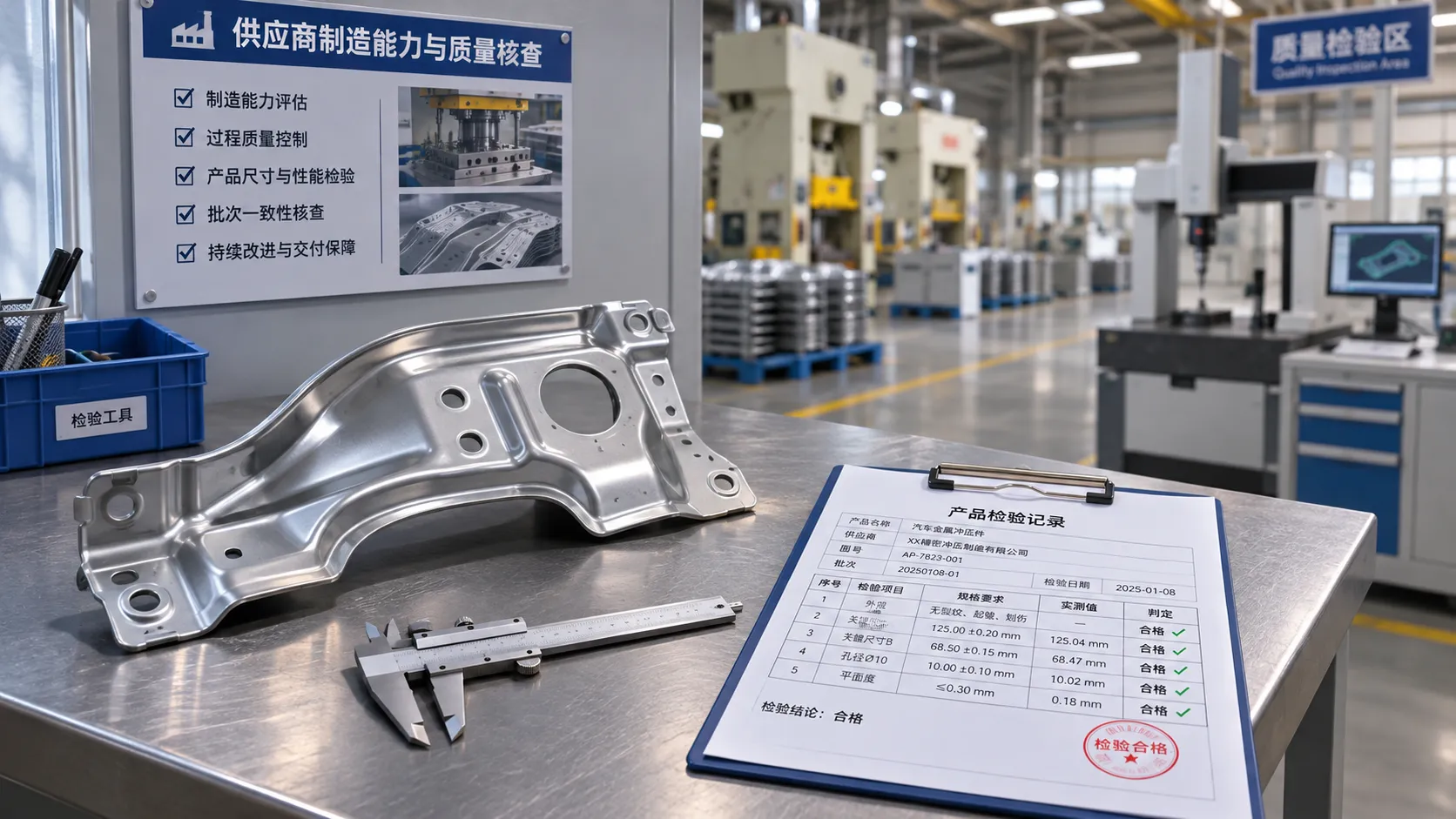
Select several critical characteristics and trace each through the drawing, process instructions, inspection method, production record, and reaction procedure. This reveals whether the system controls the manufacturing process or mainly detects defects after production.
Measurement deserves particular attention. A narrow tolerance is difficult to control when fixture location, gauge variation, or measurement technique introduces substantial uncertainty. Review calibration status alongside measurement-system evidence and the method used on the shop floor. Calibration alone does not establish that a measurement process is suitable.
Capability indices also require context. A favorable value from a selected sample has limited meaning if the process was unstable, the data excluded startup production, or the measurement method concealed variation. Agree acceptance criteria for the specific characteristic and application rather than treating one numerical threshold as universal proof.
Examine defects that final inspection cannot reliably reveal
Some characteristics require process controls because complete verification would be destructive or impractical. Weld integrity, heat-treatment results, sealing performance, and certain safety-related assembly features can fall into this category. Review validated process settings, monitoring records, maintenance, and the response to deviations.
For an airbag or seatbelt assembly, a successful final functional check does not by itself establish that every hidden assembly feature is correct. Evidence must connect component identity, controlled assembly steps, and lot or serial traceability to the applicable product requirements.
Choose a recent nonconformance and follow it through containment, root-cause analysis, corrective action, and effectiveness verification. Confirm how suspect inventory was identified, including work in progress and material already shipped. Repeated sorting without a demonstrated process correction indicates continuing exposure.
Make delivery performance comparable
An on-time delivery percentage is useful only when its calculation is clear. Establish whether the date refers to dispatch or arrival, whether performance is measured by order or order line, and whether partial shipments qualify as complete. Identify how revised commitments and customer-requested changes are recorded.
Request performance against both the original confirmed date and the latest agreed date. Measuring only against revised promises can conceal schedule slippage. Separate supplier-caused delays from documented changes in demand or specification, while preserving visibility of the total disruption.
Review delivery records for comparable products and production routes. An aggregate figure dominated by simple repeat parts can conceal poor performance on complex assemblies. Look at the frequency and duration of late deliveries, incomplete quantities, and reliance on premium freight. Expedites that preserve an acceptable headline result can indicate an unstable production schedule.
Lead time should also be broken into material procurement, queue time, processing, external services, inspection, packaging, and transport. This exposes which portions are controlled directly and which rely on assumptions. A short machining cycle does not justify a short replenishment promise when a required coating operation has a long queue.
Test what happens when the normal plan breaks
Ask the supplier to explain its response to a plausible disruption affecting the proposed route: a critical machine failure, a rejected material lot, or an unavailable external processor. Follow the answer through the actual recovery sequence.
A backup machine is credible when the tooling fits, the program and settings are controlled, staff are qualified, and the resulting product can be accepted. An alternative subcontractor is useful only when its process and approval status meet the relevant requirements. Access to another factory does not automatically establish transferable production capacity.
Maintenance history and spare-part availability help distinguish recoverable downtime from a prolonged stoppage. For specialized tooling, establish ownership, access, repair responsibility, and transfer arrangements before relying on relocation as a contingency.
Inventory buffers need similar scrutiny. Confirm where stock sits, which configuration it covers, and how it is replenished and protected from deterioration. Finished goods offer little protection against a design change, while raw material does not resolve a bottleneck in final testing.
Turn the evidence into an award decision
Separate mandatory acceptance conditions from factors that can be scored. Unresolved control of a critical characteristic, inadequate traceability, or insufficient committed capacity should not disappear inside a weighted average. A low price cannot compensate for a failure to meet a mandatory requirement.
For suppliers that pass those conditions, compare capacity headroom, process control, delivery consistency, and recovery readiness using the same evidence rules. Record both the finding and confidence in it. Observed production supported by consistent records warrants greater confidence than a forecast awaiting equipment installation.
Use a conditional award when the remaining uncertainty is specific and can be closed before unrestricted production release. Conditions might include completion of a representative run, validation of a measurement method, or evidence that an external process has been approved. Assign a clear acceptance result, responsible owner, and completion point to each condition.
The initial production order should preserve visibility: agreed reporting, traceable lots, defined escalation triggers, and
Related News

How to Evaluate Supplier Solution References Before Signing a Contract
Evaluate supplier solution references with confidence. Learn how to verify technical evidence, identify delivery risks, and close gaps before signing a contract.

How Capacitive Seat Occupancy Sensing Works in Automotive Airbag Systems
Discover how capacitive seat occupancy sensing supports automotive airbag systems, and explore the design, calibration, and validation challenges behind reliable performance.
Industrial Product References: How to Verify Specs Before Ordering
Use an industrial product reference for procurement to verify specs, compatibility, and certifications before ordering—and reduce costly purchasing risks.
Choosing a Private Label Partner in Europe: Key Supplier Criteria
Private label cooperation Europe buyers can trust starts with the right supplier. Explore key criteria for compliance, quality, traceability and supply resilience.

Integrated Cabin Comfort Systems: How Seat and Cabin Climate Controls Work Together
Discover how integrated cabin comfort systems coordinate seat and climate controls to balance occupant comfort, energy use, safety, and performance.
Automotive Ergonomics Pricing: What Drives Seat System Costs?
Discover what drives automotive ergonomics pricing, from seat mechanisms and safety systems to tooling and volume, and learn how to compare supplier quotes.
Evaluating Supplier Solutions: How to Verify References and Standards
Supplier solution references and standards can make or break a sourcing decision. Learn how to verify claims, assess compliance, and reduce risk before awarding a contract.
Choosing B2B Product Knowledge Platform Suppliers: Key Evaluation Criteria
Compare B2B product knowledge platform suppliers with confidence. Explore key criteria for data accuracy, supplier transparency, integrations, and value.

Choosing a Marine Radar Systems Supplier: What to Check Before Buying
Choosing a marine radar systems supplier? Compare installed costs, bridge compatibility, compliance evidence, and service support before you buy.
Related News
- 00
0000-00
How to Evaluate Supplier Solution References Before Signing a Contract - 00
0000-00
Industrial Product References: How to Verify Specs Before Ordering - 00
0000-00
Choosing a Private Label Partner in Europe: Key Supplier Criteria - 00
0000-00
Automotive Ergonomics Pricing: What Drives Seat System Costs? - 00
0000-00
Evaluating Supplier Solutions: How to Verify References and Standards
0000-00
Weekly Insights
Stay ahead with our curated technology reports delivered every Monday.