
Global Sourcing Procurement Planning: Data, Tools, and Templates You Need
Global Sourcing Procurement Planning: Data, Tools, and Templates You Need
Finding the right procurement planning resources global sourcing teams need can mean the difference between a resilient supply chain and costly disruption. For buyers sourcing marine navigation equipment, automotive stampings, or cabin safety components, price comparisons alone are not enough. Supplier capability, regulatory requirements, lead times, and total landed cost must inform the decision.
The difficult part is rarely collecting more information. It is deciding which information can support an award, which assumptions remain untested, and who must resolve them before production starts. A useful sourcing plan connects demand, technical requirements, supplier evidence, commercial terms, and delivery milestones in one controlled decision process.
Start with the buying decision, not the supplier list
Before searching overseas markets, establish what the purchase must accomplish. Is the priority replacing an unstable source, supporting a new vehicle program, reducing lifecycle cost, or obtaining a capability unavailable locally? These objectives lead to different shortlists. A supplier suited to repeat production may be poorly equipped for frequent engineering changes or low-volume service orders.
Create a sourcing brief that identifies the item, drawing or specification revision, destination market, forecast demand, launch date, service-life expectations, and approval owners. Separate mandatory requirements from preferences. Material traceability may be mandatory; proximity to a preferred port may simply improve logistics.
For safety-critical equipment, define technical approval gates before introducing weighted supplier scores. An attractive price cannot compensate for missing validation evidence. Nor does an established quality-management system prove that a particular airbag assembly, seatbelt, or navigation device meets its intended application requirements.
Build a data pack that exposes uncertainty
A sourcing data pack should distinguish internal records, supplier statements, and independently checked evidence. Every consequential assumption needs a source, a date, and an owner. Otherwise, an old freight estimate or an unverified capacity claim can quietly become an approved planning input.
Demand and delivery data
Use historical consumption, open orders, forecast revisions, inventory, and launch schedules to establish demand. Show base demand separately from upside scenarios. For customized components, include engineering-release dates and approval dependencies: suppliers cannot reliably schedule tooling or production against an unsettled specification.
Break lead time into material procurement, tooling, sample production, validation, manufacturing, transport, customs clearance, and receiving inspection. Ask whether quoted lead time starts at purchase-order acceptance, deposit receipt, or drawing approval. That distinction often matters more than the headline number.
Capability and compliance evidence
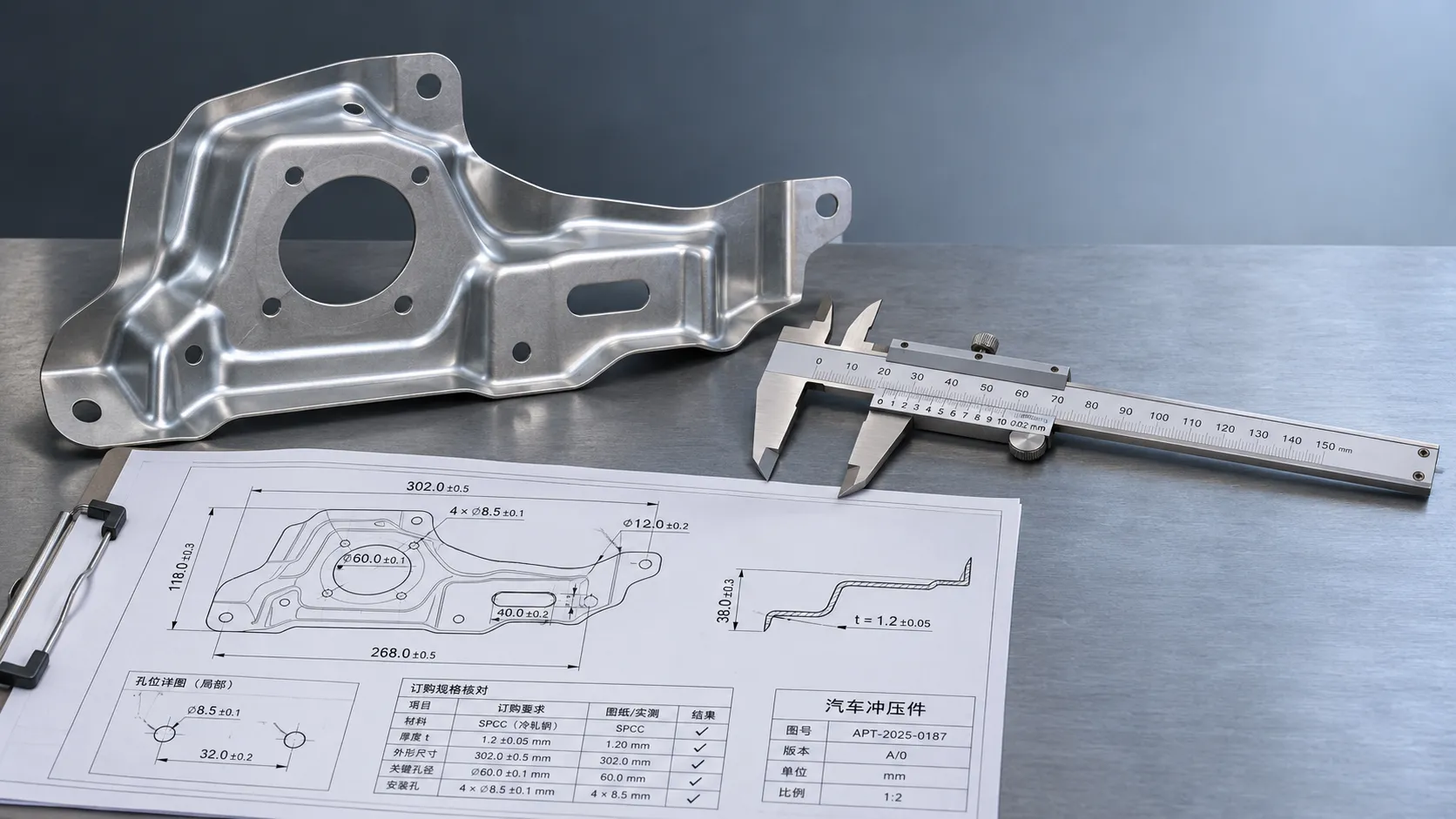
Request evidence tied to the actual manufacturing site and product configuration. For automotive stampings, investigate material grade, forming route, thickness control, dimensional inspection, and tooling maintenance. For airbags and seatbelts, examine traceability, change control, validation responsibilities, and the handling requirements of relevant components.
Marine navigation sourcing adds another layer: equipment approval, vessel integration, software versions, update support, and service coverage. Requirements depend on equipment type, vessel, flag administration, and applicable rules. Verify them against current official sources and project documentation rather than treating a supplier brochure as proof.
Keep regulatory obligations separate from customer specifications and assessment programs. IIHS and Euro NCAP assessments can influence vehicle design targets, but they are not interchangeable with statutory type-approval requirements or individual component certification.
Commercial and market inputs
Capture quotation validity, currency, payment terms, minimum order quantities, tooling ownership, warranty responsibilities, and the named delivery location under the agreed Incoterms rule. Confirm customs classification and origin treatment with appropriate specialists. Supplier location alone does not establish preferential origin or duty eligibility.
Industry intelligence provides useful context. GNCS covers marine navigation, lightweight automotive bodies, airbag assemblies, seatbelt systems, and smart seating. Its Strategic Intelligence Center connects technical developments with compliance and commercial considerations. Use that intelligence to refine questions—for example, about ECDIS update arrangements or seat-frame material changes—then verify applicability through supplier records and engineering review.
Choose tools around the work they must control
A spreadsheet can support a bounded sourcing project if ownership, formulas, and revision history are controlled. It becomes fragile when several plants, currencies, engineering revisions, and approval routes interact. The right tool is the one that prevents consequential errors, not necessarily the one with the largest feature list.
Test tools with a real sourcing package before committing. Can the system identify a quote against an obsolete drawing? Can reviewers retrieve supporting evidence directly from a scorecard? Can an approved award be traced to the assumptions used? If not, automation may simply accelerate inconsistent decisions.
Four templates worth standardizing
1. Sourcing brief and RFQ response sheet
The brief defines the purchase; the response sheet makes bids comparable. Require suppliers to state deviations explicitly rather than burying them in attachments. Include these fields:
- Part or equipment identifier, specification revision, and included scope.
- Forecast volume, order pattern, sample requirements, and production milestones.
- Required evidence, acceptance criteria, and approval responsibilities.
- Unit pricing, tooling charges, packaging, currency, validity, and payment terms.
- Capacity assumptions, lead-time trigger, exclusions, and proposed alternatives.
Request separate pricing for engineering changes and replacement tooling where relevant. A low unit price becomes difficult to interpret when the commercial treatment of these items remains undefined.
2. Total landed cost worksheet
Use a consistent boundary: purchase price plus buyer-borne transport, insurance, duties, brokerage, handling, inspection, and relevant inventory carrying costs. Allocate tooling or qualification costs over an explicitly stated volume. Show recoverable taxes separately from nonrecoverable costs, with finance confirming the treatment.
For equipment with ongoing support needs, add a separate lifecycle view covering installation, software or data subscriptions, maintenance, spares, and obsolescence exposure. Avoid double-counting freight already included in the quotation. Run sensitivity checks for exchange rates, freight changes, and lower-than-forecast volumes rather than presenting one precise but fragile total.
3. Supplier qualification and comparison matrix
Place mandatory approval gates above the weighted comparison. After those gates, assess technical fit, quality controls, capacity, delivery credibility, service support, and cost. Define what each score means and link it to evidence. “Good quality” is not a scoring rule; verified traceability and closure of audit findings are assessable conditions.
Keep evidence confidence visible alongside performance scores. A supplier with detailed production records should not appear equivalent to one making an unsupported promise. Record unresolved gaps and the person authorized to accept any residual risk.
4. Risk register and sourcing calendar
Each risk entry should contain a cause, potential consequence, affected milestone, warning indicator, mitigation owner, and response deadline. Link it to the sourcing calendar so action occurs before a dependency becomes critical.
For example, if alternate tooling has not been validated, list qualification as a dependency rather than describing the second supplier as immediately available. Set a trigger for escalation, such as an unapproved sample at the agreed milestone. Include contract signature, tooling release, trial production, approval, shipment, and receipt as separate events.
Stress-test the plan before awarding business
A sourcing plan should survive more than the expected scenario. Review what happens if demand rises, shipment is delayed, or the primary manufacturing site becomes unavailable. Ask suppliers which resources constrain recovery: presses, heat-treatment capacity, electronic components, specialized testing, or skilled labor.
Two suppliers do not necessarily provide independent supply. They may share a material producer, inflator source, logistics route, or tooling subcontractor. Map critical common dependencies where feasible. For safety-critical parts, transferring production can also require renewed validation or customer approval; an alternate quotation is not a qualified backup.
Decide whether inventory, dual sourcing, reserved capacity, or local service stock addresses the actual exposure. Inventory can bridge a shipping delay, but it does not resolve a design defect. A service agreement may support installed navigation equipment more effectively than holding complete replacement units, depending on failure modes and repair arrangements.
Turn the award into a controlled handover
The final award record should explain why the supplier was selected, which assumptions remain open, and what must happen before routine ordering begins. Purchasing, engineering, quality, logistics, and finance should work from the same approved version. Preserve rejected alternatives and their evaluation rationale for future sourcing reviews.
After award, monitor the variables that could invalidate the decision: specification changes, capacity commitments, recurring defects, delivery performance, and support availability. Refresh market intelligence when it changes a requirement or exposes a dependency—not simply to add more reports to the folder.
For the next sourcing project, start with one controlled brief, one comparable quotation sheet, and one evidence-backed risk register. Before releasing tooling funds or committing production volume, confirm the technical approval path, realistic delivery dates, and responsibility for unresolved costs. Those checks make the plan usable when conditions change.
Related News

How to Evaluate Supplier Solution References Before Signing a Contract
Evaluate supplier solution references with confidence. Learn how to verify technical evidence, identify delivery risks, and close gaps before signing a contract.

How Capacitive Seat Occupancy Sensing Works in Automotive Airbag Systems
Discover how capacitive seat occupancy sensing supports automotive airbag systems, and explore the design, calibration, and validation challenges behind reliable performance.
Industrial Product References: How to Verify Specs Before Ordering
Use an industrial product reference for procurement to verify specs, compatibility, and certifications before ordering—and reduce costly purchasing risks.

Choosing a Private Label Partner in Europe: Key Supplier Criteria
Private label cooperation Europe buyers can trust starts with the right supplier. Explore key criteria for compliance, quality, traceability and supply resilience.

Integrated Cabin Comfort Systems: How Seat and Cabin Climate Controls Work Together
Discover how integrated cabin comfort systems coordinate seat and climate controls to balance occupant comfort, energy use, safety, and performance.

Automotive Ergonomics Pricing: What Drives Seat System Costs?
Discover what drives automotive ergonomics pricing, from seat mechanisms and safety systems to tooling and volume, and learn how to compare supplier quotes.

Evaluating Supplier Solutions: How to Verify References and Standards
Supplier solution references and standards can make or break a sourcing decision. Learn how to verify claims, assess compliance, and reduce risk before awarding a contract.
Choosing B2B Product Knowledge Platform Suppliers: Key Evaluation Criteria
Compare B2B product knowledge platform suppliers with confidence. Explore key criteria for data accuracy, supplier transparency, integrations, and value.

Choosing a Marine Radar Systems Supplier: What to Check Before Buying
Choosing a marine radar systems supplier? Compare installed costs, bridge compatibility, compliance evidence, and service support before you buy.
Related News
- 00
0000-00
How to Evaluate Supplier Solution References Before Signing a Contract - 00
0000-00
Industrial Product References: How to Verify Specs Before Ordering - 00
0000-00
Choosing a Private Label Partner in Europe: Key Supplier Criteria - 00
0000-00
Automotive Ergonomics Pricing: What Drives Seat System Costs? - 00
0000-00
Evaluating Supplier Solutions: How to Verify References and Standards
0000-00
Weekly Insights
Stay ahead with our curated technology reports delivered every Monday.