
Magnesium Alloys in Auto Parts: Corrosion Risks to Check Early
Magnesium alloys are reshaping automotive lightweighting because they deliver meaningful mass reduction in seat frames, steering components, instrument panel supports, transmission housings, and other structural or semi-structural parts. Yet the same material advantage can become a hidden liability when corrosion starts early and spreads unnoticed. In auto parts, corrosion does not only affect appearance; it can weaken joints, reduce fatigue life, interfere with coatings, and create compliance risks over the vehicle’s service life. For any team evaluating magnesium alloys, the key question is not whether corrosion can happen, but where it begins, how quickly it progresses, and what design and process decisions can stop it before performance is compromised.
What makes magnesium alloys attractive in auto parts, and why does corrosion become a priority so early?
Magnesium alloys are among the lightest structural metals used in mobility applications. Compared with many steels and even some aluminum solutions, they offer excellent weight-saving potential, which directly supports fuel efficiency, EV range extension, handling, and emissions targets. In the automotive sector, that benefit is especially valuable in body structures, seat systems, brackets, cross-car beams, and interior support assemblies where every kilogram matters.
However, magnesium alloys are also electrochemically active. This means they can corrode faster than competing materials if the alloy grade, coating system, fastening method, and environmental exposure are not managed carefully. In practical terms, the earliest risks often appear long before a part fails in service. They may begin as coating blistering near fasteners, discoloration around edges, white corrosion products in crevices, or localized attack at contact points between dissimilar metals.
For automotive programs, early corrosion review matters because lightweight parts rarely operate in isolation. A magnesium seat frame may connect to steel hardware. A housing may sit near road-salt splash zones. A bracket may be exposed to cabin humidity cycles and cleaning chemicals. Once magnesium alloys are integrated into multi-material systems, corrosion performance becomes a design-system issue, not just a material-property issue.
Where do corrosion risks in magnesium alloys usually start in real vehicle applications?
Corrosion in magnesium alloys typically starts at vulnerable interfaces rather than across a perfectly protected surface. The most common starting points are edges, drilled holes, threaded regions, weld zones, casting defects, coating damage, and joints with more noble metals such as steel, copper-bearing alloys, or certain aluminum components. These locations concentrate moisture, salts, and electrical potential differences that accelerate local degradation.
Several exposure scenarios deserve early attention:
- Road salt and de-icing chemicals reaching underbody or lower-cabin structures
- Condensation cycles inside cabins, especially around seat assemblies and enclosed cavities
- Water traps created by poor drainage or tight overlapping geometries
- Galvanic contact between magnesium alloys and steel fasteners without effective isolation
- Surface contamination before coating, including oils, residues, or abrasive inclusions
- Stone-chip or handling damage that breaks the coating and exposes bare substrate
In die-cast magnesium alloys, porosity and microstructural inconsistency can also influence corrosion behavior. Tiny defects may not appear critical during dimensional inspection, but under cyclic humidity and salt exposure they can become initiation points for localized attack. That is why early corrosion mapping should be aligned with casting quality review, machining plans, and final assembly conditions.
How can magnesium alloys be checked early before corrosion turns into structural or warranty problems?
A strong early-check strategy for magnesium alloys combines material validation, design review, process control, and accelerated testing. Relying on only one of these usually creates blind spots. The most effective approach starts before tooling is frozen and continues through pilot builds.
First, confirm the exact alloy and its intended service environment. Not all magnesium alloys behave the same way. Alloy chemistry, impurity control, and forming or casting route can influence corrosion resistance significantly. Second, review every joint and interface. If a magnesium component touches steel, aluminum, or conductive inserts, define whether insulation, sealants, washers, or coatings are required to reduce galvanic interaction.
Third, test the coating system as a full stack, not as isolated layers. Conversion coating, e-coat, powder coating, paint, and sealant compatibility all matter. A coating that performs well on a flat coupon may fail near radii, laser-marked areas, or threaded holes on an actual part.
Useful early validation methods often include:
- Salt spray and cyclic corrosion testing tailored to automotive exposure
- Humidity and condensation cycling for interior and seat-related assemblies
- Cross-section analysis at joints, edges, and coated defects
- Fastener compatibility testing under load and environmental stress
- Drainage and water-retention evaluation on real geometry, not only samples
- Scratch and chip resistance testing followed by corrosion exposure
The most important principle is to test the part in the condition it will actually live in: assembled, fastened, coated, and exposed. Magnesium alloys often look acceptable in early lab screening but reveal weaknesses when multiple variables interact.
Which design and manufacturing decisions most strongly influence corrosion performance in magnesium alloys?
Design choices often determine whether magnesium alloys remain durable or become maintenance and warranty risks. Geometry should avoid water traps, sharp coating transitions, and inaccessible pockets where pretreatment chemistry cannot reach consistently. Smooth drainage paths, controlled edge radii, and accessible coating coverage are basic but powerful protections.
Joint design is especially important. If dissimilar metals must be used, electrical isolation should be built into the design rather than treated as an afterthought. Nonconductive bushings, sealed interfaces, adhesive bonding strategies, and carefully selected fastener finishes can dramatically reduce galvanic corrosion. In many cases, the corrosion issue is not the magnesium alloy itself, but the surrounding hardware ecosystem.
Manufacturing discipline is equally important. Surface preparation must be consistent, because contamination can undermine even advanced coating systems. Machining damage, burrs, and exposed cut edges should be controlled and, where needed, resealed. Storage and handling also matter; moisture exposure between casting, machining, coating, and assembly can create pre-corrosion conditions before a vehicle ever enters service.
Are magnesium alloys always riskier than aluminum or steel, or is that a common misunderstanding?
This is one of the most common misconceptions. Magnesium alloys are not automatically unsuitable for durable auto parts. The better comparison is not material versus material in isolation, but system versus system under a defined use case. Steel can rust severely if unprotected. Aluminum can suffer galvanic attack and pitting under certain chloride-rich conditions. Magnesium alloys simply demand a more disciplined corrosion-control strategy because their reactivity leaves less room for design or process mistakes.
In enclosed interior applications with controlled exposure, properly designed magnesium alloys can perform very well. In harsh splash-zone or highly conductive environments, they may still be viable, but only with stronger coatings, effective sealing, isolated joints, and validated service-life testing. The practical question should be: does the application justify the mass-saving benefit, and can the corrosion-control package be executed consistently at production scale?
This is where cross-functional intelligence becomes valuable. Lightweighting targets, passive safety performance, durability expectations, and global compliance demands are interconnected. For sectors tracked by GNCS, including automotive lightweight bodies and smart seating systems, magnesium alloys are best evaluated as part of the wider safety-and-reliability architecture rather than as a standalone materials trend.
What should be done first when selecting or reviewing magnesium alloys for upcoming auto parts programs?
Start with a disciplined screening sequence. Define the exposure profile, map all dissimilar-metal contacts, identify coating-critical zones, and require assembled-condition corrosion validation before final release. If the part contributes to occupant protection, seating integrity, or critical structural load paths, corrosion review should be tied directly to durability and crash-relevant retention requirements rather than treated as a cosmetic issue.
A practical first-pass checklist for magnesium alloys includes:
- Confirm alloy grade, impurity limits, and manufacturing route
- Identify all steel, aluminum, and insert interfaces
- Review drainage, edge geometry, and cavity access for coating
- Validate coating stack performance on real production geometry
- Run cyclic testing that reflects actual regional exposure conditions
- Inspect post-test joints, chips, holes, and hidden areas by sectioning
Magnesium alloys can deliver outstanding value in modern vehicles, but only when corrosion is checked early, locally, and realistically. The winning approach is to connect material choice with joint engineering, coating science, environmental simulation, and service-life thinking from the very beginning. If the next evaluation step focuses on where moisture collects, where metals touch, and where coatings are weakest, many expensive failures can be prevented before production ramps up.
Related News

How to Specify Integrated Marine Electronics for Reliable Bridge Operations
Integrated marine electronics: learn how to specify reliable bridge systems with clear data flows, redundancy, alarm control, lifecycle interfaces, and operational testing.

How to Evaluate Navigation Radar Manufacturers for Commercial Vessel Projects
Navigation radar manufacturers: learn how to compare performance, compliance, integration, support, and lifecycle cost for commercial vessel projects.

How Adjustable Cabin Ergonomics Reduce Operator Fatigue in Long-Shift Vehicles
Adjustable cabin ergonomics reduces operator fatigue through better seating, reach, visibility, vibration control, and climate comfort for safer long-shift vehicles.
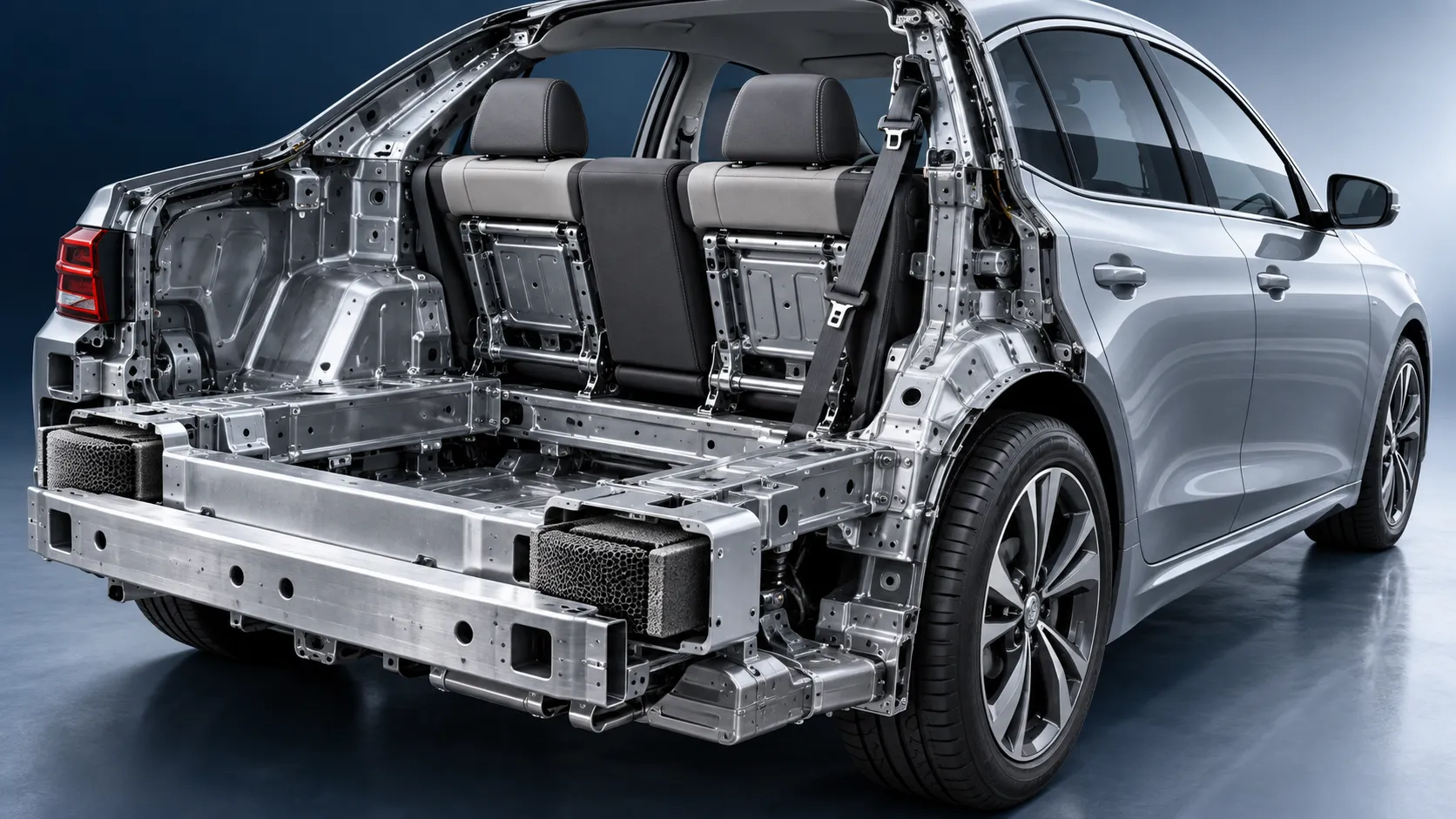
How Rear-Impact Safety Components Work Together to Protect Vehicle Occupants
Explore how automotive safety components for rear impact work together—from crash structures and seats to head restraints and belts—to enhance occupant protection.

How to Evaluate a Marine Safety Systems Manufacturer for Vessel Compliance and Reliability
Marine safety systems manufacturer evaluation guide: verify compliance, engineering quality, lifecycle costs, and global service support for safer, reliable vessel operations.

Crash Test Regulations for Seatbelts: Key Compliance Requirements Explained
Crash test regulations seatbelts explained: explore FMVSS, UN rules, anchorage strength, and dynamic restraint testing for safer, compliant vehicle systems.

How to Calculate the Total Cost of Automotive Lightweighting for a Vehicle Program
Automotive lightweight solutions cost: learn how to calculate program-level costs, including materials, tooling, joining, validation, risk, and vehicle-level value.

How Automotive Seat Occupancy Sensing Improves Airbag Deployment Decisions
Automotive seat occupancy sensing helps optimize airbag deployment decisions, improving passenger classification, safety diagnostics, and compliance across real-world conditions.

What Drives Lightweight Body Component Costs in High-Volume Vehicle Programs?
Lightweight body components cost depends on material yield, forming, joining, tooling, validation, and logistics. Explore proven ways to optimize total vehicle program cost.
Related News
- 00
0000-00
How to Evaluate an Aluminum Automotive Stampings Supplier for Cost, Quality, and Lead Time - 00
0000-00
How to Evaluate Aluminum for Vehicle Lightweight Solutions: Key Trade-Offs in Cost, Strength, and Formability - 00
0000-00
Stamped Aluminum Body Parts: Key Grades, Forming Limits, and Best-Fit Vehicle Applications - 00
0000-00
How Aluminum Automotive Stampings for Body Panels Improve Weight, Corrosion Resistance, and Formability - 00
0000-00
Automotive Lightweight Solutions: How to Compare Materials, Processes, and Cost Drivers
Weekly Insights
Stay ahead with our curated technology reports delivered every Monday.