
Product Selection Resources: A Practical Framework for Comparing Specs, Risk, and Cost
A defensible product selection decision is not a comparison of unit prices or headline specifications. It is a comparison of whether each option can meet the required operating duty, approval route, delivery condition, and service life at an acceptable total cost and risk level. This distinction matters sharply in marine navigation, automotive passive safety, and smart cabin systems, where an apparently equivalent component can fail the program for reasons hidden outside its data sheet: interface incompatibility, incomplete traceability, a restricted material, inadequate change control, or a supplier that cannot support serial production.
The most useful product selection resources guide therefore begins with a simple discipline: separate requirements that must be proven from preferences that can be traded. A lower-cost alternative is only comparable after it has cleared the same baseline for safety, compliance, fitment, and supply assurance. Until then, it is not a lower-cost option; it is an unqualified risk.
Turn a product brief into an evidence-based requirement set
Many sourcing exercises begin with a part number, a benchmark sample, or a broad request such as “radar with equivalent performance” or “lighter seat frame.” These references are useful, but they are not a complete purchasing specification. They often omit the conditions that determine whether the equipment will work in the intended system.
A usable requirement set should distinguish among functional performance, boundary conditions, integration requirements, quality evidence, and commercial constraints. The aim is not to create a longer document. It is to prevent suppliers from quoting against different assumptions while appearing to answer the same request.
- Functional requirement: What must the product do, under what inputs, and with what acceptable output or response?
- Operating boundary: What temperature, vibration, corrosion, humidity, electrical load, impact event, duty cycle, or electromagnetic environment will it face?
- Integration requirement: Which mechanical interfaces, connectors, communication protocols, mounting envelopes, diagnostic functions, software versions, or vehicle/network architectures must it match?
- Approval and traceability requirement: Which market rules, customer specifications, test reports, batch records, labeling, and change-notification obligations are required?
- Supply requirement: What are the forecast pattern, minimum order quantity, packaging specification, lead-time ceiling, service-parts horizon, and required contingency arrangements?
The difference between a target and a non-negotiable requirement should be explicit. For example, an automotive seat assembly may have a preferred weight target, but its anchorage geometry, seat-track interaction, occupant-position constraints, and applicable crash-performance obligations are not tradeable. A marine display may have a preferred screen size, but required interfaces, environmental qualification, installation limitations, and approval status may decide its eligibility before screen dimensions do.
When requirements are unclear, quotation comparisons become misleading. One supplier may include validation, tooling amortization, export packing, and firmware support; another may quote only the hardware. A spreadsheet can show a price advantage while concealing a fundamentally different scope.
Read specifications as a system, not as isolated numbers
Technical selection frequently fails when a single favorable parameter is treated as proof of overall equivalence. In safety-critical and system-connected equipment, the relevant question is not whether one figure matches. It is whether the product behaves acceptably across the operating envelope and within the complete assembly.
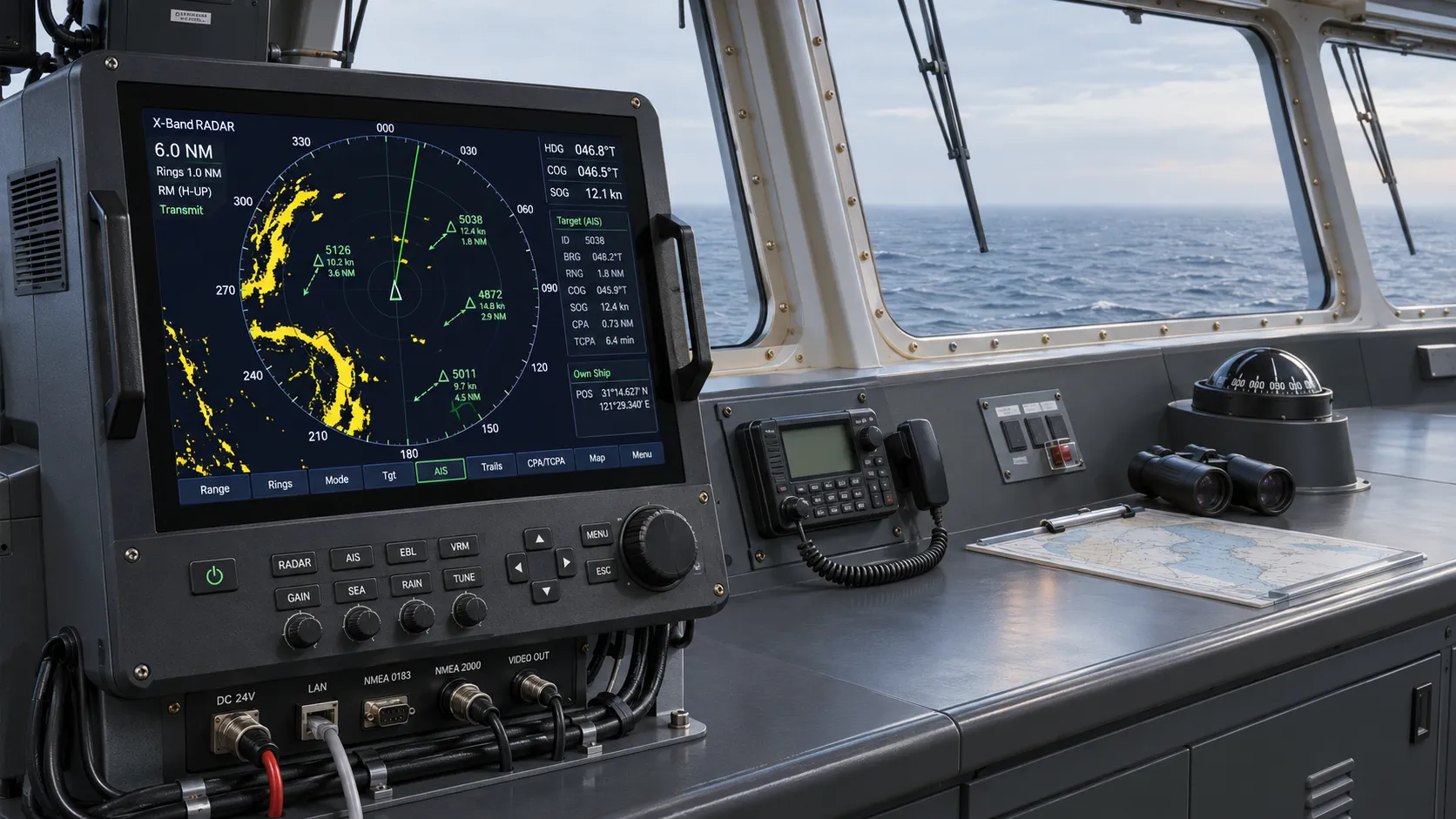
For marine navigation equipment, range, resolution, positioning accuracy, display brightness, or sensor sensitivity are incomplete selection criteria on their own. Procurement documentation needs to establish compatibility with the vessel’s existing architecture: power characteristics, supported sentence formats or network interfaces, antenna and transducer requirements, alarms, data redundancy, mounting constraints, and compatibility with connected bridge equipment. Marine electronics may also have approval requirements tied to the vessel type, intended trade, flag-state expectations, and the function being performed. A device suited to supplementary navigation is not automatically suitable for a function subject to carriage or type-approval expectations.
Environmental performance also deserves close reading. Claims such as “marine grade” do not replace evidence of the relevant test conditions. Equipment installed in an exposed location faces salt mist, solar load, vibration, temperature cycling, water ingress, and electromagnetic interference differently from equipment mounted in a protected console. IEC 60945 is commonly relevant to maritime navigation and radiocommunication equipment, but the exact compliance requirement should be linked to the equipment category and installation, rather than assumed from a supplier’s general statement.
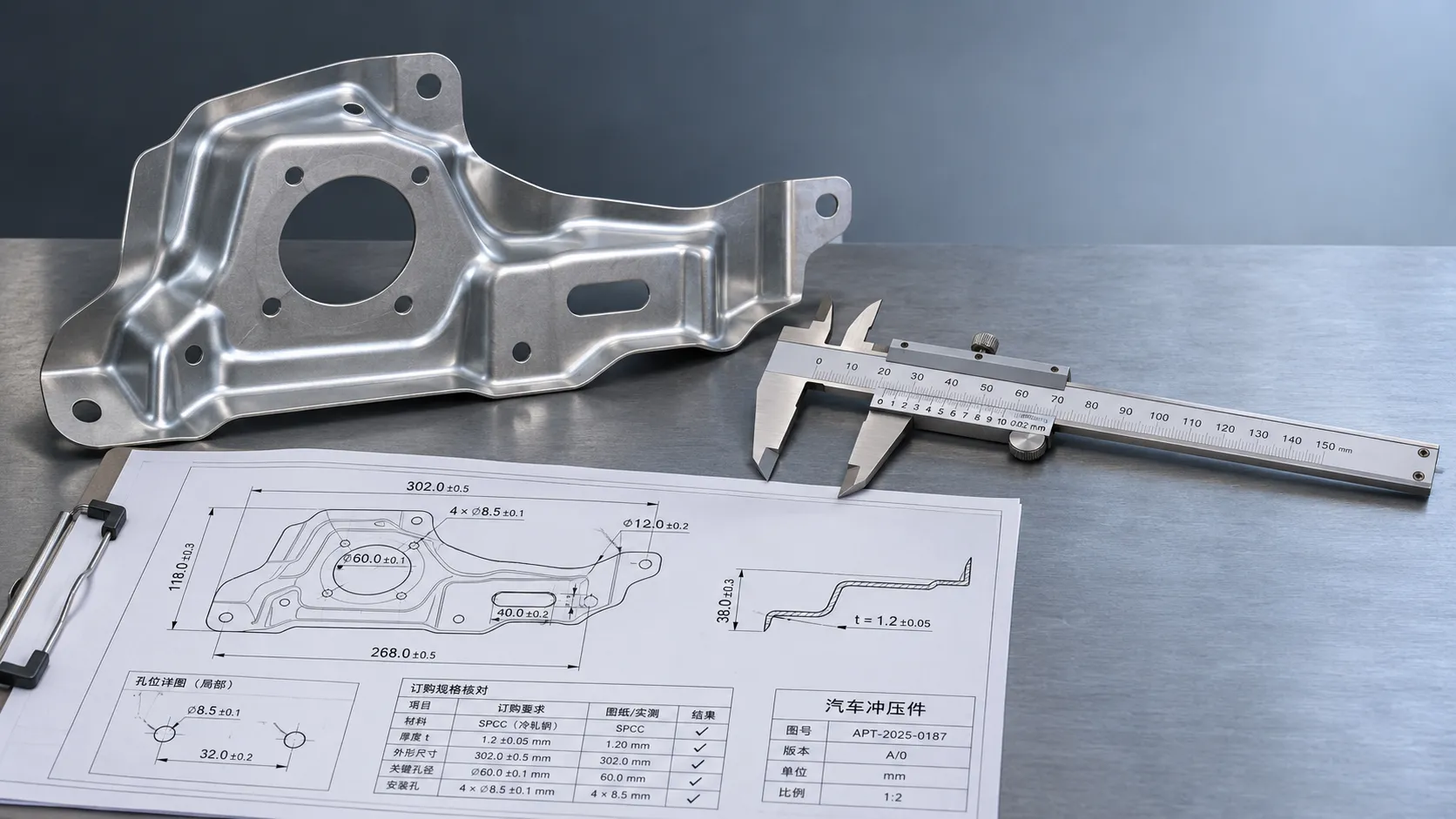
For automotive body stampings, material grade alone does not define suitability. High-strength steel or aluminum can support lightweighting objectives, but formability, springback, joining method, coating condition, corrosion behavior, dimensional repeatability, and crash-load path all affect the result. A quote for a hot-stamped component should clarify blank grade, coating, thickness tolerance, die concept, trimming approach, inspection method, corrosion-protection scope, and the basis for any mechanical-property claims. A lighter part that introduces difficult joining, inconsistent geometry, or a higher scrap exposure can increase program cost rather than reduce it.
Airbag assemblies, seatbelt systems, and seats require the same systems perspective. An inflator, cushion, sensor, pretensioner, retractor, buckle, seat frame, trim cover, occupant classification feature, or comfort actuator can be technically credible as a standalone item and still be unsuitable in an integrated restraint or cabin system. Timing, occupant kinematics, electronic diagnostics, harness routing, deployment space, attachment points, and interactions with the vehicle control architecture all matter. Component-level documentation cannot be used as a substitute for the vehicle- or system-level validation required by the applicable program.
Compliance evidence is part of the delivered product
Compliance should not be handled as a document collection exercise at the end of sourcing. It determines which suppliers can legitimately be compared and which lead times are realistic. In regulated equipment, a missing certificate or incomplete test record is not an administrative inconvenience; it can stop shipment, installation, vehicle approval, or production release.
The required evidence varies by product and market. Marine equipment may need documentation connected to IMO instruments, flag-state or classification expectations, and applicable IEC test standards. Automotive restraint products and seating systems may need to support the type-approval requirements applicable to the destination market, including relevant UN Regulations such as UN R16 for safety belts and restraint systems and UN R14 for safety-belt anchorages where applicable. Exact obligations depend on the vehicle category, sales market, component scope, and approval strategy. A global program should not assume that evidence accepted in one jurisdiction automatically satisfies another.
Quality-system certification has value, but it is not proof of product approval. IATF 16949 certification, for example, indicates that an automotive supplier operates under a defined quality-management framework; it does not demonstrate that a particular airbag, seatbelt, stamping, or seat meets the final program’s engineering and regulatory requirements. Similarly, a test report must be examined for its specimen identity, test configuration, laboratory status, date, acceptance criteria, and relevance to the offered production version.
Document control is equally important after nomination. The purchasing agreement should state which changes require prior notification and approval: material source, chemical formulation, electronic components, software, manufacturing location, tooling, process parameters, sub-tier supplier, packaging, and test method. This is particularly important where safety performance depends on tightly controlled interactions, such as inflator output, webbing properties, pretensioner behavior, or calibrated sensing functions. A component that changes without a disciplined approval process can invalidate prior validation work even if the supplier regards the change as minor.
Cost comparison should follow the failure path, not the quotation layout
Unit price is visible, immediate, and easy to compare. It is also frequently the smallest part of the cost difference between two alternatives. A more reliable selection model follows the costs created from purchase through installation, operation, quality control, and end-of-life support.
A practical lifecycle view can be expressed as:
Total landed and lifecycle cost = quoted product price + tooling and validation + freight and duties + inspection and incoming-control cost + integration cost + inventory carrying cost + service/support cost + expected cost of quality and disruption.
Not every category carries every element at the same weight. For a marine navigation retrofit, engineering time, installation materials, vessel downtime, technician availability, and training may exceed the difference in device price. For a stamped automotive structural part, tooling investment, production yield, dimensional-control burden, logistics density, and engineering changes may matter more than the piece-price reduction. For restraint components, the cost of revalidation, containment, recall exposure, or a production interruption can dwarf an initially attractive quotation.
Expected disruption cost need not be estimated with artificial precision to improve a decision. It can be assessed through concrete questions: Is there an approved alternate manufacturing site? Are critical electronic parts single-sourced? What happens if ocean freight is delayed? Can the supplier support controlled stock at the required location? How long does root-cause analysis take when a nonconformance affects serial production? Are replacement parts available for the contractual service period?
Currency and commercial terms also alter the real comparison. Payment conditions, incoterms, quoted currency, raw-material adjustment clauses, tooling ownership, warranty exclusions, and liability caps can all move cost or risk from the supplier to the buyer. A low EXW price, for instance, may offer little advantage if transport coordination, export documentation, insurance, customs exposure, and handling of damaged goods are transferred without sufficient internal capability.
Assess supplier capability beyond the sample and the audit presentation
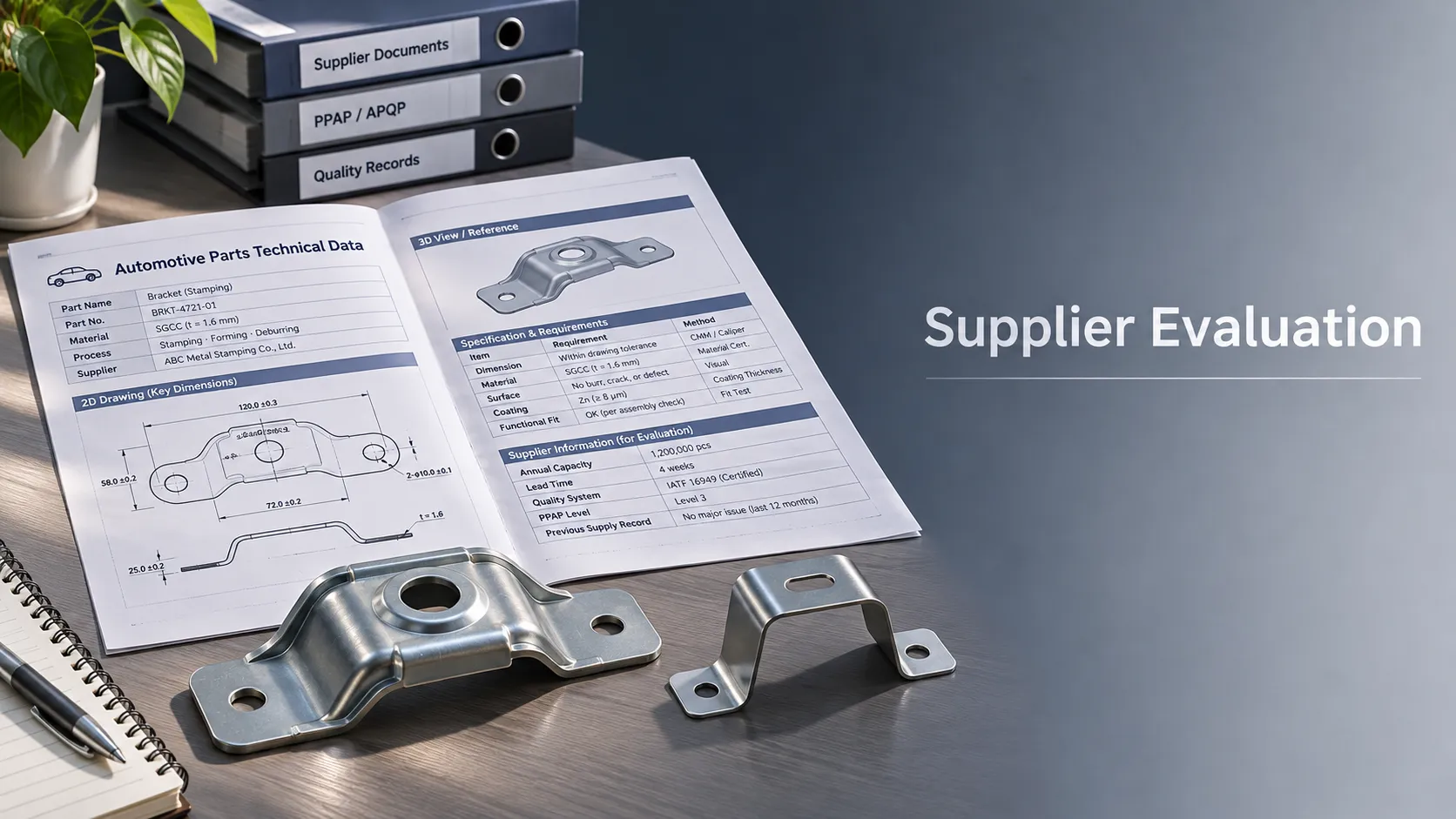
Samples demonstrate possibility. Supply capability demonstrates repeatability. The critical distinction is whether the supplier can make the same conforming product at the required rate, from controlled inputs, with a response process that remains effective when conditions change.
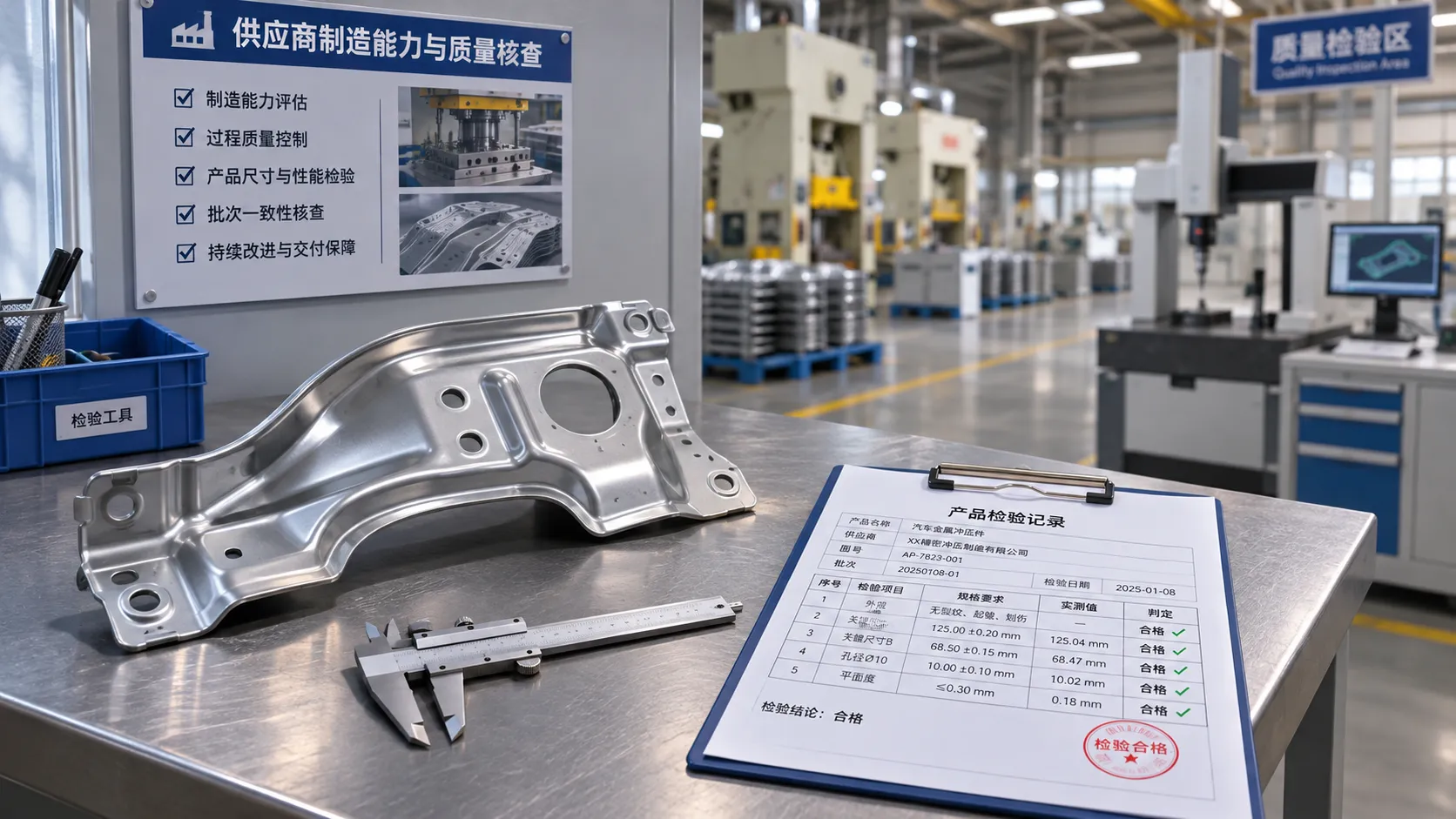
For complex or safety-relevant products, capability assessment should connect the proposed part to its manufacturing route. Key questions include whether critical processes are performed in-house or outsourced; how special characteristics are identified and controlled; what traceability exists from finished unit to material or subcomponent lot; how measuring equipment is validated; how nonconforming material is segregated; and how production capacity is calculated under realistic conditions rather than nominal machine output.
Sub-tier dependency is a recurring blind spot. A seat supplier may be operationally strong but dependent on a single source for a control module, fabric, recliner mechanism, or sensor. A navigation-equipment assembler may rely on a specialized display, GNSS receiver, processor, or antenna source. An airbag module supplier may control final assembly while relying on tightly specified inflator or fabric suppliers. The sourcing file should identify dependencies that can interrupt delivery or trigger requalification.
Supplier risk is not limited to financial stability. It includes geographic concentration, shipping-route dependence, capacity allocation, engineering responsiveness, intellectual-property controls, cybersecurity practices for connected products, and the ability to preserve records for the period required by the program. The appropriate level of scrutiny should reflect the consequence of failure. A decorative trim part and a restraint-system component should not receive identical supplier-risk treatment.
Use weighted scoring carefully—and do not let it hide a disqualifier
A weighted scorecard can improve consistency when several technically viable offers remain. It is most useful after mandatory gates have been applied. Common gates include required approval evidence, dimensional or interface fit, essential performance thresholds, required traceability, acceptance of contractual change control, and a feasible delivery plan.
Only suppliers that pass those gates should enter a comparative score. The weight given to cost, technical margin, quality history, delivery resilience, engineering support, and commercial conditions should reflect the product’s consequence and program stage. During early development, engineering support and validation competence may carry greater importance. In stable serial production, repeatability, logistics resilience, and cost-control mechanisms may become more significant.
Scorecards become dangerous when they allow a major deficiency to be offset by a cheap price or an attractive payment term. A supplier lacking required compliance evidence should not remain competitive because it has a high score for cost. The same applies to unproven compatibility, inadequate capacity evidence, or refusal to accept reasonable change notification. These are exclusion issues, not trade-offs.
Make the award conditional where uncertainty remains
Some uncertainty is unavoidable, especially when sourcing new technology, changing regions, or entering a new product category. The appropriate response is not always to delay the decision indefinitely. It is to define what must occur before the supplier can move from conditional selection to full production release.
Conditions may include a successful fit-check, interface verification, production-part approval, completion of required environmental or functional testing, confirmation of material declarations, agreed tooling trials, logistics rehearsal, or acceptance of a documented control plan. Each condition needs an owner, an evidence requirement, a decision deadline, and a clear consequence if it is not met.
This approach protects against a common procurement error: treating supplier nomination as the end of selection. In reality, nomination begins the period when technical assumptions, commercial commitments, and supply-chain claims must be converted into verifiable performance. The strongest purchasing decision is not the one that identifies the lowest initial price. It is the one that makes price comparable by proving that safety, compliance, integration, and continuity of supply have already been secured.
Related News

How to Evaluate Supplier Solution References Before Signing a Contract
Evaluate supplier solution references with confidence. Learn how to verify technical evidence, identify delivery risks, and close gaps before signing a contract.

How Capacitive Seat Occupancy Sensing Works in Automotive Airbag Systems
Discover how capacitive seat occupancy sensing supports automotive airbag systems, and explore the design, calibration, and validation challenges behind reliable performance.
Industrial Product References: How to Verify Specs Before Ordering
Use an industrial product reference for procurement to verify specs, compatibility, and certifications before ordering—and reduce costly purchasing risks.
Choosing a Private Label Partner in Europe: Key Supplier Criteria
Private label cooperation Europe buyers can trust starts with the right supplier. Explore key criteria for compliance, quality, traceability and supply resilience.

Integrated Cabin Comfort Systems: How Seat and Cabin Climate Controls Work Together
Discover how integrated cabin comfort systems coordinate seat and climate controls to balance occupant comfort, energy use, safety, and performance.

Automotive Ergonomics Pricing: What Drives Seat System Costs?
Discover what drives automotive ergonomics pricing, from seat mechanisms and safety systems to tooling and volume, and learn how to compare supplier quotes.

Evaluating Supplier Solutions: How to Verify References and Standards
Supplier solution references and standards can make or break a sourcing decision. Learn how to verify claims, assess compliance, and reduce risk before awarding a contract.
Choosing B2B Product Knowledge Platform Suppliers: Key Evaluation Criteria
Compare B2B product knowledge platform suppliers with confidence. Explore key criteria for data accuracy, supplier transparency, integrations, and value.
Choosing a Marine Radar Systems Supplier: What to Check Before Buying
Choosing a marine radar systems supplier? Compare installed costs, bridge compatibility, compliance evidence, and service support before you buy.
Related News
- 00
0000-00
How to Evaluate Supplier Solution References Before Signing a Contract - 00
0000-00
Industrial Product References: How to Verify Specs Before Ordering - 00
0000-00
Choosing a Private Label Partner in Europe: Key Supplier Criteria - 00
0000-00
Automotive Ergonomics Pricing: What Drives Seat System Costs? - 00
0000-00
Evaluating Supplier Solutions: How to Verify References and Standards
0000-00
Weekly Insights
Stay ahead with our curated technology reports delivered every Monday.